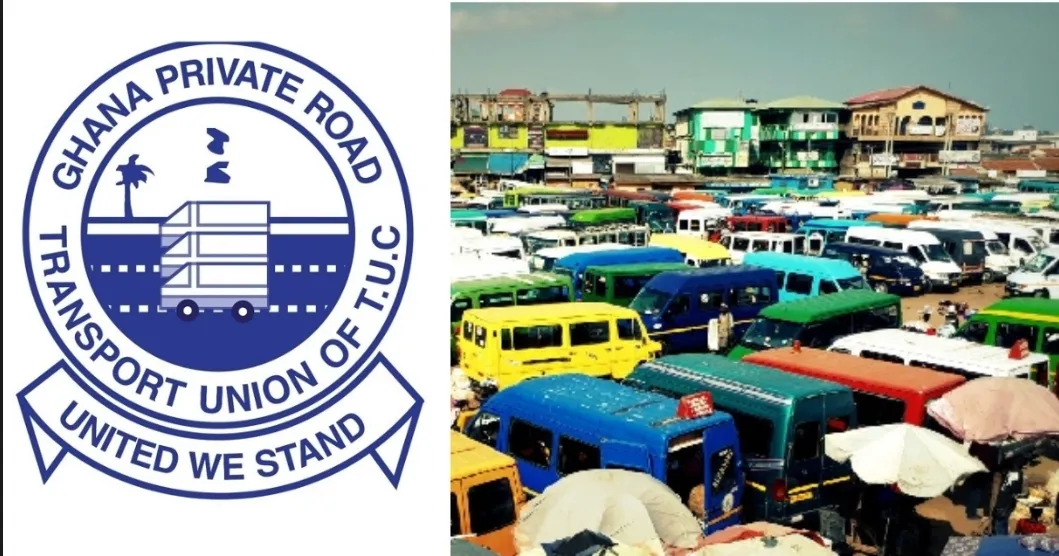
Ghanaian commuters are bracing for another major economic blow as the Ghana Private Road Transport Union (GPRTU) signals a possible 25% to 30% increase in public transport fares following an expected surge in fuel prices.
The looming fare hike threatens to deepen the financial pressure on households already struggling with rising living costs, with transport operators warning that higher fuel prices could make an upward adjustment in fares virtually unavoidable.
GPRTU Deputy Public Relations Officer, Samuel Amoah, said negotiations are currently underway and a decision on new fares is expected by the end of the week.
According to him, the Union has received credible information that fuel prices are expected to increase from Wednesday, September 16, with petrol projected to rise beyond GH¢16 per litre and diesel potentially exceeding GH¢19 per litre.
“If this increment is also coming, then it means that the possibility of increasing transport fare is going to be very high,” Mr Amoah said.
He disclosed that a proposed 30% adjustment is already before the Transport Ministry for consideration, although the final percentage has not yet been determined.
Mr Amoah, however, indicated that commuters should prepare for an increase that could be between 25% and 30%, stressing that the adjustment was unlikely to fall below 25%.
“Let’s see, if even it will come down, it won’t come down below maybe 25%,” he said.
FUEL PRICE PRESSURE
The development comes amid growing concerns over the impact of rising petroleum prices on the cost of transportation and household budgets.
Mr Amoah said the Union had independently checked reports of an imminent fuel price increase and found them credible.
“We had that information that the fuel price is likely to go up, hopefully by tomorrow. We also did one or two searches, and we got information that it is true. It’s not just hearsay,” he explained.
With fuel being one of the largest operating costs for commercial transport operators, the GPRTU believes a substantial increase in pump prices will inevitably put pressure on existing transport fares.
COMMUTERS GIVEN WARNING
While the possibility of a steep fare increase is becoming increasingly clear, Mr Amoah stressed that commuters would not be confronted with new fares immediately after negotiations are concluded.
He said the Union would announce an implementation period to allow passengers to adjust to the new rates.
“We will not come out like maybe today and say we have agreed and say tomorrow is taking effect. No, we will not do that,” he said.
According to him, transport operators normally provide passengers with a grace period before new fares take effect.
“Most of the time we do give some grace period for them to get prepared before it will take effect,” he added.
Nevertheless, Mr Amoah urged Ghanaians who depend heavily on public transportation to begin preparing for higher fares.
“So passengers should actually prepare themselves for an increment,” he warned.
ANOTHER BLOW TO HOUSEHOLDS
If implemented at the upper end of the proposed range, the increase could significantly raise the daily transportation expenses of workers, traders, students and other commuters who rely on commercial vehicles.
For low-income households, a 25%-30% jump in transport fares could mean less money available for food, school expenses, rent, healthcare and other essential needs.
The immediate concern for commuters is therefore not only the price of fuel at the pump, but how the anticipated increase will cascade through the economy and further increase the cost of living.