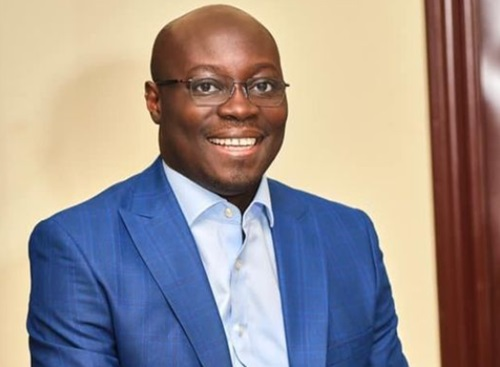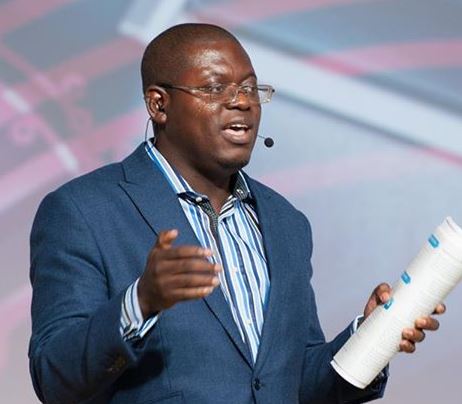
Ghana’s state-owned enterprises recorded one of their strongest headline financial turnarounds in years in 2025, swinging to a combined net profit after tax of GH¢19.80 billion from a GH¢2.26 billion loss a year earlier and ending four consecutive years of losses. But the scale and quality of that recovery are now being questioned, with Bright Simons, Vice-President of IMANI Africa, arguing that favourable currency movements rather than stronger underlying operations account for much of the improvement.
The disagreement goes to the heart of how Ghana should judge the health of businesses in which the state has billions of cedis of public capital at risk. A profit generated by stronger sales, higher productivity and improved margins is very different in quality from one produced largely by exchange-rate revaluation, even though both may legitimately appear in financial statements.
The State Interests and Governance Authority’s 2025 State Ownership Report provides substantial evidence of improvement. Revenue generated by SOEs increased 28.12% to GH¢176.43 billion from GH¢137.64 billion in 2024, while profit before interest and tax rose to GH¢25.49 billion as the sector moved decisively back into positive territory.
Some sectors recorded particularly strong revenue expansion. Agriculture revenues increased by 203.71%, manufacturing by 114.74% and infrastructure by 92.24%, while finance costs fell 42.49%, providing significant relief to enterprises that had previously been squeezed by expensive borrowing and difficult financial conditions.
Yet the most consequential movement in the accounts may have come from foreign exchange. SIGA reported net FX earnings of GH¢11.72 billion in 2025, reversing a GH¢12.01 billion foreign-exchange loss in 2024 and producing a year-on-year swing of more than GH¢23.00 billion.
That reversal matters because it is larger than the movement between the sector’s GH¢2.26 billion reported loss in 2024 and its GH¢19.80 billion profit in 2025. It does not by itself prove that the turnaround was entirely currency-driven, but it makes the FX effect impossible to treat as a secondary part of the story.
Simons argues that once those currency effects are stripped out, the picture changes considerably. “State-owned businesses’ underlying profitability declined in 2025. You heard that right,” he said, contending that net profit excluding currency effects fell 17.10%, operating profit declined 22.70% and operating margins narrowed by about 3.50 percentage points.
“In simple terms: SIGA told us that a loss of GHS2.26 billion in 2024 switched into a profit of GHS19.80 billion in 2025,” Simons said. “But as everyone now knows, if you ignore the currency revaluations, profit actually fell from GHS9.75 billion to GHS8.08 billion, a decline of 17.1 per cent.”
The distinction is more than an accounting argument. Foreign-exchange gains can materially improve earnings when companies have liabilities, assets or transactions denominated in currencies that move favourably, but they do not necessarily tell investors whether the underlying business sold more, became more productive or generated stronger recurring cash flows.
That is particularly important for Ghana’s SOEs because weakness in large public enterprises can migrate quickly onto the government balance sheet. When strategically important companies cannot service debts, finance operations or meet investment requirements, taxpayers can ultimately be exposed through recapitalisations, guarantees, arrears, subsidies or other forms of fiscal support.
SIGA’s own report makes clear that the return to profitability has not eliminated those structural weaknesses. Five SOEs, including the Electricity Company of Ghana, Ghana Cylinder Manufacturing Company, Ghana National Petroleum Authority, Graphic Communications Group and Ghana Digital Centre, recorded losses in every year between 2021 and 2025, while entities including AirtelTigo Ghana, GIHOC Distilleries and Tema Oil Refinery continued to report negative equity.
ECG remains particularly important because of its sheer size. The electricity distributor carried liabilities of GH¢82.31 billion, illustrating how the financial position of one major utility can create risks large enough to overshadow improvements recorded across several smaller state enterprises.
The dividend picture also complicates the headline recovery. Only Ghana Reinsurance Company Limited and TDC Company Limited paid dividends among SOEs, contributing a combined GH¢16 million to government, while joint ventures accounted for the overwhelming majority of dividends received by the state.
That does not necessarily mean profitable SOEs should distribute all earnings rather than reinvest them, particularly where businesses require capital for expansion or balance-sheet repair. But for government as shareholder, sustained profitability should eventually translate into stronger cash generation, lower dependence on fiscal support, reinvestment capable of producing future returns or meaningful dividend flows.
The 2025 performance should therefore be read neither as an illusion nor as conclusive evidence that Ghana’s SOE problems have been solved. Stronger revenues, lower financing costs and the reversal of FX losses all represent genuine improvements in the financial environment in which the enterprises operated, but they are not necessarily interchangeable with structural reform.
That is where Simons’ intervention becomes important. If a substantial proportion of the GH¢19.80 billion profit was produced by a favourable currency cycle, the durability of the turnaround will be tested when exchange-rate movements cease to provide the same support or begin moving in the opposite direction.
The more revealing indicators over the next few years will be operating margins, productivity, cash generation, debt reduction and the ability of chronic loss-makers to sustain themselves without repeated public support. Those measures will show whether better macroeconomic conditions have merely improved the appearance of SOE accounts or created breathing space for management teams to fix the underlying businesses.
For the government, that distinction carries direct fiscal consequences. Ghana’s state enterprises represent public assets, but poorly managed ones can also become contingent liabilities capable of eroding the benefits of fiscal consolidation elsewhere in the economy.
SIGA can therefore legitimately point to 2025 as a major improvement in reported financial performance, while Simons is equally justified in asking what remains when unusually large currency effects are removed. The two interpretations are not necessarily mutually exclusive: Ghana’s SOEs can have enjoyed a genuine financial recovery while still showing weaker underlying operational momentum than the headline profit implies.
The difference between GH¢19.80 billion in reported profit and Simons’ estimate of GH¢8.08 billion after stripping out currency revaluations is consequently more than a dispute over presentation. It is a test of whether Ghana’s public-enterprise sector is undergoing structural rehabilitation or simply benefiting from one of the most favourable macroeconomic turns it has experienced in years.
That answer will not be settled by the 2025 accounts alone. It will be determined by whether state-owned companies can remain profitable, generate cash, reduce fiscal risks and deliver returns to the public when the currency is no longer doing so much of the work.