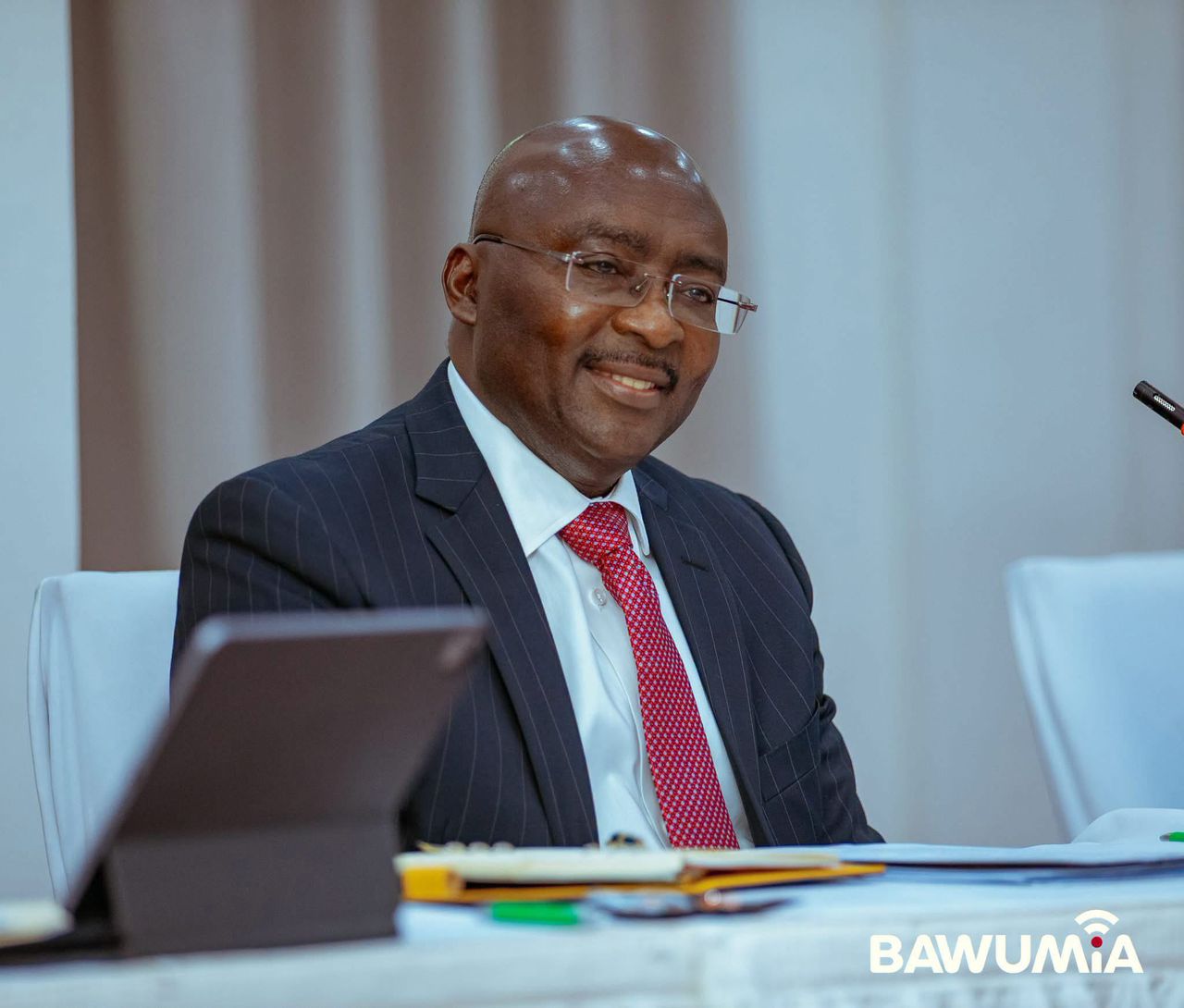
2028 NPP flagbearer and former Vice President, Dr Mahamudu Bawumia, has explained that the Gold-for-Oil policy and the Domestic Gold Purchase Programme were conceived as emergency measures to help Ghana navigate severe foreign exchange shortages and protect the economy during the economic crisis that followed the COVID-19 pandemic and the Russia-Ukraine war.
He made the disclosure when he engaged the Ghana National Association of Small-Scale Miners as part of consultations aimed at identifying practical reforms to address challenges confronting the sector on Thursday, August 27, 2026.
Dr Bawumia said Ghana’s access to international capital markets had been severely constrained at the time, creating significant pressure on the country’s balance of payments and limiting the foreign exchange available for essential economic activities.economics
“When I was vice president, Ghana faced a major economic crisis,” Dr Bawumia said, recalling the economic difficulties that confronted the country.
He said the situation was compounded by the COVID-19 pandemic and the Russia-Ukraine war, which disrupted global markets and resulted in a number of emerging market economies, including Ghana, losing access to international capital markets.
“You all recall Covid coming in. You all recall the Russia, Ukraine war and the pursuant lack of access to capital markets by creating emerging mounted economies, including Ghana,” he said.
According to Dr Bawumia, before the crisis, Ghana had relied significantly on the international capital markets to raise foreign currency to support its economic activities.
“You know, before then we would normally go to the capital markets, raise $3 billion and then go on in terms of our economic management,” he explained.
He said that avenue was suddenly closed to Ghana and several other countries, leaving the country facing a serious balance of payments crisis.
“But suddenly that gap was shut for quite a few countries. And for us it resulted in a balance of payments crisis,” Dr Bawumia said.
He explained that the crisis meant Ghana did not have sufficient foreign exchange to meet its normal economic obligations and maintain stability in the foreign exchange market.
“You know, in terms of not having enough foreign exchange to undertake our normal economic activities as a country,” he said.
Dr Bawumia further pointed to the constraints imposed under Ghana’s engagement with the International Monetary Fund (IMF), particularly restrictions on the amount of foreign exchange the Bank of Ghana could use to intervene in the foreign exchange market.
“If you all recall at this time also we were inched in an IMF program,” he said.
He explained that one of the restrictions under the IMF programme was the amount of foreign exchange the central bank could deploy to support the cedi.
“And one of the restrictions for the IMF program that we engaged in was the amount of foreign exchange that the central bank could use to intervene to support the cedi,” he said.
According to him, the ceiling was set at $80 million per month.
“Maximum $80 million a month,” Dr Bawumia said.
He argued that the amount was insufficient to meet Ghana’s monthly demand for foreign exchange.
“And you can imagine what the demand for foreign exchange for Ghana would be on a monthly basis, significantly more than $80 million a month,” he said.
Dr Bawumia said the combination of limited foreign exchange supply and high demand inevitably placed pressure on the cedi.
“And so in that particular framework that we were in, there was only one result, was when demand exceeds supply, prices would go up, isn’t it?” he said.
He said the consequence was a sharp deterioration in the exchange rate, with the cedi coming under increasing pressure.
“So in that framework that we found ourselves, suddenly we started seeing the exchange rate depreciate,” Dr Bawumia said.
“The pressures on the exchange rate started going up,” he added.
He said the situation became increasingly concerning because Ghana was facing severe restrictions in accessing foreign exchange while the cedi was losing value almost daily.
“We were really constricted in terms of availability of foreign exchange. And at the same time the cedi was depreciating almost on a daily basis,” he said.
Dr Bawumia said the developments forced policymakers to consider alternative ways of meeting Ghana’s foreign exchange needs without depending entirely on conventional foreign exchange interventions.
“And you know, we had to think about how to deal with this problem,” he said.
He said developments in Sri Lanka at the time also heightened his concerns about the possible consequences of a prolonged foreign exchange crisis.
“In fact, at some point I was getting very concerned because I could see at the same time what was happening in Sri Lanka,” Dr Bawumia said.
He recalled that Sri Lanka was experiencing severe foreign exchange shortages, which affected the country’s ability to pay for essential imports, including fuel.
“In Sri Lanka, people were out on the streets, they were facing similar foreign exchange constraints and there was shortage of fuel because you couldn’t pay,” he said.
“They didn’t have the foreign exchange to pay for fuel,” he added.
It was against this backdrop, Dr Bawumia explained, that he began considering the possibility of using Ghana’s gold resources to directly meet some of the country’s import requirements.
“And this is the backdrop against which, you know, I came up with the idea that, okay, even if you sell your gold for dollars or your cocoa for dollars, you are restricted in how much you can intervene on the market with those dollars,” he said.
He said the thinking was therefore to find a mechanism that could reduce Ghana’s dependence on scarce US dollars for critical imports.
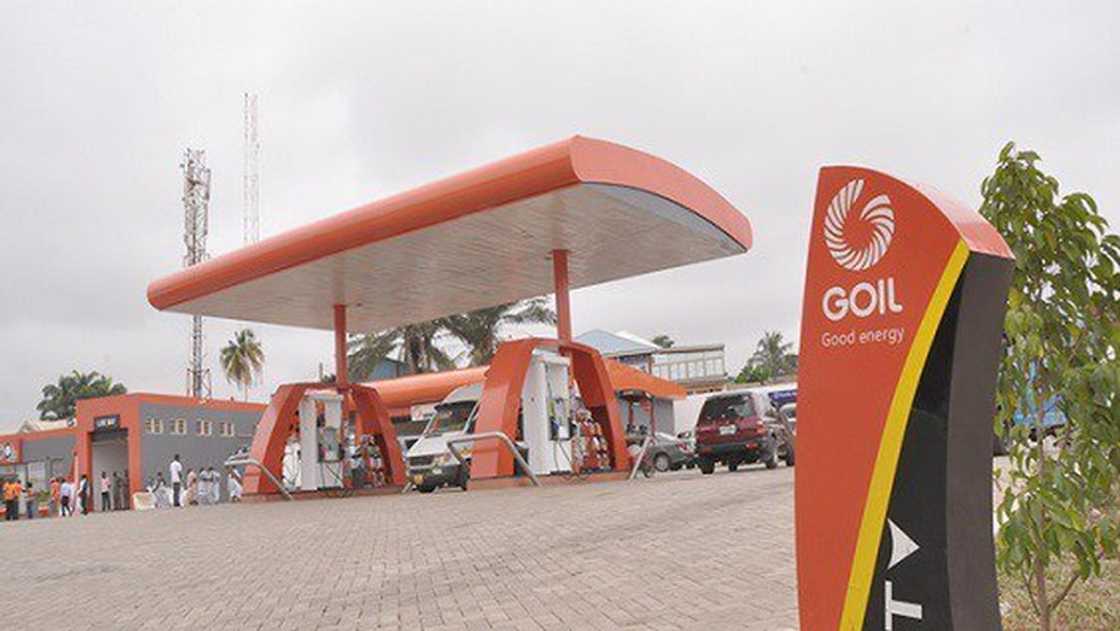
“And so why don’t we come up with the idea of gold for oil to start with, to exchange our gold for oil so that we get out of this foreign exchange construct,” Dr Bawumia said.
He described the Gold-for-Oil programme as a response to the specific foreign exchange constraints Ghana was facing at the time.
“And this is the background of the gold for oil program which we essentially saved us from a bigger crisis,” he said.
Dr Bawumia argued that without the programme, Ghana could have faced serious difficulties in securing petroleum products because of its limited access to foreign exchange.
“Because if we had not been able to pay for the oil, then we would have had major fuel shortages and so on,” he said.
He said the Gold-for-Oil initiative, however, required Ghana to have access to sufficient gold for the proposed barter arrangement to work.
“So that was a measure that was introduced. Of course we had to buy the gold, isn’t it?” Dr Bawumia said.
He said the need to secure gold for such initiatives also influenced the thinking around increasing attention to gold purchases and Ghana’s gold resources.
“And that’s how we started paying attention of the central bank’s point of view in terms of the gold tool and this context,” he said.
Dr Bawumia said Ghana’s position as one of Africa’s leading gold producers provided an important basis for exploring gold-backed approaches to addressing the country’s foreign exchange challenges.
He recalled that the idea of making greater use of Ghana’s gold resources occurred to him while exercising.
“We also started thinking, because when I looked at, I was one morning, I was exercising when the idea also came and I said, you know, when you look at Ghana, we are Africa’s number one gold producer,” he said.
He stressed Ghana’s significant position in global gold production, describing the country as one of the world’s leading producers.
“Number one in the whole of us,” he said, referring to Ghana’s position in Africa.
“When you look at the world, we are about number five in the whole of the world in terms of gold,” Dr Bawumia added.
He said Ghana’s substantial gold production presented an opportunity to leverage the country’s natural resources in responding to economic and foreign exchange challenges.