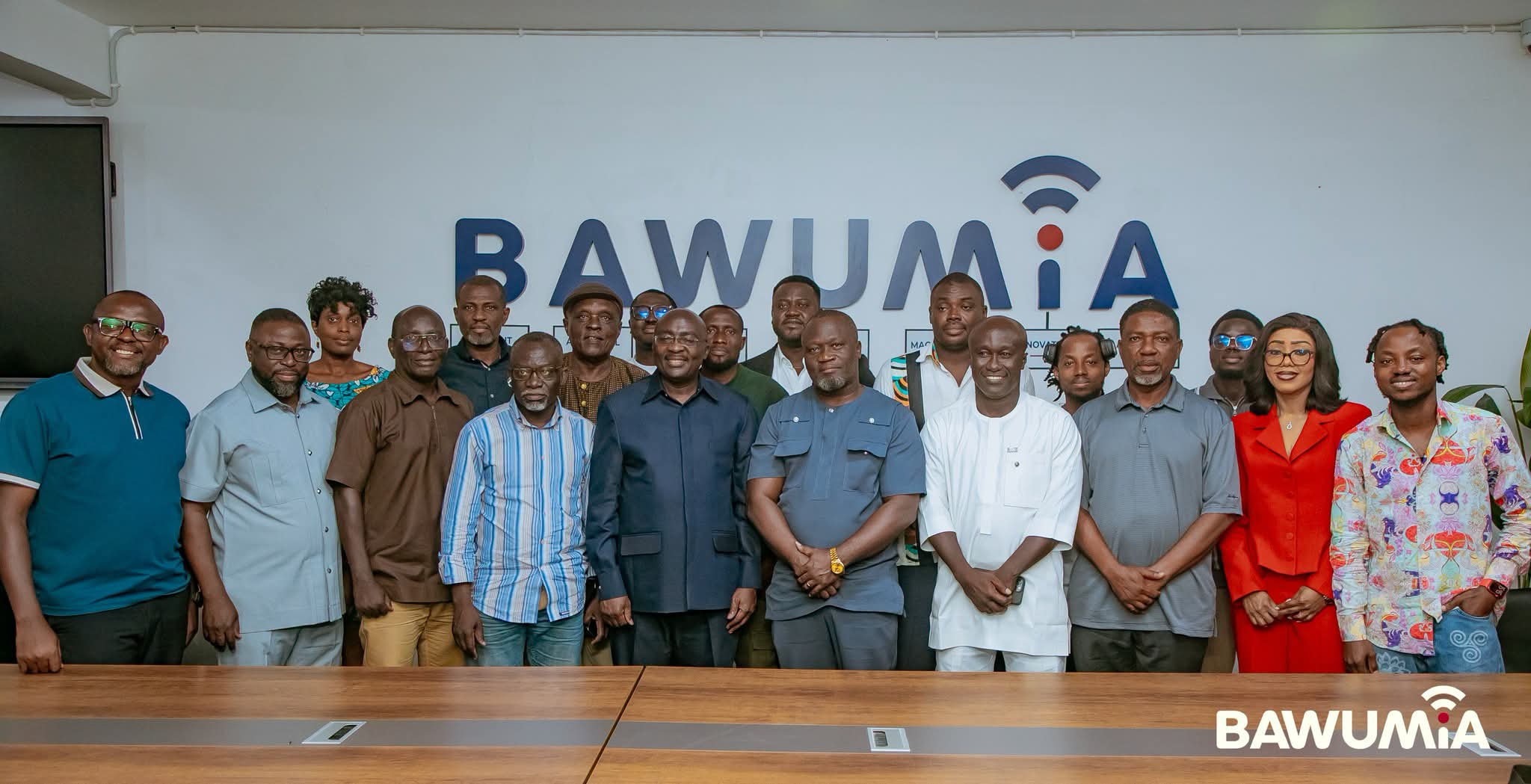
The flagbearer of the New Patriotic Party (NPP), Dr Mahamudu Bawumia, has taken a swipe at successive governments for paying lip service to Ghana’s creative arts industry,
declaring that the country’s film sector holds enormous economic potential that has remained largely untapped due to years of neglect, inadequate investment and policy failures.
Dr Bawumia made the remarks following a stakeholder engagement with representatives of Ghana’s film industry, where industry players outlined what they described as persistent structural challenges undermining the growth and competitiveness of local filmmaking.
Among the concerns raised were unfair competition from foreign film productions, inadequate cinema infrastructure, limited training facilities and the prohibitive cost of film production.
The concerns, according to Dr Bawumia, expose the failure of successive governments to recognise filmmaking as a serious economic enterprise capable of generating employment, attracting investment and creating wealth.
He argued that Ghana’s creative arts industry, particularly filmmaking, should no longer be treated merely as an entertainment sector but as a strategic economic asset capable of contributing significantly to national development.
“My message to them was simple. Ghana has not appreciated the economic potential of the creative arts, especially film.
The job creation potential is huge, but successive governments have only paid lip service to it,” he stated.
THREE MAJOR POLICY INTERVENTIONS
Dr Bawumia outlined three major interventions he believes could transform the fortunes of the film industry.
First, he called for the passage of the Broadcasting Act, arguing that an appropriate legislative framework is necessary to strengthen the broadcasting environment and create opportunities for local content.
Second, he proposed tax incentives for filmmakers to reduce production costs, encourage private-sector investment and make Ghanaian films more competitive against foreign productions.
Third, he advocated the establishment of a dedicated streaming platform for Ghanaian films to expand distribution opportunities, increase market access and enable local producers to monetise their creative works beyond traditional cinema outlets.
He further stressed that government investment, working in partnership with the private sector, should not be considered a favour to filmmakers but an economic necessity.
GHANA’S UNTAPPED CREATIVE ECONOMY
The intervention comes against the backdrop of growing concerns about the ability of Ghana’s film industry to compete in an increasingly globalised entertainment market.
Despite the country’s rich storytelling traditions, talented actors, directors, producers and technical professionals, the industry continues to grapple with financing constraints, limited distribution networks and inadequate infrastructure.
The absence of sufficient cinema screens and modern production facilities also restricts the capacity of local filmmakers to reach wider audiences and generate sustainable commercial returns.
Dr Bawumia believes the situation requires a deliberate policy shift that places the creative economy at the centre of Ghana’s economic transformation agenda.
“Ghana has the talent. Ghana has the stories. What has been missing is the will to back them,” he declared.
His position signals an attempt to place the creative arts sector within the broader national conversation on employment generation, entrepreneurship, investment and economic diversification.