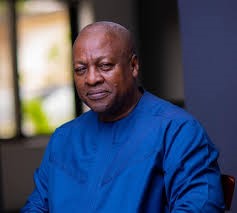
An opinion article on the reported comments of Justice Paul Baffoe-Bonnie on Ghana’s state institutions
Publication date: 3 September 2026
Written by Richard Addai
Pre-Bar Student, Ghana School of Law-Kumasi campus
Former Communication Director – TESCON, Greenfield College
Former Youth Organiser – NPP, Kintampo North
Tel: 0241789890
Authorial note: This is a legal and journalistic opinion piece. It does not allege that the Chief Justice has committed a disciplinary offence. Its criticism is directed at the wisdom, propriety and institutional risk of the reported wording of his public remarks.
Introduction: When judicial words acquire institutional weight

The office of the Chief Justice of Ghana is not an ordinary public office. It is one of the constitutional offices around which the credibility of the Republic’s justice system is constructed. The holder of that office is simultaneously the head of the Judiciary, the presiding judicial officer of the Supreme Court and the administrative and supervisory head of the institution entrusted with the exercise of judicial power.
It is against that constitutional setting that the reported remarks of Chief Justice Paul Baffoe-Bonnie on 2 September 2026 deserve serious public scrutiny. During a visit to the Minerals Income Investment Fund (MIIF), the Chief Justice praised the performance of MIIF and other state institutions and reportedly said: “Sometimes when we hear how well some state organisations are doing now, we wonder what we really have been doing in the past eight years.” He also reportedly contrasted the present position of SSNIT with the earlier consideration of disposing of valuable assets. These remarks have already generated public commentary, including a caution from legal scholar Professor Stephen Kwaku Asare that the reference to “the past eight years” could be understood as a political assessment of the previous administration. [1]
The criticism in this article is not that a Chief Justice must become mute, indifferent or incapable of discussing public administration. Nor is it suggested that every expression of approval for a public institution is partisan. The point is narrower and more important: when the head of the Judiciary uses language capable of being understood as an adverse political assessment of one administration and a favourable assessment of another, the institutional consequences are far more serious than they would be if the same words were spoken by an ordinary citizen, journalist or political commentator.
The Chief Justice should therefore be held to a higher standard of restraint—not because judicial office extinguishes freedom of expression, but because the Constitution, the nature of judicial power and the Judiciary’s own Code of Conduct demand that the appearance as well as the reality of independence and impartiality be protected.
1. The constitutional office of the Chief Justice
Article 125(1) of the 1992 Constitution provides that justice emanates from the people and is administered in the name of the Republic by an independent Judiciary subject only to the Constitution. Article 125(3) vests the judicial power of Ghana in the Judiciary and expressly excludes the President, Parliament and other organs of state from possessing final judicial power. Most importantly for present purposes, Article 125(4) provides that the Chief Justice, subject to the Constitution, is the Head of the Judiciary and is responsible for its administration and supervision. [2]
This is an institutional office, not merely a senior judicial rank. The Chief Justice therefore carries the constitutional responsibility of protecting the Judiciary as an institution. That responsibility includes safeguarding the confidence of citizens that courts will adjudicate disputes without political favour, fear or prejudice.
Article 127 reinforces the point. It provides that in the exercise of judicial power, including the Judiciary’s judicial and administrative functions, the Judiciary is subject only to the Constitution and is not subject to the control or direction of any person or authority. Article 127(2) further protects judges and judicial officers from interference in their judicial functions and requires state organs and agencies to assist the courts in protecting their independence, dignity and effectiveness. [3]
The constitutional design is therefore deliberately austere: political actors govern; Parliament legislates; the Executive administers; and the Judiciary adjudicates and protects legality. The Chief Justice may and should speak on matters affecting the administration of justice, judicial independence, court reform and access to justice. But the closer his public commentary moves toward evaluating rival political administrations, the greater the danger that the constitutional boundary between judicial authority and partisan political discourse will become blurred.
2. What does the Courts Act actually say?
It is important not to overstate the statutory position. The Courts Act, 1993 (Act 459), does not contain a single comprehensive provision setting out every administrative function of the Chief Justice. Its principal function is to give statutory effect to the constitutional architecture of the courts and to provide for their jurisdiction, composition and related matters. [4]
Section 1(1) of Act 459 provides for the composition of the Supreme Court, including the Chief Justice. Section 1(3) provides that the Chief Justice shall preside at sittings of the Supreme Court, subject to the constitutional arrangement concerning the most senior Justice in his absence. The Act similarly recognises the Chief Justice within the composition of the High Court in section 14. [4]
The broader administrative and supervisory mandate of the Chief Justice is therefore rooted principally in Article 125(4) of the Constitution rather than in an invented or expansive reading of Act 459. This distinction matters. The Chief Justice has extensive institutional responsibilities, but those responsibilities are constitutional responsibilities exercised within a constitutional order that insists on judicial independence and impartiality.
The Supreme Court has recognised the administrative dimension of the Chief Justice’s office. In Agyei Twum v Attorney-General & Akwetey [2005-2006] SCGLR 732, the Court explained that the Chief Justice’s authority to constitute panels of the Supreme Court derives from Article 125(4) and is an administrative incident of the office. A later Supreme Court decision reiterated that Article 125(4) makes the Chief Justice the administrative head of the Judiciary. [5]
That administrative authority is substantial. It makes restraint even more important. The person who has responsibility for the administration and supervision of the institution must avoid conduct capable of causing citizens to believe that the institution itself has taken a political side.
3. Judicial independence is not merely freedom from interference
A common misunderstanding is that judicial independence means only that politicians cannot telephone judges to dictate judgments. That is an important part of independence, but it is not the whole concept.
The Judicial Service’s Code of Conduct for Judges and Magistrates expressly states that judicial independence has both individual and institutional dimensions. It describes independence as foundational to judicial impartiality and public confidence, and states that judges must apply the law without fear or favour and without regard to whether a decision is popular. The Code further emphasises that public confidence is a cornerstone of judicial independence. [6]
The distinction between independence and perceived independence is critical. A court may in fact be independent while the public increasingly doubts its independence. Once that doubt becomes entrenched, the constitutional institution suffers even if individual judges remain personally honest.
This is why the Supreme Court’s jurisprudence on bias repeatedly recognises that the law is concerned not only with actual bias but also with apparent or reasonably apprehended bias. In Republic v High Court, Denu; Ex parte Agbesi Awusu (No.1) [2003-2004] SCGLR 864, the Supreme Court dealt with a situation involving a judge’s attendance at a partisan meeting and extra-judicial comments, and treated the issue of real likelihood of bias as a serious judicial concern. [7]
Similarly, in Republic v High Court, Accra (Commercial Division); Ex parte Environ Solutions & Others [2020] GHASC 17, the Supreme Court distinguished actual bias from apparent bias and explained that apparent bias is assessed objectively by considering whether a reasonable, fair-minded and informed observer would consider the decision-maker capable of impartiality. [8]
The principle is simple but profound: justice must not only be done; the circumstances must also be such that a reasonable observer can see that it is being done impartially.
4. The Judiciary’s own Code is unusually clear on political activity
The strongest criticism of the Chief Justice’s reported remarks comes not from political opponents but from the Judiciary’s own Code of Conduct for Judges and Magistrates.
Under the Code’s provisions on political activity, a judge is required, subject to the constitutional exceptions stated there, to refrain from partisan political activity. The Code states that all partisan political activity and association must cease with the assumption of judicial office and that a judge must refrain from conduct which, in the mind of a reasonable, fair-minded and informed person, could give rise to the appearance that the judge is engaged in political activity. [9]
The Code goes further. It recognises that judges retain rights of expression, but explains that judicial office imposes restraints necessary to preserve public confidence in judicial impartiality and independence. It specifically warns that participation in public discussion can undermine confidence where it creates the appearance of political involvement. It also states that judges should avoid unnecessary exposure to political attack and should ordinarily keep commentary on government policy focused on practical implications rather than political controversy. [9]
There are legitimate exceptions. Judges may speak about law reform, the administration of justice and matters directly affecting the operation or independence of the courts. The Code even recognises limited circumstances in which a judge may properly speak on politically controversial matters where those matters directly affect the courts, judicial independence, fundamental aspects of the administration of justice or the judge’s personal integrity. But even then, the Code requires great restraint. [9]
The critical question, therefore, is not whether the Chief Justice is legally forbidden from praising a public institution. He is not. The question is whether the particular framing of the praise, especially the reference to “the past eight years,” unnecessarily crosses from institutional commentary into political evaluation. In the highly polarised language of Ghanaian politics, that phrase can reasonably be understood as a comparison between the performance of the current administration and the administration that governed for the preceding eight years. That is precisely the kind of perception the Code tells judges to avoid.
5. Why the phrase “the past eight years” is institutionally dangerous
The problem is contextual, not semantic. If a Chief Justice says that a state institution has improved, the statement can ordinarily be understood as an institutional observation. But when he asks what “we” had been doing during the preceding eight years, the remark invites a political reading because Ghana’s electoral and governmental history divides those years between identifiable political administrations.
The danger is magnified by the setting. The remarks were made during an institutional visit to MIIF, a public entity, by the head of another constitutional institution. They were therefore not private observations among friends. They were public comments by the Chief Justice in his official capacity and were capable of being reported nationwide.
The Chief Justice himself has previously emphasised the importance of judicial restraint. In January 2026, while swearing in Circuit Court Judges, he reportedly told them that judicial authority is not asserted through eloquence or persuasion but through restraint, fairness and fidelity to the law. He also warned that abuse of judicial authority erodes public confidence and undermines the rule of law. [10]
Those observations should apply with even greater force to the holder of the highest judicial office. The standard expected of a Circuit Court Judge cannot logically be lower when the speaker is the Chief Justice.
6. The danger of a partisan-sounding Chief Justice
First, it damages the perception of impartial adjudication. Ghanaian politics is intensely competitive. Parties and supporters regularly litigate election disputes, public-law controversies, criminal prosecutions, procurement disputes and constitutional questions. In many of those matters, the interests of the governing party and the opposition may directly or indirectly arise.
If the Chief Justice is perceived to have praised the governing administration while disparaging the record of its predecessor, litigants may begin to ask whether the Judiciary is institutionally neutral. That perception can become particularly damaging where a future case concerns the conduct, policy or legality of the government that has received such public praise.
Second, it creates an avoidable recusal problem. A judge who has publicly expressed a strong view about a politically controversial matter may face applications or arguments that a reasonable observer could apprehend bias. The Supreme Court has shown that apparent bias is not a frivolous doctrine. In appropriate circumstances, it can justify prohibition or other supervisory relief. [7][8]
Third, it exposes lower-court judges to political pressure. Judges do not operate in a vacuum. If the Chief Justice is seen to have taken a political position, litigants, lawyers and politicians may consciously or unconsciously interpret subsequent judicial decisions through that political lens. A judge who rules against the perceived preference of the Chief Justice may be accused of defiance; a judge who rules consistently with it may be accused of political conformity. Neither perception is healthy for judicial administration.
Fourth, it weakens public confidence in the Judiciary. The public does not usually distinguish neatly between an individual judge’s private political opinion and the institutional identity of the Chief Justice. The Judiciary’s own Code recognises that a judge’s public conduct can affect perceptions of the Judiciary as a whole. [6][9]
Fifth, it hands political actors an unnecessary weapon. A government that receives praise from the Chief Justice may be accused of enjoying judicial favour. An opposition party that feels criticised may accuse the Judiciary of partisan alignment. The Chief Justice may intend neither outcome, but public institutions must be judged not merely by intention but by reasonably foreseeable institutional consequences.
7. Freedom of expression does not answer the institutional question
A likely defence is that judges are citizens and therefore retain freedom of expression. That proposition is correct, but incomplete.
Judicial office is a public trust. The Code of Conduct does not pretend that judges lose all personal rights. Rather, it recognises that the demands of judicial office impose legitimate restraints. The Code expressly states that judges do not surrender all rights of expression upon appointment, but that the office requires restrictions necessary to maintain confidence in judicial independence and impartiality. [9]
This is consistent with a broader constitutional principle: rights and institutional duties must be read together. A Chief Justice can criticise unconstitutional conduct, defend judicial independence, advocate reforms to improve justice delivery, explain court procedures and educate the public about the law. Those are not partisan acts. Indeed, they are often essential to constitutional democracy.
The difficulty begins when judicial speech moves from defending constitutional principle to ranking political administrations. A judge does not need to praise a government to defend the Judiciary. Nor does a judge need to condemn a previous government to advocate institutional reform.
8. The lesson from the law of bias
The law of bias offers an instructive analogy. A judicial officer may honestly believe that he is capable of deciding a case fairly. Yet the law may still intervene where the surrounding circumstances create a reasonable apprehension that impartiality is compromised. That is because the justice system protects not only the purity of the judge’s mind but also the confidence of the litigant and the public.
The Supreme Court’s reasoning in Ex parte Agbesi Awusu is particularly instructive because it involved partisan association and extra-judicial comments. The case demonstrates that what a judge does or says outside the courtroom can become relevant to the public assessment of judicial impartiality. [7]
The same institutional logic appears in the Judiciary’s Code. It requires judges to avoid conduct that, in the mind of a reasonable, fair-minded and informed person, could undermine confidence in impartiality. [9]
It would therefore be a mistake to ask only: “Was the Chief Justice actually partisan?” The more appropriate institutional question is: “Could a reasonable, fair-minded and informed Ghanaian, aware of the political context, reasonably interpret the comments as taking a side in a partisan political debate?” If the answer is yes, restraint was the safer and constitutionally wiser course.
9. The Chief Justice should lead the Judiciary by example
The Chief Justice’s office is uniquely powerful in symbolic terms. The Constitution places him at the apex of the Judiciary’s administrative structure. The Courts Act places him at the centre of the Supreme Court’s composition and proceedings. The Judicial Council is chaired by the Chief Justice under the constitutional and statutory framework governing that body. [2][4][11]
That combination of judicial and administrative authority makes the Chief Justice different from an ordinary judge. His words are likely to be interpreted as signals about the institutional direction of the Judiciary. For that reason, the safest model is institutional speech: speak for justice, speak for constitutionalism, speak for independence, speak for access to justice, speak for court reform—but leave partisan scorekeeping to politicians and commentators.
This is not timidity. It is constitutional discipline. A judge who refuses to enter the political arena is not abandoning the Republic; he is protecting the institutional space in which political disputes can lawfully be resolved.
10. A measured criticism—not a personal attack
It is important to distinguish legitimate criticism from disrespect. The Chief Justice is entitled to criticism, just as every public office-holder is. Article 162 guarantees freedom and independence of the media, and Ghana’s democratic order depends upon robust scrutiny of public institutions. [12]
Accordingly, criticism of the Chief Justice’s public statements is not an attack on the Judiciary. On the contrary, respectful criticism can strengthen judicial accountability. The proper object of criticism is the conduct and its institutional implications, not the personal character of the office-holder.
For that reason, describing the reported remarks as “reckless” should be understood as a judgment about institutional judgment and prudence, not an allegation of corruption, bad faith or actual partisan membership. There is presently no factual basis in the material reviewed for such allegations, and none should be invented.
11. What the Chief Justice should do going forward
The appropriate response is neither resignation nor political confrontation. It is restraint and clarification.
First, the Chief Justice should avoid comparative political commentary about successive governments unless the subject directly concerns judicial independence or the administration of justice.
Second, where he wishes to commend a state institution, he should confine his remarks to verifiable institutional performance, statutory mandates, service delivery and the broader public interest.
Third, where the Judiciary needs to comment on public policy, the Code itself suggests that such commentary should ordinarily focus on practical implications and should, where appropriate, be made through collective or institutional channels rather than as personal political assessments. [9]
Fourth, the Judicial Service should continue public education about the distinction between judicial independence, judicial accountability and judicial political neutrality. The credibility of the courts depends upon citizens understanding that a judge may be constitutionally independent while simultaneously being subject to ethical constraints.
Finally, the Chief Justice should apply to himself the same standard he has publicly demanded of other judges: courage without political alignment, firmness without hostility, and public service without partisan identification.
Conclusion: The Judiciary cannot afford a political accent
Ghana’s constitutional democracy requires political contestation, but it also requires institutions capable of standing above that contest. The Judiciary is one of those institutions. Article 125 makes justice a public trust; Article 127 protects the independence and dignity of the courts; Article 125(4) places the Chief Justice at the head of the institution; and the Judiciary’s own Code demands propriety, independence, impartiality and restraint.
The reported comments of Chief Justice Baffoe-Bonnie may have been intended as praise for improvements at public institutions. That intention should be acknowledged. But intention is not the end of the analysis. The wording—particularly the reference to what Ghana had been doing during “the past eight years”—carries an obvious political resonance in Ghana’s current public discourse. It was therefore avoidable, unnecessary and institutionally unwise.
The Chief Justice should not become a political commentator. He should remain something more valuable: the constitutional guardian of the institutional conditions under which political disputes can be fairly adjudicated. His authority is strongest when his words sound neither NDC nor NPP, neither government nor opposition, but law, constitutionalism and justice.
The greatest danger is not that one statement will immediately destroy judicial independence. The greater danger is cumulative. Public confidence is lost gradually—through repeated perceptions, small departures from restraint and the growing belief that the Judiciary has preferences beyond the law. Once that perception takes root, even legally sound judgments may be viewed through a political lens.
For a Chief Justice, that is too high a price to pay for a moment of political commentary. Ghana needs a Judiciary that is independent not merely in fact, but unmistakably independent in appearance. The head of that Judiciary must therefore be the first to guard that appearance.
Authorities and sources consulted
[1] ChannelOne News, “State Institutions: What went wrong in the past eight years? – Baffoe-Bonnie”, 2 September 2026; MyJoyOnline, “Chief Justice should avoid partisan political arena – Prof Kwaku Asare”, 3 September 2026. These reports are used only for the reported wording and subsequent public reaction.
[2] Constitution of the Republic of Ghana, 1992, Article 125(1), (3), (4); Article 128.
[3] Constitution of the Republic of Ghana, 1992, Article 127(1)–(2).
[4] Courts Act, 1993 (Act 459), especially sections 1 and 14, read with Chapter Eleven of the 1992 Constitution.
[5] Agyei Twum v Attorney-General & Akwetey [2005-2006] SCGLR 732; see also the Supreme Court’s discussion of Article 125(4) in later cases.
[6] Judicial Service, Code of Conduct for Judges and Magistrates, Ghana, provisions under Rules 1 and 2 concerning propriety and judicial independence.
[7] Republic v High Court, Denu; Ex parte Agbesi Awusu (No.1) [2003-2004] SCGLR 864 (reported in GhaLII as [2004] GHASC 14).
[8] Republic v High Court, Accra (Commercial Division); Ex parte Environ Solutions & Others [2020] GHASC 17.
[9] Judicial Service, Code of Conduct for Judges and Magistrates, Ghana, Rule 6 and the accompanying principles/commentary on impartiality and political activity.
[10] Ghana News Agency, “Be firm in the face of pressure – Chief Justice advises judges”, 23 January 2026.
[11] Judicial Service Act, 2020 (Act 1057), section 5, concerning the composition of the Judicial Council and the Chief Justice as Chairman.
[12] Constitution of the Republic of Ghana, 1992, Article 162(1)–(6), on freedom and responsibility of the media.
Verification note
The article has been deliberately framed as an opinion piece and avoids asserting that the Chief Justice has committed a proven disciplinary or constitutional offence. The reported comments are attributed to current media reports, while the constitutional, statutory and ethical propositions are tied to the cited primary or institutional materials. In particular, the Ghana Judicial Service Code of Conduct used here is the official Judicial Service publication titled “Code of Conduct for Judges and Magistrates, Ghana”; it should not be confused with similarly named judicial codes from other jurisdictions.