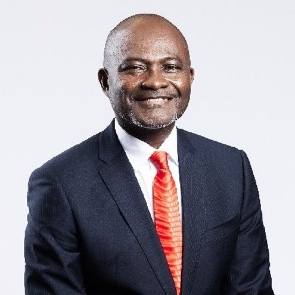
Lawyer Paul Twum Barimah
Former Member of Parliament for Dormaa East and legal practitioner, Lawyer Paul Apreku Twum Barimah, has criticised what he describes as attempts by some elements within the National Democratic Congress (NDC) to influence public debate over the interpretation of Article 66(2) of the 1992 Constitution, insisting that the Supreme Court is capable of interpreting the law independently.
Speaking on the constitutional provision governing presidential term limits, Mr. Twum Barimah argued that the Constitution is explicit and leaves no room for an interpretation that would permit a person who has already been elected President twice to contest the office again.
According to him, Article 66(2) clearly states:
“A person shall not be elected to hold office as President of Ghana for more than two terms.”
He maintained that the provision places an absolute limit of two elected presidential terms, irrespective of whether those terms are consecutive or separated by a period out of office.
“The Supreme Court judges are highly experienced and knowledgeable. They understand the Constitution and will not be swayed by political pressure or partisan interests,” he said.
Mr. Twum Barimah described attempts to seek an alternative interpretation of the constitutional provision as unnecessary, arguing that the wording of Article 66(2) is “plain, clear and unambiguous.”
He explained that a President elected twice—whether the two terms are served consecutively or after an interruption—is constitutionally ineligible to seek election for a third term.
According to him, any contrary interpretation would undermine the spirit and letter of Ghana’s Constitution and could create uncertainty within the country’s constitutional democracy.
“The Constitution does not distinguish between consecutive and non-consecutive terms. Once a person has been elected President on two occasions, that person cannot contest again,” he asserted.
Mr. Twum Barimah further warned that any interpretation expanding eligibility beyond two elected terms could generate unnecessary constitutional controversy and potentially affect Ghana’s democratic stability.
The Supreme Court Case
His comments follow the filing of a writ at the Supreme Court by Ganiwu Alhassan, a teacher from Kpandai in the Northern Region, who is seeking a judicial interpretation of Article 66(2).
The suit, filed on July 9, 2026, asks the Court to determine whether a person who has served two separate, non-consecutive terms as President remains constitutionally eligible to contest the presidency again.
According to the writ, the plaintiff contends that Article 66(2), properly interpreted, bars only a person who has served two consecutive terms, and therefore does not prohibit someone who previously served two non-consecutive terms from seeking election again.The Attorney-General has been named as the defendant in the case.