By Kwabena Adu Koranteng
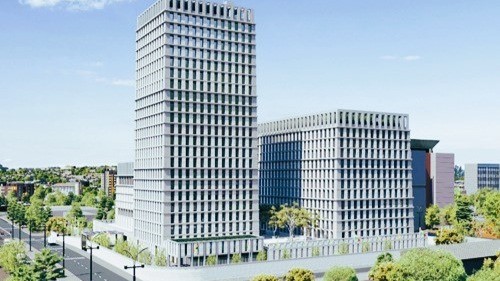
If reports and suggestions that the government is considering selling or leasing the newly constructed Bank of Ghana headquarters are true, then Ghana is standing at the edge of yet another historic mistake, one that future generations will neither forgive nor forget.
The Bank of Ghana headquarters is not just a building made of concrete, steel and glass. It is a national symbol. It represents the sovereignty, financial independence and economic authority of the Republic of Ghana. To put such a strategic national asset on the market would amount to mortgaging a piece of Ghana’s sovereignty.
Over the past four decades, Ghanaians have witnessed the systematic disposal of state-owned enterprises under the banner of divestiture, restructuring and economic reforms. Factories built with the sweat and resources of the Ghanaian people were sold off one after another. Hotels, manufacturing plants, agro-processing industries, steel factories, bottling companies and commercial assets that once formed the backbone of Ghana’s industrial economy disappeared into private hands.
The tragedy is that many of these assets were established during the industrial revolution spearheaded by Ghana’s founding President, Kwame Nkrumah. Nkrumah understood that no nation could attain genuine economic independence without controlling its productive capacity. His vision transformed Ghana into one of Africa’s most industrialized economies at the time, with hundreds of factories spread across the country.
Then came the era of divestiture.
Ghanaians were promised efficiency. They were promised modernization. They were promised economic transformation. The argument was simple: sell state assets, attract investors and prosperity would follow.
Today, the evidence speaks for itself.
Many of the factories are gone. Thousands of jobs disappeared. Entire industries collapsed. Strategic sectors fell under foreign control. Yet the economic miracles that justified the sale of those assets never materialized to the extent promised.
The list is long and painful: GHACEM shares, Nsawam Cannery, Abosso Glass Factory, Tema Steel Company, GIHOC Bottling Company, West Africa Mills Company, Atlantic Hotel, Meridian Hotel, Star Hotels and many others. One by one, national assets built with public funds were transferred away from public ownership.
Now, after decades of selling Ghana’s economic inheritance, we are being told that even the new Bank of Ghana complex may not be safe.
What next?
Will Parliament be sold?
Will the Jubilee House be leased?
Will our ports, airports and military installations be placed on the auction block whenever governments face financial difficulties?
A nation cannot sell its way into prosperity.
No serious country develops by continuously disposing of strategic national assets. Countries become prosperous by creating wealth, expanding production, protecting national interests and managing public resources responsibly.
The new Bank of Ghana headquarters was built to serve Ghana for generations. Whether one supported the government that constructed it or not is irrelevant. Once completed, it became the property of the Republic of Ghana—not a political party, not a government and certainly not a group of temporary office holders.
Governments come and go.
National assets remain.
The current debate goes beyond politics. It is about whether Ghana has learned anything from its past. It is about whether we are prepared to preserve strategic assets for future generations or continue the cycle of selling national property whenever economic pressures arise.
History teaches us that once strategic assets are sold, they are rarely recovered. Future governments spend decades attempting to rebuild what previous administrations disposed of within a few signatures.
The Bank of Ghana headquarters is more than a building. It is a statement of national confidence, institutional permanence and economic sovereignty.
Selling it would send a dangerous message to investors, citizens and the international community—that Ghana has become so desperate that it is prepared to auction even the symbols of its monetary independence.
That would be a national embarrassment.
Ghana must not repeat the mistakes of the past.
The Bank of Ghana complex must remain the property of the Ghanaian people.
Anything less would be a betrayal of our sovereignty and a stain on our national conscience.