Kwabena Adu Koranteng Writes
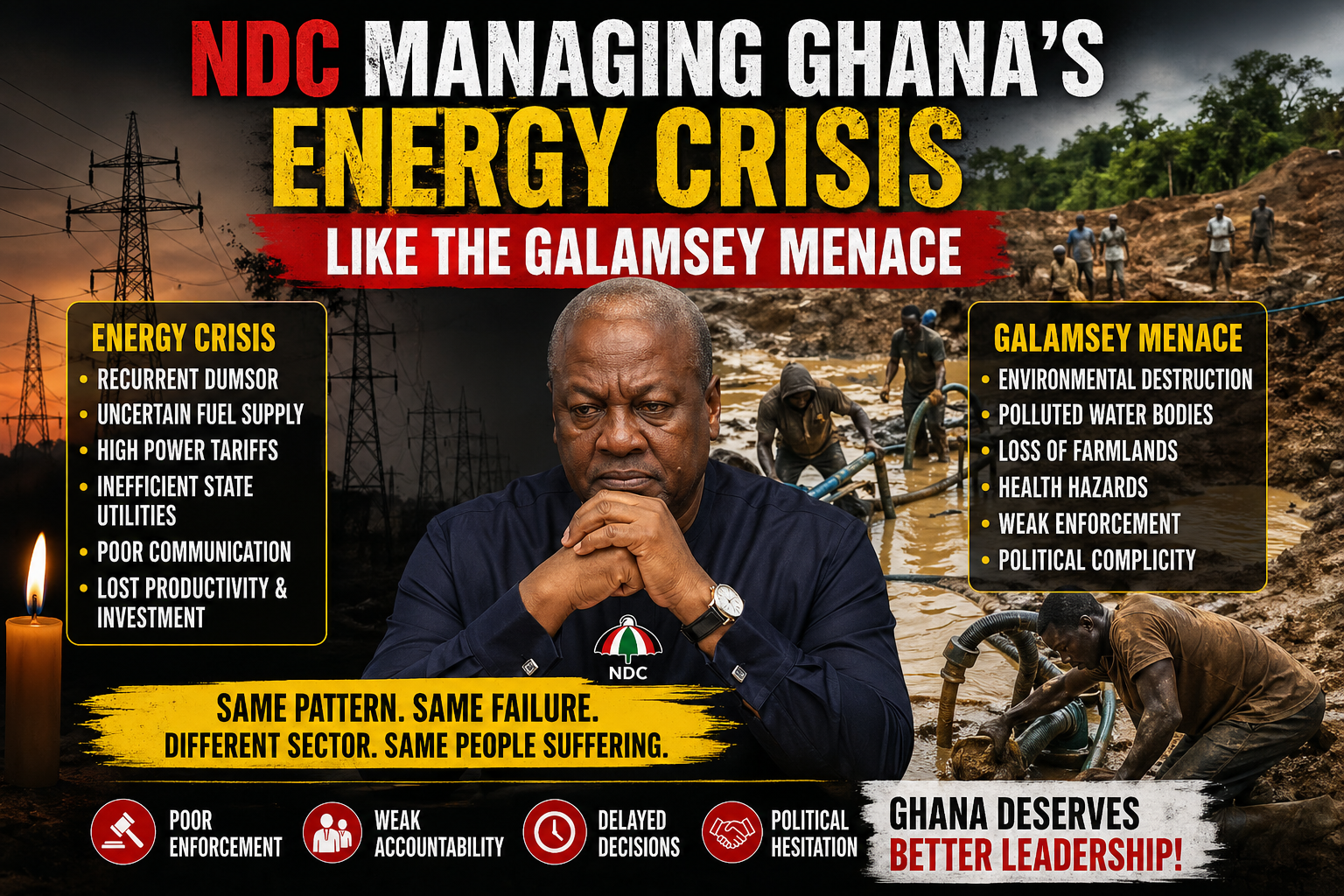
Ghana’s energy situation has remained unstable since the Mahama administration assumed office in January 2025. Many Ghanaians had hoped that, based on its previous experience in government, the administration would effectively manage the sector. However, recent developments suggest otherwise.
The painful memories of the 2012–2016 power outages—popularly known as dumsor—are still fresh in the minds of citizens. While there was initial optimism that history would not repeat itself, the current trajectory raises serious concerns. Despite the efforts made by the previous NPP administration to stabilize power supply, the country now appears to be slipping back into uncertainty, raising fears of a deepening energy crisis.
Equally troubling is the escalating illegal mining (galamsey) menace. In 2024, President John Mahama pledged to declare a state of emergency to combat illegal mining. That promise, however, remains unfulfilled. Instead, the establishment of GoldBod—an agency reportedly tasked with purchasing gold, including from informal sources—has sparked controversy. Critics argue that this policy risks legitimizing and indirectly encouraging illegal mining activities, thereby worsening environmental degradation.
Today, illegal mining continues to devastate Ghana’s environment. Rivers and water bodies are increasingly polluted, with reports suggesting that a significant proportion have been affected by harmful chemicals such as mercury and cyanide. These pollutants pose serious health risks, contributing to rising cases of kidney and liver diseases in affected communities.
The gravity of the situation was underscored recently when the Chairman of the Church of Pentecost announced that the Church has suspended baptisms in natural water bodies due to contamination, opting instead for artificial means. This development highlights the extent to which environmental degradation is affecting even religious practices.
Taken together, the worsening energy challenges and the unchecked spread of illegal mining point to a broader leadership and governance crisis. Ghana stands at a critical juncture. What is urgently required is decisive leadership, clear policy direction, and a genuine commitment to safeguarding both the nation’s energy security and its natural resources.
Without bold and effective action, the consequences for public health, economic stability, and future generations could be severe.