Ghana is laying the groundwork for a significant shift in how it measures national progress, with the Ghana Statistical Service advocating a broader framework that evaluates development through well-being, environmental sustainability, social inclusion and resilience, rather than relying solely on Gross Domestic Product.
The proposal was discussed at a policy workshop themed “Measuring What Matters in Ghana: Inclusive and Sustainable Growth Beyond GDP,” and signals a gradual evolution in Ghana’s economic governance as policymakers seek more comprehensive data to guide fiscal planning, public investment and long-term development.
While GDP will remain the principal measure of economic activity, the GSS argues that output figures alone do not fully show whether growth is improving living standards, reducing inequality, protecting natural resources or strengthening the economy’s resilience to future shocks.
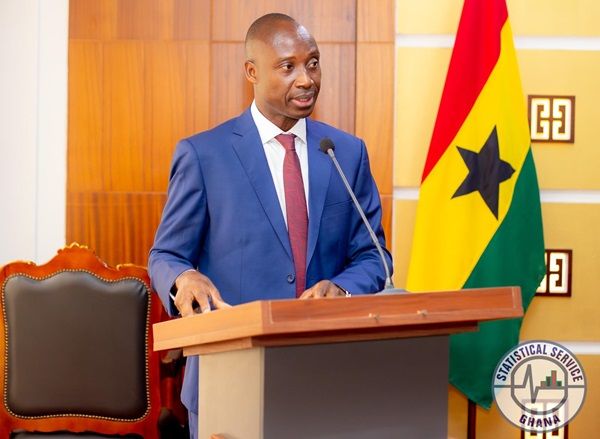
Speaking on behalf of Government Statistician Dr Alhassan Iddrisu, Acting Deputy Government Statistician for Economic Statistics and Data Science, Francis Bright Mensah, said Ghana has an opportunity to develop a national measurement framework that better reflects the priorities and lived experiences of its citizens.
“For more than half a century, GDP has served as the world’s benchmark for measuring economic success. Yet it cannot fully explain whether growth is inclusive, sustainable or improving quality of life,” he noted.
The initiative reflects a growing global shift among governments, statistical agencies and international institutions to supplement traditional national accounts with indicators that track social progress, environmental health, inequality, institutional strength and long-term economic resilience.
For Ghana, the timing is significant. The economy has regained momentum, expanding by 6.40% in the first quarter of 2026 after years of macroeconomic adjustment under an IMF-supported reform programme.
But as growth accelerates, policymakers are under increasing pressure to ensure that the recovery translates into real improvements in household welfare, job creation, social mobility and environmental sustainability, rather than simply stronger output numbers.
Officials say the proposed framework will strengthen evidence-based policymaking by helping government assess whether the benefits of growth are being widely shared, whether natural capital is being preserved, and whether current development patterns are sustainable for future generations.
The expanded measurement system is expected to build on existing national initiatives, including the Sustainable Development Goals, environmental-economic accounting and natural capital accounting, while integrating new indicators into Ghana’s national statistical framework.
Such a framework could allow government to better track the quality of growth, not just its speed. This would mean measuring whether higher output is accompanied by better health and education outcomes, reduced regional inequality, decent jobs, environmental protection and improved resilience against climate and economic shocks.
For investors, the initiative represents a maturation of Ghana’s economic policy architecture. Beyond headline GDP growth, future policy decisions may increasingly be informed by indicators that measure environmental risks, social outcomes and institutional resilience — metrics that are becoming more relevant to development finance institutions, ESG-focused investors and multilateral lenders.
The shift could also affect how public investment decisions are assessed. Projects may increasingly be judged not only by their contribution to economic output, but also by their impact on livelihoods, climate adaptation, inclusion and long-term national resilience.
Although GDP will continue to anchor macroeconomic management, the GSS believes a broader dashboard of development indicators will give policymakers a more accurate picture of Ghana’s economic trajectory.
The broader message from the workshop is that growth must be judged not only by how much the economy produces, but also by who benefits, what is depleted in the process, and whether today’s gains are sustainable tomorrow.
For Ghana, the move beyond GDP could mark an important step towards a more balanced development model one that treats economic expansion, social progress and environmental sustainability as connected parts of the same national growth story.