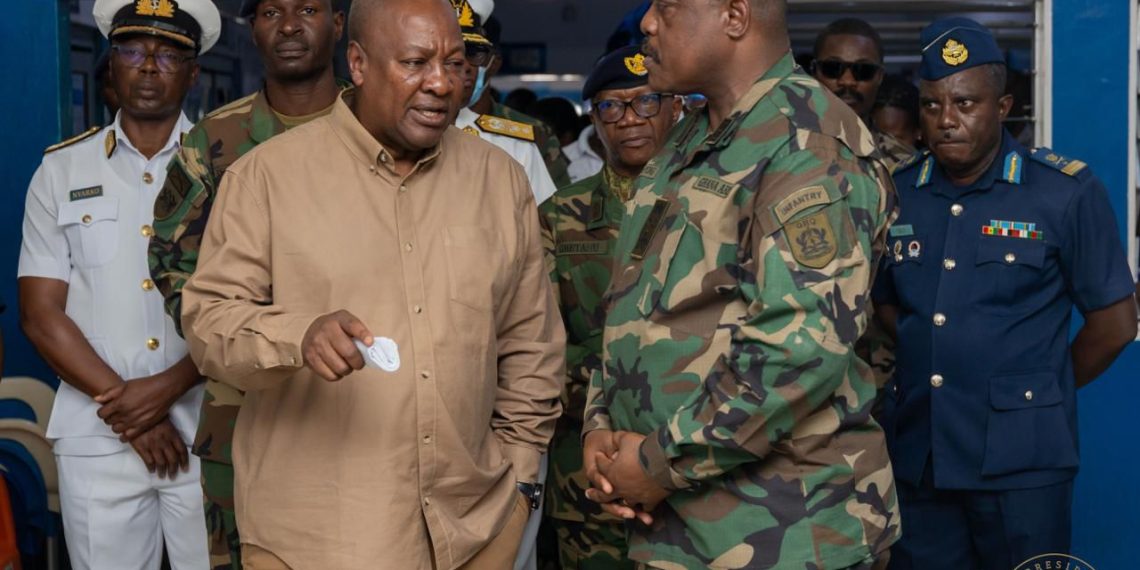
The Ghana Catholic Bishops’ Conference has mounted fresh pressure on President John Dramani Mahama to declare a targeted state of emergency in communities severely affected by illegal mining, popularly known as galamsey, warning that existing government interventions have failed to deliver the promised results.
In a strong-worded intervention, the Bishops said the continued destruction of Ghana’s water bodies, forest reserves and agricultural lands required extraordinary measures, insisting that the time had come for the government to adopt a more decisive approach to confronting the environmental menace.
The Conference made the demand in a communiqué issued at the end of its annual plenary assembly held at Jamasi in the Ashanti Region on Saturday, November 14, 2026.
According to the Bishops, the government’s interventions under President Mahama have so far failed to achieve the desired results, making a targeted state of emergency necessary in the worst-affected mining communities.
“Considering that the interventions put in place by the government of President Mahama are so far not producing the desired, promised and expected end of the menace of galamsey, we believe that it is NOW time to declare a targeted state of emergency in the locations most affected by illegal and irresponsible mining,” the communiqué stated.
The religious leaders called on President Mahama, to demonstrate greater courage, political will and determination in protecting Ghana’s natural environment.
MAHAMA UNDER PRESSURE
The Bishops’ intervention represents a significant challenge to the government’s handling of illegal mining, particularly as public concerns continue to mount over the pollution of rivers, destruction of forest reserves and loss of agricultural lands.
Their demand for a targeted state of emergency suggests that the Catholic Church believes conventional enforcement measures have not been sufficiently effective in stopping the activities of illegal miners.
The Conference further explained that the proposed emergency should create an opportunity for the development and implementation of comprehensive national regulations to ensure responsible and environmentally sustainable mining.
The Bishops expressed deep concern about the devastation caused by illegal and irresponsible mining, particularly its impact on water bodies, forest reserves, agricultural production and public health.
“We remain deeply concerned about the devastation caused by illegal and irresponsible mining (galamsey),
particularly the pollution of water bodies, destruction of forest reserves, degradation of agricultural lands and threats to public health,” they stated.
GO AFTER GALAMSEY KINGPINS
In what could be interpreted as a call for a more comprehensive crackdown, the Catholic Bishops insisted that the fight against illegal mining must go beyond occasional security operations and arrests.
They argued that authorities must confront the powerful networks and individuals who facilitate and sustain illegal mining activities.
The Conference specifically called for accountability, sustainable alternative livelihoods for affected communities and greater participation by local populations in protecting the environment.
“The fight against galamsey must confront networks of complicity, ensure accountability, provide sustainable livelihood alternatives and promote community participation in environmental protection,” the communiqué stressed.
The Bishops also called on regulatory institutions, security agencies, traditional authorities, religious leaders and ordinary citizens to pool their resources and work together to defeat what they described as a common enemy..
DRUG TRAFFICKING ALSO WORRIES BISHOPS.
Beyond the environmental crisis, the Catholic Bishops raised serious concerns about the alarming levels of drug trafficking and substance abuse in the country.
They warned that the growing menace threatened public health, family stability, youth development and national security.
The Conference consequently urged relevant state institutions to intensify intelligence-led enforcement operations, strengthen border controls and expand public education and rehabilitation services.
Families, schools and religious institutions were also encouraged to strengthen preventive education and provide support for persons struggling with substance dependency.