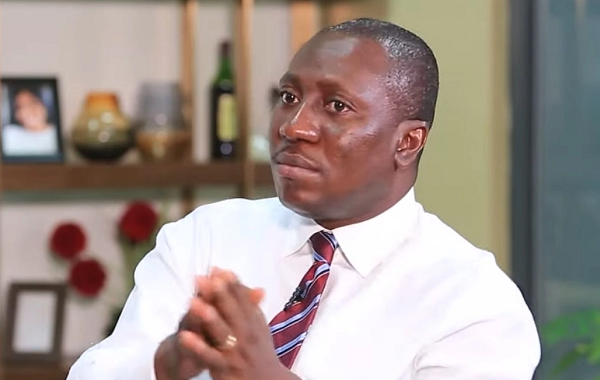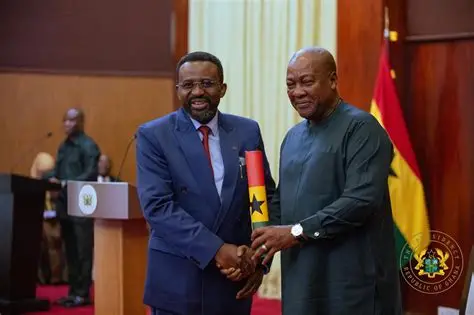
The Governor of the Bank of Ghana (BoG), Dr Johnson Pandit Asiama, has stepped away from the Board of the Ghana Gold Board (GoldBod), with the central bank now appointing Second Deputy Governor, Mrs Matilda Asante-Asiedu, to represent it
The development comes amid growing questions over the relationship between the Bank of Ghana and GoldBod, particularly the central bank’s role in financing GoldBod’s gold-purchasing operations and concerns raised over reported losses associated with the Domestic Gold Purchase Programme.
The Bank of Ghana confirmed on Monday, September 28, 2026, that Dr Asiama ceased to serve on the GoldBod Board effective May 11, 2026.
According to the BoG, Dr Asiama has not participated in any GoldBod Board meeting or activity since that date. Mrs Asante-Asiedu has subsequently assumed the role of representing the central bank on the Board.
Dr Asiama himself disclosed the resignation at the Bank of Ghana’s Monetary Policy Committee press conference on September 24, saying he had resigned approximately five months earlier and no longer attended GoldBod Board meetings.
“I resigned from the GoldBod Board about five months ago or so. I do not attend board meetings at the GoldBod at all,” he said.
His disclosure followed renewed scrutiny of his membership of the GoldBod Board and questions about whether his simultaneous position as BoG Governor could create a conflict of interest.
Former Finance Minister and Karaga MP, Dr Mohammed Amin Adam, had on September 1 called for Dr Asiama’s removal from the GoldBod Board.
Dr Amin Adam argued that the arrangement raised governance and conflict-of-interest concerns because the Bank of Ghana was involved in financing GoldBod while the Governor was also sitting on the institution’s governing board. He also questioned the financial relationship between the two institutions and called for greater disclosure of the transactions.
Dr Asiama, however, has maintained that his presence on the GoldBod Board was not personally required by law.
He explained that the Ghana Gold Board Act, 2025 (Act 1140), provides for the Bank of Ghana to be represented on the GoldBod Board either by the Governor or another Bank official of the required rank.
“The law that governs the activities of the GoldBod, there’s a provision there for the Bank of Ghana to be represented either by the Governor or any other official up to the rank of a director,” Dr Asiama said.
“It does not necessarily need the Governor to be there.”
GoldBod’s own published description of its governing board confirms that the legislation provides for the Governor of the Bank of Ghana or a representative of the Governor not below the rank of director to sit on the Board.
With Dr Asiama’s departure, the BoG has nominated its Second Deputy Governor, Mrs Matilda Asante-Asiedu, as its representative on the GoldBod Board.
The central bank said the appointment fulfils the statutory requirement for BoG representation on the Board.
It further stated that it remains committed to “the highest standards of governance, transparency and the avoidance of any actual or perceived conflict of interest” in carrying out its mandate.
The change comes at a time when GoldBod has become increasingly important to Ghana’s gold economy, holding exclusive rights to buy, sell, weigh, grade, assay, value and export gold and other precious minerals under its governing framework.
QUESTIONS REMAIN
While Dr Asiama’s resignation settles his personal participation on the GoldBod Board, questions surrounding the financial and institutional relationship between the two entities remain part of the public debate.
Dr Amin Adam has called for greater disclosure of GoldBod’s financial arrangements and questioned reported differences in figures concerning losses and transactions involving the gold-purchasing programme. These are allegations and political claims that have been disputed or subject to differing institutional accounts.
The latest development therefore leaves Mrs Asante-Asiedu carrying the BoG’s representation on the GoldBod Board as scrutiny of the gold-buying programme, its financing arrangements and governance structure continues.
For now, the BoG Governor is out of GoldBod—but the questions surrounding the relationship between the central bank and the country’s gold-buying authority remain.