By Kwabena Adu Koranteng
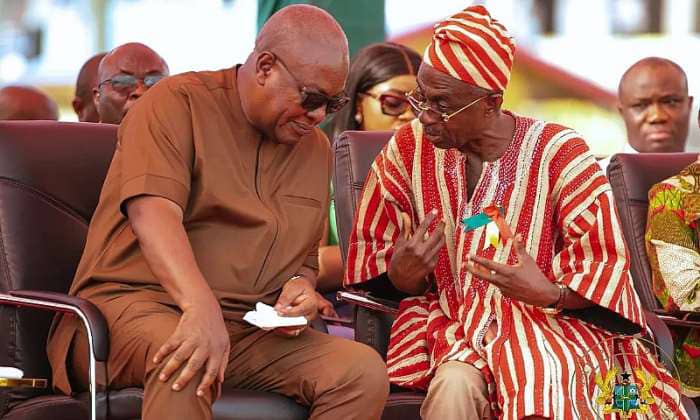
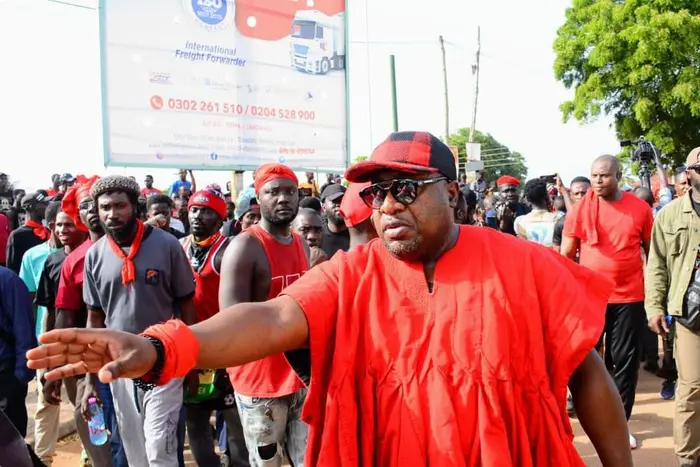
The battle for the future of the National Democratic Congress (NDC) could be heading towards a dramatic confrontation between President John Dramani Mahama and the party’s National Chairman, Johnson Asiedu Nketia, popularly known as “General Mosquito.”
The current national Chairman of the NDC, Johnson Asiedu Nketia has decided not to run for the party’s chairmanship position again and refused to pick form to contest. He is now eying the presidency. He wants to become the flagbearer of the NDC and lead the party to the 2028 General elections. He is the only obstacle to John Mahama’s 3rd term ambition. This means that Mahama would have to contest Asiedu Nketia in an impending primaries if he wants to contest for the 2028 general elections.
Currently, President Mahama has been able to draw the Judiciary , and the parliamentary majority closer to him to pursue the 3rd term agenda as well as some members of the NDC. His only obstacle is Jonson Asiedu Nketia popularly known as general mosquito. General mosquito is determined to become the next flagbearer after Mahama ends his term , but Mahama wants to come back and his 3rd teem could be supported by a supreme Court declaration and or a majority decision following amendments to the Constitution and referendum. Information indicates that the referendum could be held alongside the district assembly elections
President Mahama’s return to power has placed him at the centre of the NDC’s political calculations.
A contest between the President and the National Chairman in a presidential primaries would be particularly significant because it would pit the authority of an incumbent head of state against the organisational experience and political network of a long-serving party leader.
Beyond the internal NDC contest lies a more fundamental question: can Mahama constitutionally seek another presidential term in 2028?
Article 66(2) of Ghana’s 1992 Constitution provides that a person shall not be elected President of Ghana for more than two terms.
Mahama previously served as President from 2012 to 2017 and returned to office in January 2025 after winning the December 2024 election.
His previous presidential service, therefore, is central to any discussion of whether he could lawfully seek another election.
The constitutional restriction cannot simply be overcome by a political agreement within the NDC, a parliamentary majority or a party primary.
Any proposal to alter the presidential term limit would have to confront the constitutional text and the applicable amendment procedures.
In particular, Article 66(2) is among the entrenched provisions of the Constitution. Article 290 prescribes a demanding procedure for amendments to entrenched provisions, including parliamentary and referendum requirements.
A referendum would therefore not, by itself, automatically authorise a third presidential term. The prescribed constitutional process would have to be followed, and any proposed amendment would have to be assessed against the Constitution’s substantive provisions and applicable legal requirements.
Speculation about a possible constitutional referendum has added another dimension to the debate.
One suggestion circulating in the political discussion is that a referendum could be coordinated with District Assembly elections to reduce logistical costs and consolidate electoral activities.
If the President and the National Chairman pursue conflicting political objectives, party members could find themselves divided between competing camps. Such divisions could affect the NDC’s preparations for the 2028 elections.
ASIEDU NKETIA THWARTS MAHAMA’S THIRD-TERM AMBITION