The Ghana Tourism Report 2025 is a comprehensive assessment of Ghana’s tourism sector performance and development. The Research, Monitoring and Evaluation Department of the Ghana Tourism Authority (GTA) produced the report to provide reliable data for planning, policy formulation, investment, and decision-making. It examines both international and domestic tourism, visitor behavior, tourism expenditure, tourism businesses, visitor satisfaction, regional tourism development, and special tourism events.
The central theme of the report is “Resilience and Sustainable Growth.” This theme reflects the tourism sector’s ability to recover from previous disruptions while moving towards a more organized and sustainable form of development. The report emphasizes that Ghana’s tourism development should not only focus on attracting more visitors but also on improving the quality of tourism experiences, supporting local communities, protecting cultural and natural resources, and creating long-term economic opportunities. The following emphasizes on the development of the tourism sector
I. Performance of international tourism
One of the major areas covered by the report is international tourism. Ghana recorded 1,306,962 international arrivals in 2025, representing a 1.4% increase compared with the previous year. The report therefore describes international tourism as showing modest growth.
The average international visitor stayed in Ghana for approximately 13 nights, indicating that visitors continued to spend a considerable amount of time in the country. Business affairs were the leading purpose of international visits, accounting for 31% of arrivals. This demonstrates the importance of Ghana as a business and commercial centre within the West African region.
However, the report also identifies an important concern: although the number of international visitors increased, average visitor expenditure declined from US numbers3, 742. 98 alone 𝑖𝑛 2024 may𝑡𝑜𝑈𝑆 not necessarily result in higher tourism revenue. Consequently, 3,319.90 in 2025. This suggests that increasing visitor the report points towards the importance of attracting higher-value visitors and developing premium tourism experiences.
II.Growth of domestic tourism
Domestic tourism is one of the strongest areas highlighted in the report. In 2025, Ghana recorded 1,793,797 visits to 55 tourist sites. Residents accounted for 84% of these visits, showing that Ghanaians themselves were the largest group visiting the country’s tourist attractions. Domestic tourism increased by 7%, from 1,681,985 visits in 2024 to 1,793,797 visits in 2025. The report describes internal tourism as an important pillar of the sector because it supports local businesses, contributes to regional development, and strengthens the resilience of the tourism industry.
This is important because domestic tourists spend money on transportation, accommodation, food, entrance fees, souvenirs, entertainment, and other services. This spending can circulate within local economies and create opportunities for businesses and communities around tourist destinations.
III.Concentration of tourism in some regions
The report also identifies an uneven distribution of tourism activity across Ghana. The country’s most popular tourist sites are concentrated largely in Greater Accra, Central, Ashanti, and Eastern Regions.
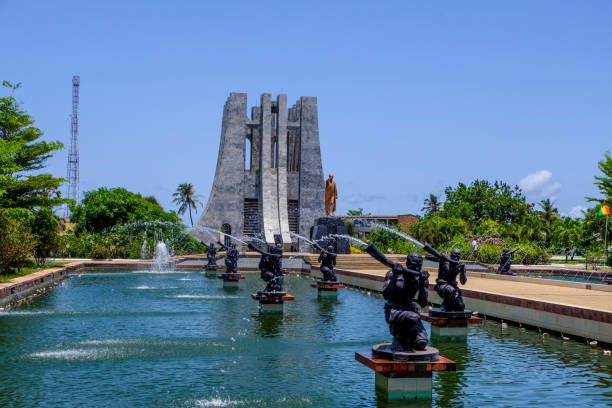
The top ten tourist sites alone recorded 1,377,588 visits, representing 77% of total visitation to the 55 sites covered. The Kwame Nkrumah Memorial Park was the most visited site, recording 302,523 visits. Other highly visited attractions included Kakum National Park, Bunso Arboretum, Cape Coast Castle, Manhyia Palace Museum, Kumasi Zoo, Accra Zoo, Elmina Castle, Shai Hills Resource Reserve, and Aburi Botanical Garden.
The concentration of visitors in a few regions indicates that there is still considerable potential for tourism development in less-visited parts of Ghana. The report points to factors such as differences in tourism infrastructure, accessibility, visibility, and demand as possible reasons for this uneven distribution.
IV.Tourism and local economic development
A major implication of the report is the relationship between tourism and local economic development. Tourism not only benefits major tourism institutions; it can also support businesses and individuals within communities where attractions are located. When visitors travel to a destination, they may use hotels, restaurants, taxis, tour guides, shops, entertainment facilities, craft markets, and other services.
This creates opportunities for local businesses and can contribute to employment and income generation.
The report specifically describes internal tourism as supporting local businesses and regional development. Therefore, expanding domestic tourism can help distribute the economic benefits of tourism beyond the major tourism centres.
V.Growth of tourism enterprises
The report also shows growth in the formal tourism business sector. The number of licensed tourism enterprises increased from 6,702 in 2024 to 7,109 in 2025. These enterprises include accommodation facilities, food, beverage and entertainment businesses, as well as travel-trade enterprises. Travel trade recorded particularly strong growth, increasing by 18.6%, while the entertainment and conference segment grew by 14.3%.
The increase in licensed businesses indicates an expanding tourism ecosystem and provides more opportunities for private-sector participation in tourism.
VI.Special tourism events
The report also examines specific events that attract visitors and generate economic activity. These include the Kwahu Easter Paragliding Festival,
PANAFEST/Emancipation celebrations, and December in GH.
For example, the Kwahu Easter Paragliding Festival attracted many young visitors and contributed to the performance of accommodation and other hospitality businesses in the Eastern Region. The report therefore demonstrates how festivals and special events can become tourism products that generate spending and support local economic activity.
PANAFEST and Emancipation also attracted both Ghanaian residents and international visitors, while December in GH recorded strong participation and positive visitor experiences.
VII.Cruise tourism
Cruise tourism is another area discussed in the report. Ghana recorded 18 cruise ship calls involving 5,488 passengers in 2025. Cruise ships arrived through the ports of Takoradi and Tema. Although cruise tourism remains relatively small compared with Ghana’s total international arrivals, the report identifies it as a potentially important niche. Cruise visitors can be introduced to Ghanaian heritage sites, cultural experiences, crafts, and coastal attractions.
VIII.Visitor satisfaction and Ghana’s image
Visitor experience is another important part of the report. International visitors generally expressed positive impressions of Ghana. Ghanaian friendliness was rated at 99%, while airport facilities and airport formalities were both rated at 98%. These findings show that hospitality and the experience visitors receive are important strengths of Ghana’s tourism sector. Maintaining good service quality is therefore important for encouraging repeat visits and strengthening Ghana’s reputation as a tourism destination.
IX.Sustainability and responsible tourism
The report places considerable emphasis on sustainable tourism development. It highlights areas such as eco-tourism, community-based tourism, and the preservation of cultural and heritage assets.
The idea is that tourism development should provide economic and social benefits without destroying the natural environment or cultural resources that attract tourists in the first place. This means that Ghana’s tourism growth needs to balance economic development with environmental protection and cultural preservation.
X.Overall message of the report
Overall, the 2025 Ghana Tourism Report presents a tourism sector that is growing and becoming more diversified, while also facing areas that require further attention. Domestic tourism showed particularly strong performance, while international arrivals recorded modest growth. The tourism business sector also expanded, and visitor satisfaction remained high.
At the same time, the report identifies issues such as the decline in average international visitor expenditure and the concentration of tourism activity in a few regions. These findings point to the need for Ghana to develop new tourism destinations, improve accessibility and infrastructure, increase the value generated from tourism, and ensure that tourism benefits communities across the country. In simple terms, the report shows that Ghana’s tourism sector is moving from recovery towards long-term growth. The future direction is not only to attract more tourists but to develop tourism that creates employment, supports local businesses, strengthens communities, protects Ghana’s natural and cultural resources, and generates sustainable economic benefits.