The growing attacks on Minority Leader Alexander Kwamena Afenyo-Markin following his explanation of the International Monetary Fund (IMF) report on the operations of the Ghana Gold Board (GoldBod) raise serious questions about Ghana’s commitment to democratic accountability and transparency.
Rather than addressing the substantive issues contained in the IMF report, elements within the governing National Democratic Congress (NDC) have reportedly resorted to personal attacks, name-calling and accusations against the Minority Leader.
Afenyo-Markin’s central message has been straightforward: if public resources have been exposed to massive losses, Ghanaians deserve answers.
The controversy centres on the IMF’s reported disclosure of losses associated with Ghana’s domestic gold purchasing operations, figures that have been interpreted as amounting to approximately GH¢22 billion.
Instead of providing a detailed explanation of the figures, the circumstances surrounding the losses and the safeguards put in place to prevent a recurrence, the response from some officials and their allies has focused heavily on attacking the messenger.
WHERE IS THE EVIDENCE?
One of the most serious allegations levelled against the Minority Leader is that he is an “extortionist.”
That allegation, however, demands evidence.
When exactly did Afenyo-Markin demand money from Sammy Gyamfi or his associates? What amount was allegedly demanded? From whom? For what purpose? Where is the evidence?
Political accusations of this nature cannot be allowed to substitute for evidence in a democracy.
If an elected Minority Leader has committed extortion, the appropriate response is not merely television commentary, social-media attacks or political insults. The appropriate response is to produce the evidence and, where necessary, invite the appropriate investigative authorities to examine the matter.
Until then, such allegations risk becoming nothing more than an attempt to divert public attention from the substantive questions surrounding GoldBod.
ATTACK THE ARGUMENT — NOT THE MAN
The conduct of public officials and their defenders must be subjected to scrutiny, particularly where billions of cedis of public resources are involved.
Afenyo-Markin, as Minority Leader, has a constitutional and political responsibility to scrutinise the government’s handling of public finances and state institutions.
Demanding transparency from GoldBod does not amount to an attack on Ghana.
Asking how losses occurred does not make anyone an enemy of GoldBod.
And explaining an IMF report does not constitute extortion.
Indeed, the real issue is not Afenyo-Markin’s personality. The real issue is the money.
Ghanaians deserve to know how the losses occurred, who authorised the relevant transactions,
what controls existed, whether those controls worked and what measures have been introduced to prevent similar losses.
SAMMY GYAMFI MUST ANSWER THE QUESTIONS
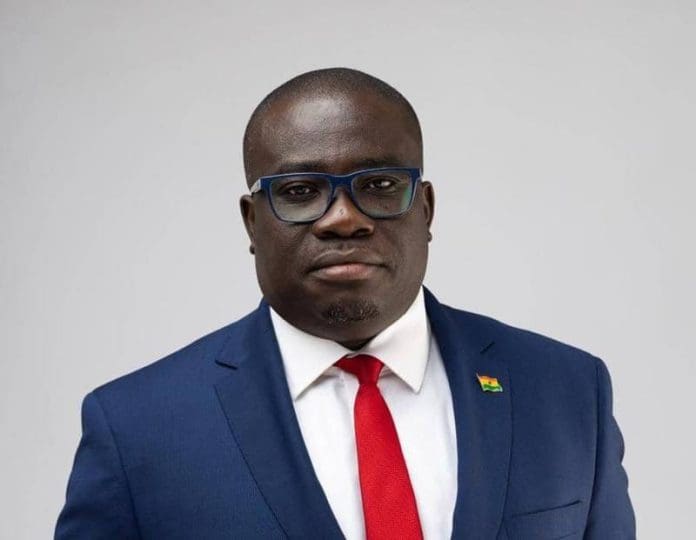
As Chief Executive Officer of GoldBod, Sammy Gyamfi occupies a position of enormous public responsibility.
The public therefore expects him to respond to questions concerning GoldBod’s operations with facts, figures, audited accounts and documentary evidence.
Personal attacks cannot replace financial explanations.
If the IMF report has been misinterpreted, GoldBod should provide the precise figures and explain the discrepancy.
If the reported loss has been misunderstood, the institution should demonstrate exactly how.
If the loss occurred under circumstances that were unavoidable, the public deserves to know why.
And if there were operational failures, Ghanaians deserve to know who was responsible and what accountability measures have been taken.
A DANGEROUS PRECEDENT FOR DEMOCRACY
What is particularly disturbing is the apparent effort to turn a legitimate parliamentary accountability question into a political battle against the individual raising the issue.
A democracy cannot function properly if public officials expect praise when things go well but respond to criticism by attacking their critics.
The Minority’s job is not to applaud every government decision.
Its job is to scrutinise, question and challenge the government where it believes public interest is at stake.
The same principle applies regardless of which political party occupies power.
Today it may be Afenyo-Markin. Tomorrow it could be another opposition politician, journalist, civil-society organisation or ordinary Ghanaian who asks uncomfortable questions.
If every demand for accountability is met with intimidation, insults and unsubstantiated allegations, Ghana’s democratic culture will suffer.
THE GOLD MUST NOT BECOME A POLITICAL SMOKESCREEN
GoldBod is too important to Ghana’s economy to become a battleground where political loyalty takes precedence over transparency.
The gold sector involves billions of dollars, foreign exchange, public resources and the economic interests of millions of Ghanaians.
It therefore requires extraordinary transparency.
The question confronting the nation is simple:
Were Ghanaian resources lost, how much was lost, why was it lost, and who must account for it?
Those questions will not disappear because Afenyo-Markin is attacked.