The political storm over Ghana’s gold economy has entered a new and potentially explosive phase, with the Minority in Parliament demanding a full-scale investigation into losses associated with the Bank of Ghana’s Domestic Gold Purchase Programme.
Minority Leader Alexander Afenyo-Markin has put the government, the Bank of Ghana and the Ghana Gold Board on notice, declaring that the Minority will return to Parliament with a fresh attempt to trigger a probe into the financial consequences of the programme.
At the centre of the controversy is an International Monetary Fund finding that the Domestic Gold Purchase Programme generated losses exceeding US$1.7 billion in 2025, equivalent to about 1.5 per cent of Ghana’s GDP.
For the Minority Leader , the figure represents approximately GH¢22 billion in economic losses and raises fundamental questions about who took the financial risks, who benefited from the transactions and who should ultimately answer to the Ghanaian taxpayer.
Afenyo-Markin argues that GoldBod operated as a buying agent for the Bank of Ghana under the previous financing structure, while the central bank provided the funding and absorbed costs associated with the arrangement.
The Minority leader is demanding disclosure of: the prices paid for gold; the methodology used to determine purchase prices; premiums paid to suppliers; the identities of off-takers; discounts applied to gold sold to buyers; fees earned by GoldBod; the commercial risks carried by GoldBod; the risks transferred to the Bank of Ghana; and the risk controls governing the transactions. These are not insignificant questions.
The Minority has raised an even more uncomfortable issue: the structure of the old arrangement.
Its argument is that where one institution earns transaction-related fees while another carries the principal financial risk, incentives must be subjected to extraordinary scrutiny.
In simple terms, the concern is this: If the volume of transactions generates fees for one institution while trading losses are ultimately borne elsewhere, who has the strongest incentive to control the risk?
Afenyo-Markin insists that the Minority does not oppose GoldBod itself.
He says the concept of using gold to strengthen Ghana’s reserves and support currency stability was part of the NPP’s 2024 policy platform.
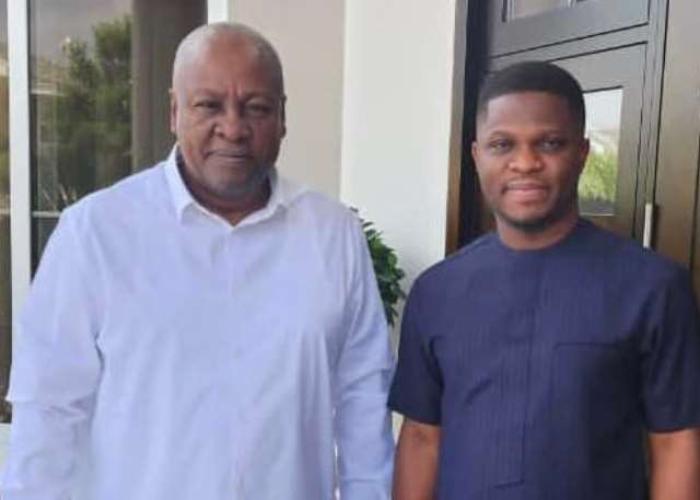
The Minority has now placed the responsibility squarely at the door of President John Dramani Mahama’s government.
The opposition is demanding that the administration explain the financial architecture of the programme and support a parliamentary investigation.
The pressure comes at a sensitive time for the government, which has made fiscal discipline and economic recovery central elements of its political narrative.
A US$1.7 billion loss associated with a major state economic programme therefore presents an awkward political question.
The government must explain whether the losses were an unavoidable cost of reserve accumulation, a consequence of exchange-rate mechanics, trading costs and fees, or evidence of weaknesses in the programme’s design.
It must also explain why the financing arrangement has now been fundamentally changed.
The Minority leader says the Minority will return to Parliament with a fresh attempt to secure a full probe, arguing that the latest IMF findings constitute new information.