Rabat is committing military, security and humanitarian resources to the protection of civilians, reconstruction efforts and the pursuit of lasting peace in the Middle East.
Rabat – Morocco has taken a further step in its commitment to peace in the Middle East by signing an agreement concerning its participation in the International Stabilization Force in Gaza. The decision, taken on the High Instructions of His Majesty King Mohammed VI, Chairman of the Al-Quds Committee, places the Kingdom among the first actors to translate their support for the stabilization process in the Gaza Strip into political and operational action.
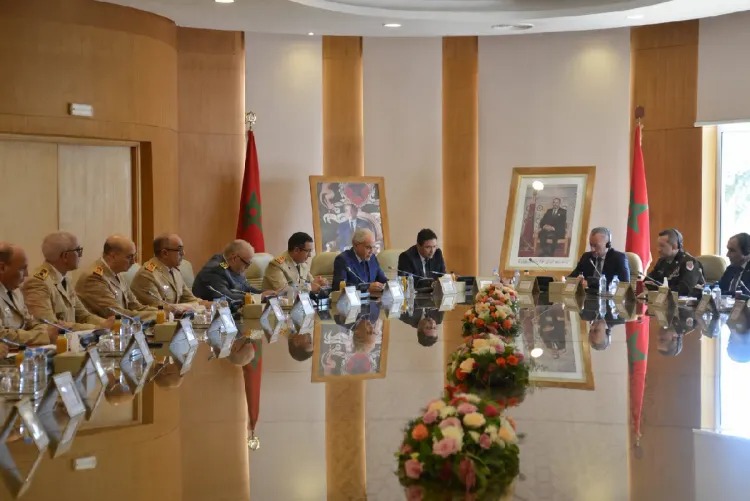
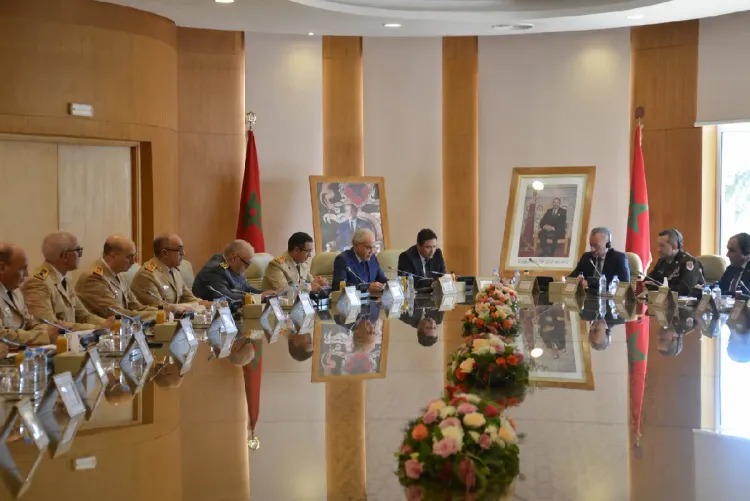
The agreement was signed in Rabat following a meeting between the Minister of Foreign Affairs, African Cooperation and Moroccan Expatriates, Nasser Bourita; the Minister Delegate in charge of the National Defence Administration, Abdeltif Loudyi; and the High Representative of the Peace Council for Gaza, Nickolay Mladenov.
The meeting was attended by senior Moroccan military and security officials, as well as the commander of the International Stabilization Force. It made it possible to define the legal, technical and operational framework of Morocco’s contribution.
According to the information released following the meeting, Morocco is the first country to sign an agreement of this kind with the Peace Council for Gaza. This pioneering position builds on the commitments made by the Kingdom during the inaugural meeting of the Peace Council, held in Washington on February 19, 2026.
Morocco’s participation reflects the consistent approach championed by King Mohammed VI: prioritizing concrete and pragmatic solutions capable of producing results that can be directly felt by the population.
The Kingdom’s action is fully consistent with its principled position in support of a just and lasting peace based on the two-state solution. Morocco therefore reaffirms its support for the establishment of an independent and sovereign Palestinian state within the borders of June 4, 1967, with East Jerusalem as its capital, living in peace and security alongside the State of Israel.
This diplomatic position seeks to reconcile the defence of the legitimate rights of the Palestinian people with the need for action on the ground to protect civilians, guarantee security and promote reconstruction.
Morocco’s contribution to the International Stabilization Force will not be limited to political or financial support. It notably provides for the deployment of senior officers from the Royal Armed Forces to the force’s joint command.
Officials from the Royal Gendarmerie and the General Directorate of National Security are also expected to participate in efforts to train and support the new Palestinian police force, which will be tasked with helping to restore public order during the transitional phase.
Morocco also plans to establish a military field hospital intended to meet the healthcare needs of the international force, as well as those of the population of Gaza.
At the same time, the Kingdom intends to contribute to programmes aimed at preventing extremism, promoting deradicalization and fostering tolerance, coexistence and dialogue.
These initiatives are in addition to Morocco’s financial contribution to the Peace Council. According to the information released, Morocco is said to have been the first country to make a payment into the budget of this body.
The Moroccan authorities have emphasized the nature of the International Stabilization Force’s mandate. It would be neither an occupying force nor a mechanism intended to support one side at the expense of another.
Its mandate is to secure the Gaza Strip during the transitional period, protect civilians, facilitate the return of displaced persons and create the conditions necessary for the delivery of humanitarian aid and the launch of reconstruction operations.
The force will also be required to support the training of a Palestinian police force capable of gradually assuming responsibility for security and public order.
From this perspective, Morocco’s participation is presented as a commitment to human life, civilian security and reconstruction. It seeks to consolidate a lasting ceasefire and facilitate the transition from a logic of confrontation to a process of political and security stabilization.
Morocco’s commitment is part of the continuity of the initiatives undertaken since the outbreak of the war in Gaza.
On royal instructions, Morocco has delivered several shipments of humanitarian and medical aid for the benefit of the Palestinian population. The Kingdom notably succeeded in delivering part of this assistance by land through an exceptional route negotiated with the parties concerned.
Nearly 280 tonnes of aid are reported to have been mobilized, including 180 tonnes in July 2025 and an additional 100 tonnes in August of the same year.
This assistance was supplemented by the interventions of the Bayt Mal Al-Quds Agency, the operational arm of the Al-Quds Committee, which works for the benefit of the Palestinian population, particularly in East Jerusalem.
The Agency carries out social, educational, healthcare and heritage-related projects, while also providing direct assistance to the most vulnerable groups. The financial contributions mobilized through this institution are reported to have exceeded $2.2 million as part of operations related to the crisis.
Morocco’s decision comes amid an exceptionally grave humanitarian situation. Civilian casualties, mass displacement, the destruction of infrastructure and the collapse of essential services have created immense needs.
The cost of rebuilding Gaza is estimated at tens of billions of dollars. Hospitals, schools, water networks, homes and energy infrastructure have been severely damaged.
In this context, Morocco believes that the international community cannot limit itself to declarations of principle. The priority must be to protect the population, enable displaced families to return and gradually restore the conditions required for normal life.
The stated objective is to allow children to return to school, hospitals to reopen and families to recover housing in a secure environment.
Morocco’s participation also rests on the experience accumulated by the Royal Armed Forces in peacekeeping operations conducted under the auspices of the United Nations.
For several decades, Moroccan contingents have operated in various regions of the world in the fields of security, civilian protection, medical assistance and humanitarian support.
This expertise gives the Kingdom a recognized operational capacity and strengthens the credibility of its commitment to the stabilization mechanism in Gaza.
Morocco’s status as an Arab and Muslim country, together with King Mohammed VI’s chairmanship of the Al-Quds Committee, also gives it particular legitimacy in addressing the Palestinian issue.
The Kingdom maintains relations with the various actors concerned and seeks to place this position at the service of balanced, realistic solutions that respect the rights of the Palestinian people.
By signing this agreement, Morocco intends to demonstrate that peace is built through concrete political, financial, security and humanitarian commitments.
Morocco’s contribution aims to support the transition, reduce the risk of renewed hostilities and create an environment conducive to the reconstruction of Gaza.
It is not a substitute for the pursuit of a comprehensive political solution. On the contrary, it must help create the conditions necessary for the revival of a genuine peace process.
For Rabat, the stabilization of Gaza cannot be sustainable without a clear political perspective based on the two-state solution, Palestinian sovereignty and respect for the security of all the populations of the region.
By deploying soldiers, police officers, gendarmes, doctors and humanitarian resources, Morocco thus seeks to help transform Gaza from a theatre of war and suffering into, gradually, a space of reconstruction, dignity and peace.