… As Questions Mount ON ABFA Allocation
Kwabena Adu Koranteng
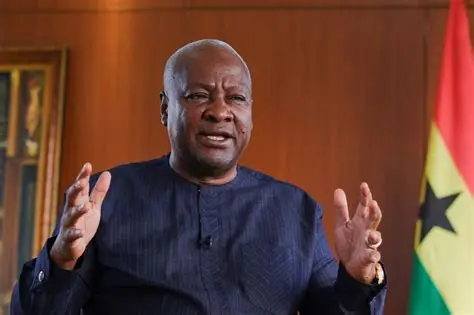
President John Dramani Mahama’s decision to allocate a staggering US$434.55 million of Ghana’s petroleum revenue to the proposed Accra-Kumasi Expressway is increasingly raising eyebrows among economists, policy analysts, and infrastructure experts amid concerns over transparency, cost uncertainty, and fiscal prudence.
The amount, drawn from the nation’s Annual Budget Funding Amount (ABFA) under the government’s flagship “Big Push” infrastructure programme, represents one of the most ambitious single allocations of oil revenue in recent history. Yet, beyond the political fanfare, critical questions remain unanswered: How much will the project actually cost? Who is executing it? What procurement process was followed? And can the allocated amount realistically complete the project?
Government has remained conspicuously silent on the details.
According to available budgetary allocations, the entire petroleum revenue earmarked under the ABFA for 2025 has been directed toward the proposed expressway project linking Accra and Kumasi , a highway expected to transform transportation between Ghana’s two largest commercial corridors.
However, economic analysts warn that US$434.55 million may merely scratch the surface of the financial requirements for a modern expressway of such magnitude.
Several infrastructure experts fear the project could eventually consume close to US$1 billion, with additional petroleum revenue allocations likely required in subsequent years to sustain construction. Some observers predict another substantial allocation from the 2026 petroleum receipts could be redirected in 2027 to supplement the current funding envelope.
The biggest concern, according to critics, is that government appears to be moving forward without publicly disclosing the total project cost, contractor details, financing structure, timelines, or contractual obligations.
“Transparency is essential when public petroleum revenues are involved,” one economic analyst cautioned. “You cannot commit nearly half a billion dollars of oil revenue to a mega project without full public disclosure of costs and procurement arrangements.”
Even more contentious is the argument by infrastructure economists that the government may be ignoring a cheaper and more practical alternative.
Critics argue that channeling the same US$434.55 million into completing the existing Accra-Kumasi Highway expansion project reportedly over 75 percent complete , could have delivered faster economic results at significantly lower cost.
In their estimation, such an investment would not only have accelerated completion of the current corridor but potentially generated surplus funds for additional national infrastructure projects.
Instead, they fear the government may be embarking on an expensive political showpiece project whose completion timeline remains uncertain.
With the next general elections expected in 2028, skeptics believe the expressway could become a major political campaign tool rather than a fully deliverable infrastructure promise.
Despite government optimism, industry experts insist it is highly improbable that a project of this scale would be fully completed by 2028, especially considering financing uncertainties, land acquisition challenges, environmental approvals, and procurement complexities that historically delay major infrastructure projects in Ghana.
For many observers, the central issue is not whether Ghana needs a modern Accra-Kumasi expressway — it undoubtedly does — but whether the country can afford to commit enormous petroleum revenues to a project whose full financial blueprint remains hidden from public scrutiny.
As billions of cedis in oil revenues continue to flow into national development, the pressure is mounting on the Mahama administration to answer one simple question:
Is the Accra-Kumasi Expressway a transformational national investment or an expensive political gamble financed by Ghana’s oil wealth?