By Kwabena Adu Koranteng, Financial and Economic Development Journalist

Every morning and evening in Accra tells the same frustrating story. Engines idle endlessly, horns blare impatiently, tempers flare, and productivity drains away—one traffic light at a time. From the northern and eastern corridors of the capital to its busiest interchanges, traffic congestion has become a daily ritual for commuters.
Yet, in the midst of these choking gridlocks, a curious contradiction persists: while long queues of vehicles stretch endlessly in one direction, traffic lights stubbornly grant green signals to almost empty roads in another. The problem is not a lack of roads—it is a lack of intelligence in how traffic is managed.
Ghana’s traffic light system remains largely static, operating on fixed time schedules that do not reflect real-time traffic conditions. These lights cannot “see” congestion building up, nor can they respond when traffic patterns change. In a fast-growing city like Accra, this outdated approach is no longer fit for purpose.
When Technology Fails to Keep Pace with Urban Growth
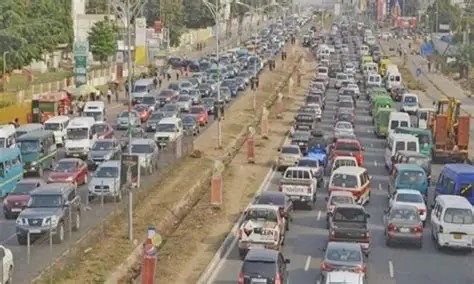
Accra’s rapid urbanisation, population growth, and rising vehicle ownership have far outpaced the capacity of existing traffic management systems. Rush-hour congestion on major highways has become the norm rather than the exception, costing the economy countless productive hours and burning millions of cedis in wasted fuel annually.
Ironically, even during peak congestion, traffic lights remain indifferent—oblivious to the fact that traffic from the northern and eastern parts of the city is mounting heavily, while roads in the south and west remain relatively free. This imbalance worsens congestion and heightens driver frustration.