Gold has always been more than a mineral to Ghana. It is a symbol of sovereignty, resilience, and economic security. In recent years, it also became a powerful financial tool one deliberately deployed to protect the nation’s economy from shocks and currency instability.
Between 2022 and 2025, the NPP government pursued a clear and strategic policy: build Ghana’s gold reserves. Through domestic gold purchases and reserve accumulation by the Bank of Ghana, the country’s holdings rose to over 30 tonnes. The objective was simple but critical to strengthen foreign reserves, stabilise the cedi, and restore investor confidence after years of economic turbulence.
That hard-won progress is now being rapidly undone.
Barely settling into office, the Mahama-led NDC government, operating through the Bank of Ghana under Governor Dr. Johnson Asiama, has reportedly sold about 19 tonnes of gold, slashing reserves to roughly 18.6 tonnes. In effect, more than half of Ghana’s strategic gold stockpile has been liquidated in record time.
The Bank of Ghana (BoG) is making headlines after an adjustment in the composition of the country’s international reserves, specifically through the liquidation of a portion of its gold holdings.
The gold holdings dropped from 37.1 tonnes to 18.6 tonnes between September and December 2025, about a 50% decline as a result.
This is not reform. It is regression.
From Strategic Buffer to Fire Sale
Gold reserves are not ordinary assets. Central banks hold them as a hedge against inflation, currency depreciation, and global financial instability. In uncertain times, countries accumulate gold—they do not rush to sell it.
Yet the NDC government has chosen the opposite path.
The sale of such a significant volume of gold raises uncomfortable questions. Why dispose of a long-term economic buffer so early in a new administration? What emergency justified this decision? And why has the government failed to clearly explain the economic rationale to Ghanaians?
The silence is telling.
A Familiar Economic Pattern
For many Ghanaians, this development feels disturbingly familiar. Under previous Mahama-NDC administrations, Ghana witnessed rising debt, weakened fiscal discipline, and growing dependence on short-term fixes rather than sustainable solutions.
Once again, the signs are emerging: sell national assets today to paper over policy gaps tomorrow.
Instead of building on the foundation inherited, the NDC appears determined to dismantle it—asset by asset, buffer by buffer. The gold reserves painstakingly built to protect the cedi are now being treated like expendable cash.
The Cost to Confidence
Markets thrive on confidence. Investors pay close attention to how governments manage strategic reserves. A country that rapidly sells off its gold without transparent justification sends a dangerous signal—that it is fiscally stressed, policy-light, and desperate for liquidity.
That signal weakens confidence in the cedi, undermines monetary credibility, and raises Ghana’s risk profile internationally.
At a time when global uncertainty remains high, Ghana should be strengthening its defences—not tearing them down.
Ghana Deserves Answers
Ghana’s gold does not belong to any political party. It belongs to the people—present and future. Decisions affecting such a critical national asset demand transparency, accountability, and a clear long-term vision.
So far, the Mahama-NDC government has offered none.
If the depletion of gold reserves continues unchecked, the consequences will not be political—they will be economic, painful, and long-lasting. The cedi will suffer, confidence will erode, and Ghanaians will pay the price.
This is not governance. It is economic short-sightedness.
And unless this trajectory is reversed, Ghana’s gold—once a shield—will become another casualty of NDC mismanagement.
For many observers, this raises questions about stability of the economy.
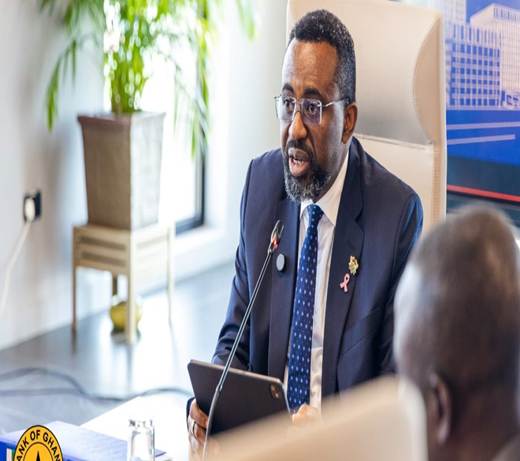
However, the decision by the Central Bank , according to The Governor of the Bank , Johnson Asiamah, was a deliberate rebalancing exercise to modernise the portfolio and reducing risk.
It will be recalled that Ghana held 30.53 tonnes of gold at the end of December 2024. In 2025, the Bank purchased an additional 10.32 tonnes. However, to reach the strategic target of reducing gold’s share of the GIR to 20%, the Bank divested approximately 22.24 tonnes on the international market.
This scale of rebalancing brought the total gold holdings from a peak of 38 tonnes in October 2025 to 18.61 tonnes by the end of the year. The Bank maintains that, this is strategic diversification, not a crisis response.
Reaction From The Bank Of Ghana
The Bank says it converted part of its gold portfolio into foreign exchange (FX) assets. It is important to note that this was not a write-down or a loss of national asset. Rather, the gold was sold on the international market to acquire other liquid assets.
This process is known as a reallocation – meaning the value remains within Ghana’s international reserves and is being actively reinvested into other instruments. Simply, a reallocation within reserves, not a drawdown of reserves.
Why was the decision taken?
The rationale was the sharp rise in global gold prices over the past two years. As gold prices surged, the value of gold as a percentage of Ghana’s Gross International Reserves (GIR) also increased significantly.
Before the rebalancing, gold accounted for over 40 per cent of Ghana’s total reserves.
In contrast, many peer central banks typically maintain gold holdings at approximately 20 to 25 per cent of their total reserves. This high concentration in a single asset class created two main issues.
One, heavy reliance on one asset increases exposure to potential price swings and two, any reduced balance hindered the overall liquidity and balance of the national portfolio. So divesting a portion of gold means the Bank was aligning the reserve composition more closely with international peer benchmarks for better liquidity.
Where did the money go?
The proceeds from the gold sales were not spent. Rather, it was redeployed into high-quality, liquid foreign exchange assets and fixed-income instruments. The Bank also employed a two-pronged management approach to ensure these funds continue to grow while maintaining safety.
The approaches were by reinvesting in instruments consistent with central bank reserve guidelines. In addition, a portion of the funds is being managed by professional external fund managers, a standard practice among central banks to enhance returns while maintaining strict risk controls.
Was it in line with best practices?
Globally, Central bank reserve management is generally guided by three core principles. Safety (capital preservation), liquidity and return. The Bank of Ghana’s actions are therefore consistent with these principles and international norms.
Periodically rebalancing a portfolio especially after significant movements in asset prices is considered prudent portfolio management. This ensures that the reserves remain diversified across different asset classes and avoiding excessive risk in any one area.
The Bank of Ghana has assured to closely monitor global market conditions and risk exposures. Further adjustments may be made in the future to safeguard the country’s external position. In summary, part of Ghana’s gold holdings was converted into FX to ensure the reserves remain intact, liquid and strong. It is only a stance of financial prudence rather than economic pressure.