A fierce political storm is brewing over Ghana’s cocoa sector, and once again COCOBOD has become the battlefield.
According to Dennis Miracles Aboagye, spokesperson for the Flagbearer of the New Patriotic Party {NPP} Dr Mahamudu Bawumia, the roots of today’s crisis trace back to 2015 when the NDC introduced cocoa roads in their current structure , a move critics say blurred the lines between agriculture and infrastructure spending.
A $1.8 billion syndicated cocoa loan meant for bean purchases allegedly became the turning point. Claims persist that hundreds of millions were redirected to road contractors , including a reported $400 million paid out in the final weeks after the 2016 electoral defeat.
The result? A debt burden estimated at GH¢19 billion.
When the NPP assumed office, it inherited a sector weighed down by obligations but still managed to purchase cocoa — even borrowing from the central bank to stabilise the system and maintain farmer payments.
At the heart of the allegations is a $1.8 billion syndicated cocoa loan secured under the NDC administration. The funds, intended to finance cocoa purchases, are now being cited as the genesis of the sector’s ballooning liabilities.
Aboagye claims the money was misapplied, arguing that significant portions were diverted into infrastructure spending rather than cocoa procurement — a move critics say destabilised the financial backbone of the industry.
Even more damning are allegations that between December 9 and December 30, 2016 — after the NDC had lost the general elections — nearly $400 million was paid out to road contractors without corresponding cocoa purchases.
the move represents one of the most controversial financial decisions in COCOBOD’s recent history.
A Mountain of Debt
The fallout, was a staggering debt burden estimated at roughly GH¢19 billion by the time power changed hands.
Miracles Aboagye argues that when the NPP assumed office in 2017, it chose stability over lamentation. He maintains that the new administration resorted to emergency borrowing from the central bank to sustain cocoa purchases and prevent a collapse in farmer payments.
In his telling, the sector was stabilised without imposing punitive losses on farmers — a sharp contrast to current tensions within the cocoa value chain.
Franklin Cudjoe Drawn Into Crossfire
The controversy has since widened, with policy analyst Franklin Cudjoe becoming a lightning rod in the debate. Aboagye blasted what he described as attempts to “gaslight the public,” warning critics against distorting what he insists are well-documented historical facts.
His message was blunt: voices unwilling to help secure better outcomes for cocoa farmers should refrain from inflaming the debate.
Farmers Caught in the Middle
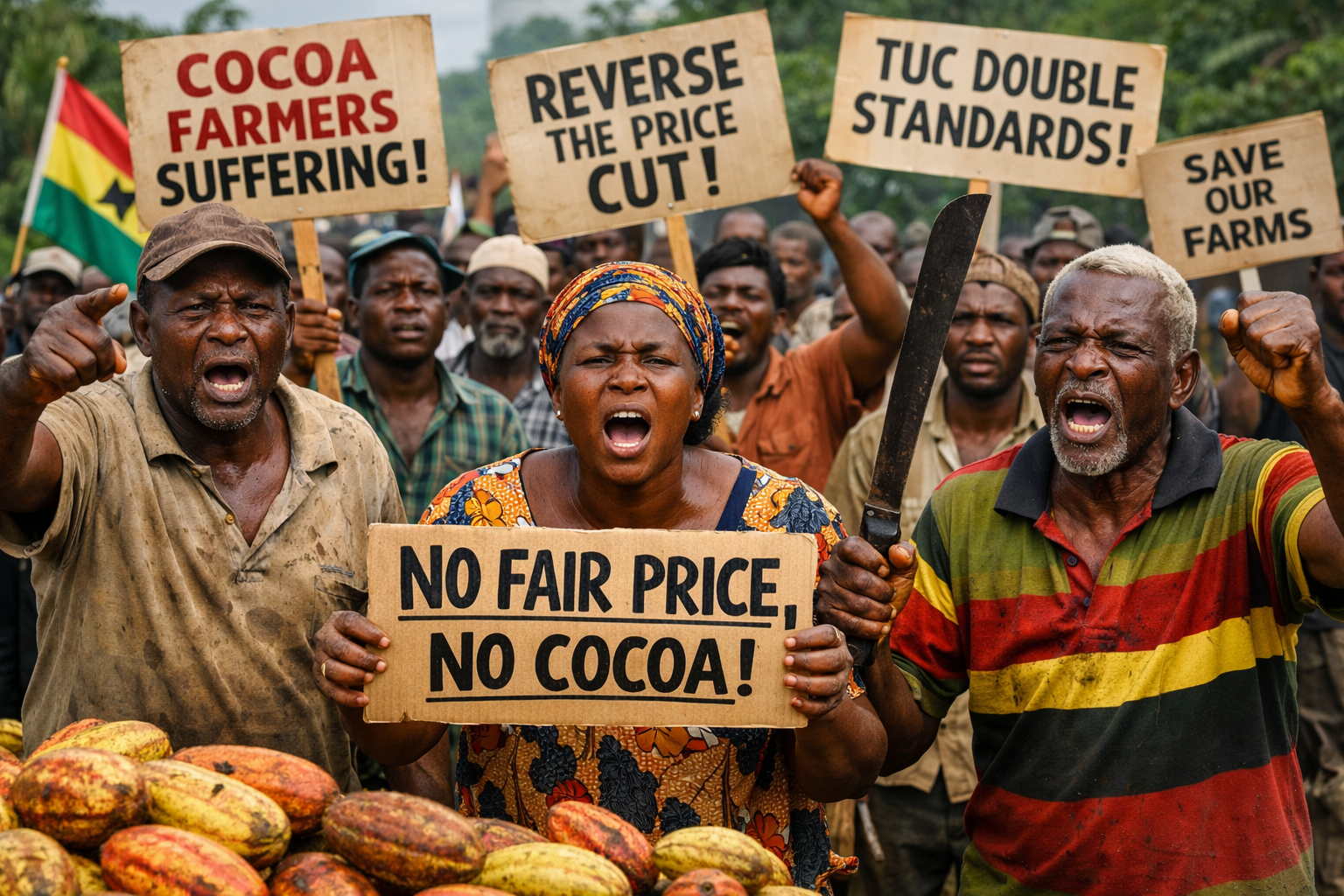
Beyond the political fireworks lies a sobering reality — Ghana’s cocoa farmers remain the ultimate stakeholders in the unfolding narrative war.
As both sides trade accusations over legacy debts and policy failures, industry observers warn that the real danger lies in politicising a sector that remains central to Ghana’s economic stability.