Gold Sale Masks Deeper BoG Losses — Amin Adam Raises Red Flags
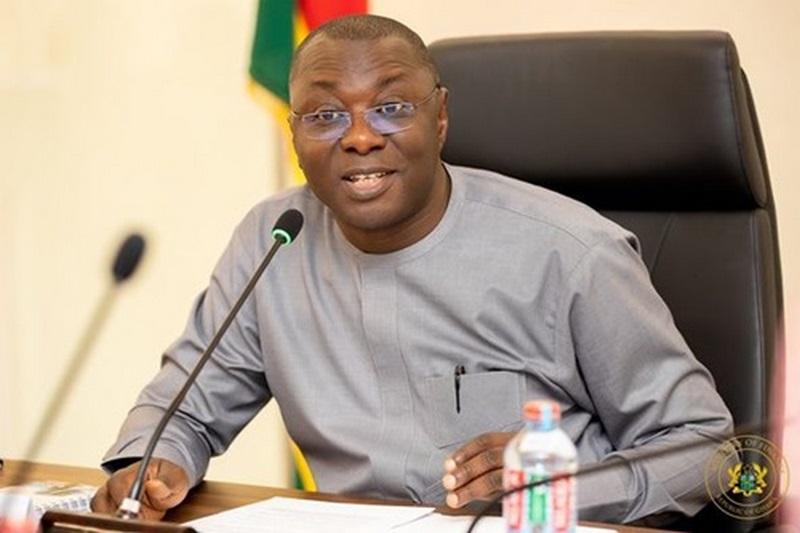
Former Finance Minister Mohamed Amin Adam has ignited fresh debate over the financial position of the Bank of Ghana, warning that the central bank’s reported GH¢15.6 billion loss for 2025 significantly understates the true scale of its financial challenges.
In a strongly worded assessment of the Bank’s long-awaited financial statements, Dr. Amin Adam argued that accounting treatments linked to the sale of gold reserves were used to soften the appearance of deeper operational losses.
At the centre of the controversy is the Bank’s disposal of approximately 18 tonnes of gold, which generated GH¢40.3 billion and yielded a net gain of GH¢9.57 billion. While the central bank has maintained that the transaction formed part of a broader reserve portfolio rebalancing strategy, the former minister has questioned both its timing and necessity.
According to him, the decision to reduce gold holdings runs contrary to Ghana’s recent policy direction, which has focused on building reserve buffers to strengthen external stability.
More critically, Dr. Amin Adam pointed to the treatment of the proceeds in the Bank’s accounts. The GH¢9.57 billion gain from the sale was reclassified from equity and recognised as realised income in the profit and loss statementa move he insists materially alters the Bank’s reported performance.
“This is critical,” he stressed, arguing that without the inclusion of the gold-sale gains, the Bank’s losses would have far exceeded the reported GH¢15.6 billion.
“In plain terms, even after selling gold, the Bank still recorded a massive loss. Without it, the situation would have been far worse,” he stated, estimating that the true loss position could exceed GH¢25 billion and potentially approach GH¢40 billion.
The former minister further highlighted the rising cost of monetary policy operations, particularly sterilisation measures, which surged to GH¢16.73 billion in 2025. He noted that the Bank’s operating income estimated at GH¢12.7 billion—would have been insufficient to cover these costs without the boost from the gold sale proceeds.
Even the central bank’s own report, he observed, acknowledges that its “strong policy solvency position” in 2025 was supported by inflows from bullion gold sales—reinforcing his claim that the transactions played a crucial role in cushioning deeper financial strain.
Dr. Amin Adam also credited the Domestic Gold Purchase Programme, an initiative associated with Vice President Mahamudu Bawumia, for strengthening Ghana’s reserve position and providing a buffer for the central bank during a difficult period. However, he criticised what he described as a failure by current authorities to adequately acknowledge the contribution of earlier policy interventions.
He cautioned that reliance on asset sales to offset operational losses is unsustainable and risks obscuring the true cost of economic management.
“Using gold reserves to absorb losses does not eliminate the problem—it only masks it,” he warned. “It conceals the true cost of policy decisions and delays the necessary corrective actions.”
The concerns come as the Bank of Ghana reported a widened net loss of GH¢15.6 billion in 2025, up sharply from GH¢9.4 billion in 2024. The deterioration reflects the heavy financial burden of aggressive monetary tightening measures aimed at restoring macroeconomic stability following a period of high inflation and exchange rate volatility.
Central bank officials have defended the losses as the inevitable cost of stabilisation policies, particularly liquidity sterilisation operations, which nearly doubled in cost from GH¢8.6 billion in 2024 to GH¢16.7 billion in 2025.
These measures, while eroding profitability, contributed to a significant decline in inflation, improving price stability and restoring some confidence in the economy.
The Bank’s financial position was further impacted by a GH¢19.32 billion charge recorded under other comprehensive income, largely driven by the appreciation of the Ghanaian cedi. The stronger currency reduced the domestic value of foreign-denominated assets, including reserves held in US dollars and gold.
Despite these pressures, the central bank has emphasised that its long-term strategy, particularly the expansion of gold reserves to approximately 111 tonnes, remains critical to strengthening Ghana’s external buffers and reducing reliance on external borrowing.
However, the Bank’s balance sheet continues to weaken. Negative equity widened to GH¢96.3 billion in 2025, up from GH¢61.3 billion in 2024, marking a dramatic reversal from the positive position recorded just a year earlier.
The unfolding debate underscores growing scrutiny over the central bank’s financial management and raises broader questions about transparency, sustainability, and the true cost of Ghana’s economic stabilisation efforts.