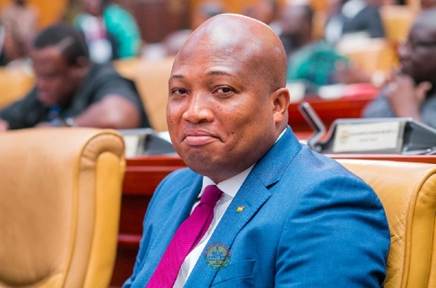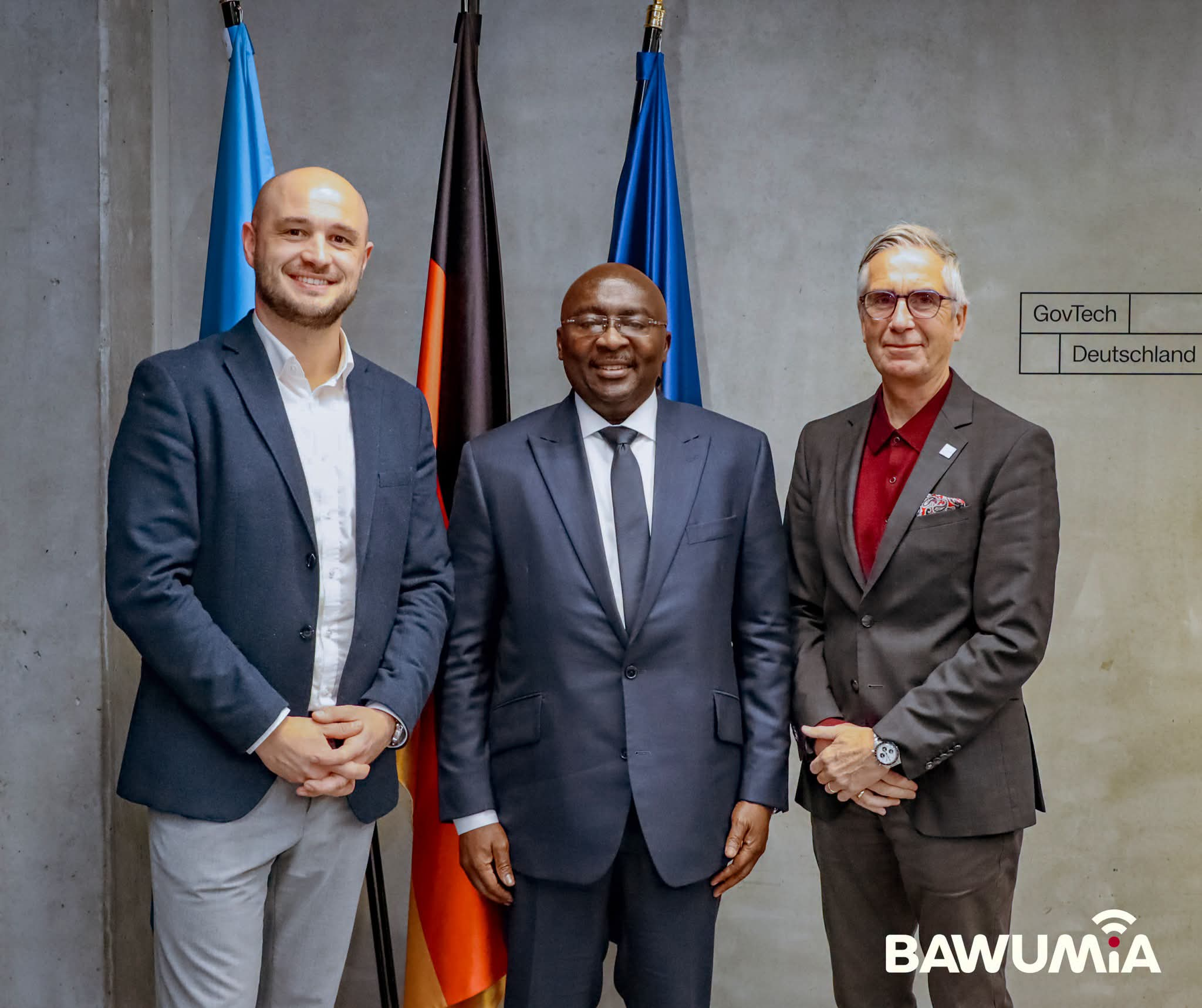
Ghana’s digital transformation agenda has attracted international attention, with New Patriotic Party (NPP) flagbearer Dr Mahamudu Bawumia revealing that officials of GovTech Deutschland acknowledged Ghana’s significant progress in the digitalisation of public services during his engagements in Germany.
Dr Bawumia, who has consistently championed digitalisation as a central pillar of Ghana’s economic transformation, described his visit to GovTech Deutschland, Germany’s leading institution driving the digital transformation of the country’s public sector, as one of the major highlights of his engagements in the European nation.
According to him, discussions with the institution’s leadership produced an encouraging revelation: Ghana has made considerable strides in certain aspects of government digitalisation, with its home-grown platforms offering valuable lessons for more advanced economies.
He specifically cited Ghana.Gov as an example of the country’s progress in building an integrated digital infrastructure designed to make government services more accessible, transparent and efficient.
The revelation, if sustained by independent comparative assessments, represents an important endorsement of Ghana’s digitalisation ambitions and the potential of locally developed technology to compete internationally.
For Dr Bawumia, the achievement demonstrates what strategic vision, innovation and confidence in Ghanaian talent can accomplish when technology is deliberately deployed to address national development challenges.
DIGITALISATION AS AN ECONOMIC GAME-CHANGER
The former Vice-President believes Ghana’s digital transformation must go beyond the convenience of accessing government services online.
His vision is to use digital infrastructure as a foundation for economic expansion, private-sector development, innovation and large-scale employment creation.
He argues that the digital economy presents enormous opportunities for young Ghanaians, particularly in software development, financial technology, artificial intelligence, data management, digital entrepreneurship and technology-driven businesses.
The broader objective, he maintains, is to establish a digital and economic architecture capable of creating millions of sustainable jobs for the country’s growing youth population.
Ghana’s digitalisation journey has seen the introduction and expansion of several platforms and initiatives aimed at reducing bureaucratic bottlenecks, improving public-sector efficiency and promoting financial inclusion.
Among them are Ghana.Gov, the national digital payments platform, and other technology-driven systems designed to connect citizens, businesses and government institutions.
Dr Bawumia’s engagements in Germany therefore provide an opportunity to project Ghana’s technological capabilities beyond the African continent.
His message is that Ghana should not merely remain a consumer of imported technology but must increasingly become a developer, innovator and exporter of digital solutions.
For a country battling unemployment, public-sector inefficiencies and economic pressures, the digital economy could become one of the most important engines of future growth.
The challenge now is to translate these achievements into greater productivity, improved public services, competitive businesses and sustainable employment.
Dr Bawumia’s central argument remains that Ghana has the human talent, technological foundations and innovative capacity to become a leading digital economy in Africa and beyond.