There was a time when December in Accra was simple. You went to church, you went home to your family house, you ate too much jollof, and you watched the year quietly end. Now? December in Accra is a different country.
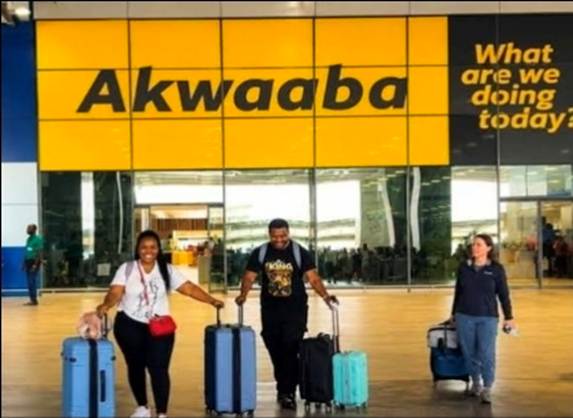
By December 1st, Kotoka is full. The planes do not stop. The hotels are booked out. Oxford Street is blocked. East Legon does not sleep. And your WhatsApp is full of friends from London, New York, Toronto, and Lagos asking: “Are you coming down this December?”
December in GH is no longer just Christmas. It is a season. It is a brand. It is Ghana’s biggest festival, biggest business, and biggest homecoming all rolled into one month. And this year, it is official. It is not just vibes anymore. It is a national programme.
150 events. One month. One country.
According to the Daily Graphic on Thursday, November 12, 2026, the Ghana Tourism Authority (GTA) will stage more than 150 events across the country during this December festive season.
Not 15. Not 50. But 150.
Cultural festivals, music concerts, food exhibitions, heritage celebrations, and other entertainment activities all lined up to attract international visitors and encourage domestic tourism beyond Accra.
Speaking at a stakeholders’ engagement in Accra, the GTA’s Deputy Chief Executive Officer in charge of Marketing and Special Duties, Gilbert Abeiku Aggrey, said this year’s celebrations will feature the Africa Festival of Arts, Culture and Entertainment, scheduled for December 9 to 12, with international artists expected to perform.
Other activities include the Royal City Carnival, Asanteman Global Expo in Kumasi, Bator-Obeze-Elwza Heritage Night, Accra Art Week, African Basketball Festival, Afro Future and the African Food Festival.
The list goes on across the whole country.
Mr Aggrey said the celebrations would extend into next year as Ghana prepares to mark its 70th anniversary of independence describing it as an important opportunity to attract international visitors and promote tourism.
He also had a message for Ghanaians in the diaspora. He urged stakeholders to ensure that members of the diaspora describe them as returnees rather than visitors because they are coming home, not just coming to visit.
That one line says everything about what December in GH has become. It is not tourism. It is return. It did not start with a party. It started with a homecoming.
To understand December in GH, you must go back to 2019, the Year of Return.
Ghana invited the diaspora home to mark 400 years since the first enslaved Africans left our shores. The government expected maybe a few thousand people to come. Over a million came.
They came to see the Cape Coast Castle. They came to cry at the Door of No Return. But they also stayed to dance. They stayed to eat. They stayed to feel what it was like to be in a place where they were not a minority, but the majority.
And when they went back to London and Atlanta, they did not just tell stories about history. They told stories about the parties. About the beach at Labadi on Christmas Day. About Afrochella. About the food. About the feeling.
That feeling became the marketing. And it worked.
The Year of Return became Beyond the Return. Beyond the Return became December in GH. And December in GH became something the entire world now puts on its calendar.
The law was already waiting for it.
What many people do not realise is that Ghana had already laid the groundwork for this boom years before.
The Tourism Act, 2011 (Act 817) created the Ghana Tourism Authority (GTA) to promote the sustainable development of tourism in Ghana both locally and internationally.
That Act does a lot of the quiet work behind December:
It licenses hotels, guest houses, tour operators, and event venues, so visitors know where is safe and legit
Also, It created the Tourism Development Fund to fund tourism projects and it gave the GTA power to set standards, promote Ghana abroad, and protect tourists In other words, when the world started coming, there was already a system meant to handle them. December in GH is not just an Instagram trend. It sits on top of a real legal
In other words, when the world started coming, there was already a system meant to handle them. December in GH is not just an Instagram trend. It sits on top of a real legal
And this year, you can see that framework in action not just in the 150 events, but in the safety planning behind them.
This time, safety is part of the story
In past years, one of the biggest complaints about Detty December was safety, traffic, crowd control, medical emergencies, and people feeling lost at big events.
This year, the GTA brought the security agencies and other state institutions together to strengthen preparations.
At that same engagement, the Director of Operations of the Ghana Police Service, Deputy Commissioner of Police (DCOP) Theodore Hormenu, said the police were preparing to manage traffic, crowds, and public safety during the festivities. He said security was a shared responsibility, and urged event organisers and other stakeholders to cooperate with the police by providing prompt information about their activities.
The lessons from earlier festive seasons, he said, would inform the service’s operational preparations.
The Deputy Regional Administrator of the Ghana Ambulance Service, Walter Foli-Ashom, said the service would deploy dedicated ambulances, mobile medical posts and strategically positioned emergency response teams. He said the service would adopt risk-based medical deployment and coordinate with the police, fire service, and event organisers to respond to emergencies.
Mr Foli-Ashom urged organisers to send event calendars, ease accreditation, and provide secure spaces for medical posts and ambulance parking.
A Deputy Superintendent of the Ghana Immigration Service, Newman Akuffo, also said the service had positioned emergency response teams.
This is important. It shows December in GH is growing up. It is no longer just “let’s organise a party and hope for the best.” It is now a coordinated national event with police, ambulance, fire, and immigration all involved because the crowds are that big, and the stakes are that high.
That is exactly what the Tourism Act intended when it gave the GTA the duty to “take appropriate measures for the safety and security of consumers of the tourism industry.”
December is now an economy of its own. One week in Accra can make an entire year for some people. Hotels and Airbnbs prices triple. And they still sell out. People book as early as March for December.
Drivers, vendors, and creatives From the Uber driver who works 18 hours a day, to the woman selling waakye at 2am after a concert, to the makeup artist, photographer, DJ, and stylist December feeds thousands of families.
AfroFuture, Detty Rave, Tidal Rave, and the endless concerts at the Polo Grounds and La Palm have turned Accra into the capital of African music in December. Artistes from Nigeria, South Africa, the UK, and the US now want to perform here. They used to skip Ghana. Now they beg to be on the bill.
People fly thousands of miles to eat what we eat every Sunday. Foods such as; kenkey, waakye, fufu, kebab, kelewele, and Jollof. And our fashion kente, smock, Ankara streetwear is now on the world stage every December.
December is not just fun. It is jobs. It is dollars. It is foreign exchange. It is the month when Ghana’s informal economy makes its real money.
And with 150 events spread across the regions this year, that money is no longer just staying in Accra. It is going to Kumasi, Tamale, Cape Coast, Koforidua, Sandema, and Bogda Kanda too.
But it is also emotional.
If you ask a diasporan why they keep coming back, they will not talk about the concerts first. They will talk about belonging.
In London, you are Black. In New York, you are African American. In Accra in December, you are just home.
You hear Ga and Twi in the taxi. You hear Highlife in the shop. You see aunties who look like your grandmother. You see kids who look like you, playing freely, not being watched.
For a lot of people in the diaspora, December in GH is healing. It is the one month of the year where they do not have to explain themselves.
And for us at home, it is also healing. For years we were told that to make it, you had to leave. December flipped that. Now the world comes to us to feel alive.
The other side of Detty December
We must be honest too. It is not all perfect.
Traffic in Accra in December is madness. A 20-minute drive becomes 2 hours. Prices go up for everyone, even for locals who are not earning dollars. Rent goes up. Food goes up. And some Ghanaians feel priced out of their own city in their own festive season.
There is also the question of who really benefits. Are the big hotels and big event promoters taking all the money, or is the money reaching the small vendor in Makola, the tour guide in Cape Coast, the fisher in Jamestown?
That is where the Tourism Act matters again. The Act talks about “pro-poor, sustainable and responsible tourism.” That means tourism should not just help the rich. It should help the poor too. If December in GH is going to last, we must make sure it does.
We need better planning, better roads, better safety, better pricing, better protection for tourists and for locals. We need December to be more than Accra too and with 150 events this year, we are finally moving in that direction.
What December in GH has become
December in GH started as Christmas. Then it became a homecoming. Now it is an identity.
It is proof that Ghana does not need to copy anybody to be attractive. Our culture is the attraction. Our music, our food, our warmth, our history that is the product.
From a small country on the West Coast of Africa to a global destination that the universe watches every December that is not small.
So when the plane lands in December and you hear “Akwaaba” at Kotoka, remember you are not just coming for a party. You are coming home to the biggest festive season Ghana has ever built.
By: Eugenia Naa Otinkorama Ankrah
National service personnel, Corporate Affairs Department
Ghana Tourism Authority