Flagbearer of the New Patriotic Party (NPP), Dr Mahamudu Bawumia, has raised serious concerns over the deteriorating conditions facing Ghanaian rice farmers, warning that the country’s agricultural sector could face devastating consequences if urgent measures are not taken to protect local producers.
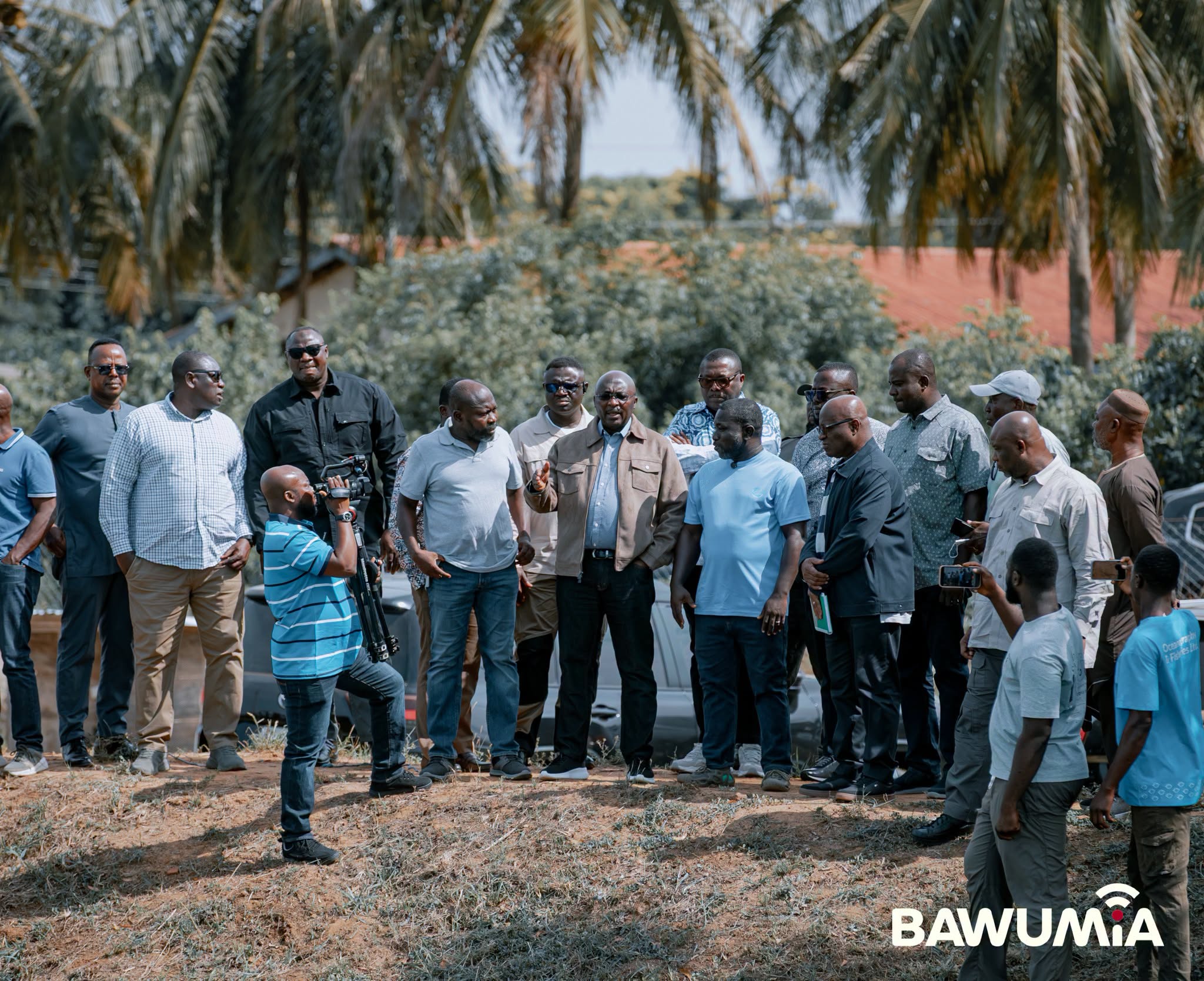
Dr Bawumia expressed his concerns following a visit to the Asutuare Water Users Association in the Kpone Irrigation enclave, where he interacted with farmers and other agricultural stakeholders to assess the challenges confronting rice production.
Before meeting the stakeholders,
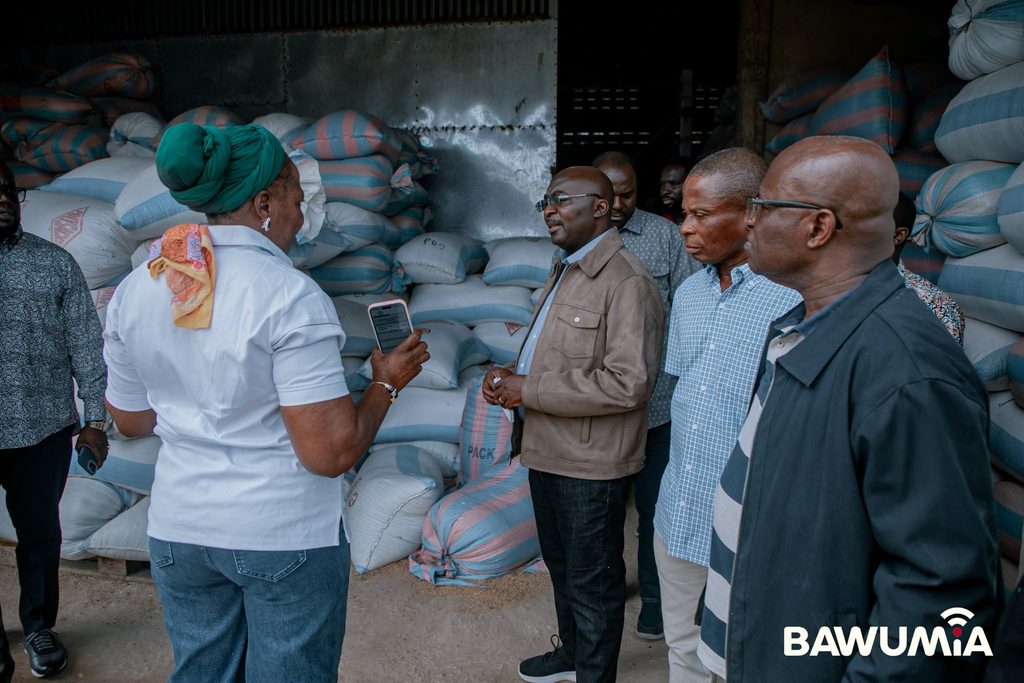
the former Vice President toured farms, inspected irrigation facilities and visited a rice mill to obtain firsthand information about the difficulties confronting farmers and mill operators.
He described the situation as sobering, citing the influx of cheaper imported rice, escalating production costs and the failure of the market to absorb locally produced rice as major threats to the survival of Ghanaian farmers.
According to him, local rice farmers are struggling to sell their produce, with some unable to secure buyers even at half the prices they previously received.
He attributed the situation largely to cheaper foreign rice imports flooding the Ghanaian market, leaving locally produced rice increasingly uncompetitive.
Dr Bawumia further observed that the cost of essential agricultural inputs, including fertilisers, seeds and tractor services, had increased, placing additional financial pressure on farmers already battling declining market prices.
He also expressed concern over the stalled Phase Two of the Kpone Irrigation Scheme, warning that delays in expanding irrigation infrastructure were undermining efforts to improve agricultural productivity.
The challenges, he noted, extend beyond rice farmers to local millers, many of whom are struggling with high electricity bills and insufficient demand for their milling services.
AGRICULTURE AS NATIONAL SECURITY
Dr Bawumia stressed that agriculture must be treated as a national security priority rather than merely an economic activity.
He warned that the collapse of the agricultural sector would have far-reaching consequences for employment, household incomes, food security and the livelihoods of millions of Ghanaians.
“If agriculture collapses, unemployment will rise and the livelihoods of most Ghanaians will be destroyed,” he cautioned.
He called for urgent government intervention to reverse the situation, particularly through the restoration of incentives previously available to farmers to reduce production costs and improve their competitiveness.
He also advocated the strategic use of government’s purchasing power to support local agricultural producers by creating reliable markets for their produce.
According to him, government must deliberately prioritise locally produced rice in its procurement programmes instead of allowing domestic farmers to struggle for survival while imported products dominate the market.
CALL FOR PROTECTION OF LOCAL FARMERS
The NPP flagbearer maintained that Ghana cannot genuinely pursue food security while domestic farmers are unable to sell their produce and recover their investments.
He argued that supporting local farmers must go beyond political declarations and translate into practical policies that guarantee markets, affordable inputs, functional irrigation infrastructure and sustainable agricultural financing.
He emphasised that farmers remain central to Ghana’s food security and economic stability and deserve policies that protect their investments and reward their hard work.
“Our farmers feed this nation. It is time this nation fed them back,” Dr Bawumia declared.