The Minority in Parliament is demanding the immediate publication of full, verifiable and independently traceable data on all narcotics seizures, arrests and prosecutions recorded in Ghana since January 2025, as pressure mounts for answers over a series of major drug consignments allegedly linked to the country.
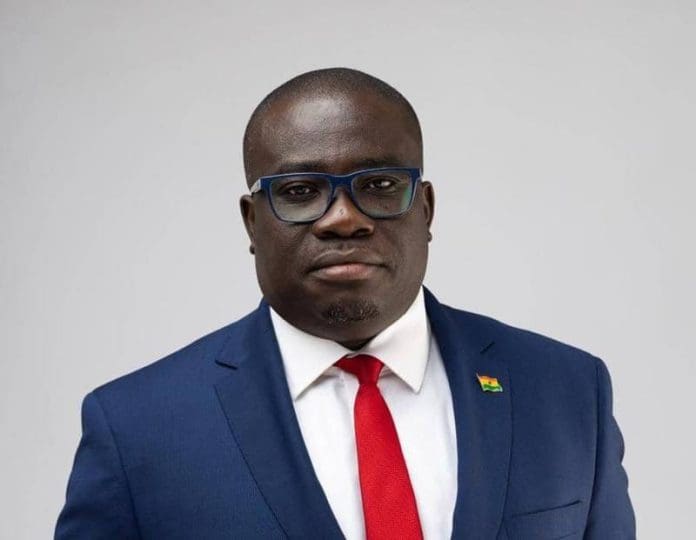
The demand was made by the Minority Spokesperson on Foreign Affairs, Rev. John Ntim Fordjour, ahead of Parliament’s emergency sitting on Tuesday, September 29, following a petition by the Minority Caucus over recent international narcotics seizures connected to Ghana.
The emergency sitting comes in the wake of the seizure of nearly 3.9 tonnes of cocaine at France’s Port of Dunkirk from a container reportedly shipped from Ghana, an incident that has intensified scrutiny of Ghana’s ports, border controls and institutions responsible for combating narcotics trafficking.
Rev. Fordjour said the government must place the country’s narcotics enforcement record in the public domain rather than allow Ghanaians to depend on foreign authorities for information about drugs allegedly passing through the country’s borders.
“We call on the Executive to publish in real time, with primary sourcing, full and verifiable data on every narcotic seizure, arrest [and] prosecution since January 2025, so that we no longer learn the state of our own borders from foreign customs officers,” he said.
Parliament to examine state agencies
According to Rev. Fordjour, the parliamentary process must go beyond individual drug seizures and examine the institutional and systemic weaknesses that may be facilitating narcotics trafficking.
He said the inquiry should also investigate the role of state institutions and any possible complicity of public agencies, while ensuring that individuals whose cases are before the courts are not prejudged.
“It will also look into the role and actions of possible complicity of state agencies,” he said.
He stressed that any committee constituted by Parliament would have the authority to summon witnesses, demand documents and obtain information necessary for its work.
Such proceedings, he added, should be conducted publicly except in circumstances where national security considerations require portions of the proceedings to be held privately.
‘Parliament is not a spectator’
Rev. Fordjour insisted that Parliament has a constitutional obligation to demand answers from the Executive instead of waiting passively for investigations initiated by government institutions.
“Parliament is not a spectator in this matter,” he said. “The Constitution gives it the power to appoint committees, to summon and to demand answers.”
The Minority is also urging members on both sides of the political divide to support the parliamentary process, arguing that narcotics trafficking represents a national security and public health concern rather than a partisan issue.
“The trafficker does not check party cards. The young person destroyed by addiction does not ask which side of the House his member sits on,” Rev. Fordjour said.
‘Let the public see the record’
The Minority wants the government to make the requested information readily accessible to the public, including details of seizures, arrests and prosecutions.
Rev. Fordjour argued that transparent publication of the data would allow Parliament, the media and the public to assess the country’s actual enforcement record and determine whether existing institutions are adequately protecting Ghana’s borders.
“If the government is confident in its record, it has nothing to fear from the truth,” he said.
The parliamentary demand comes amid growing international scrutiny of narcotics consignments reportedly originating from or passing through Ghana, putting renewed focus on the country’s ports, customs controls, security agencies, shipping documentation and anti-narcotics enforcement architecture.