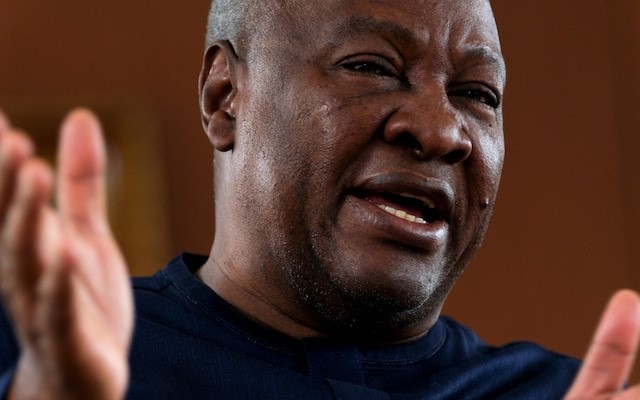
The prosecution’s fourth and final witness (PW4) & EOCO lead investigator, Frank Marshal Cromwell
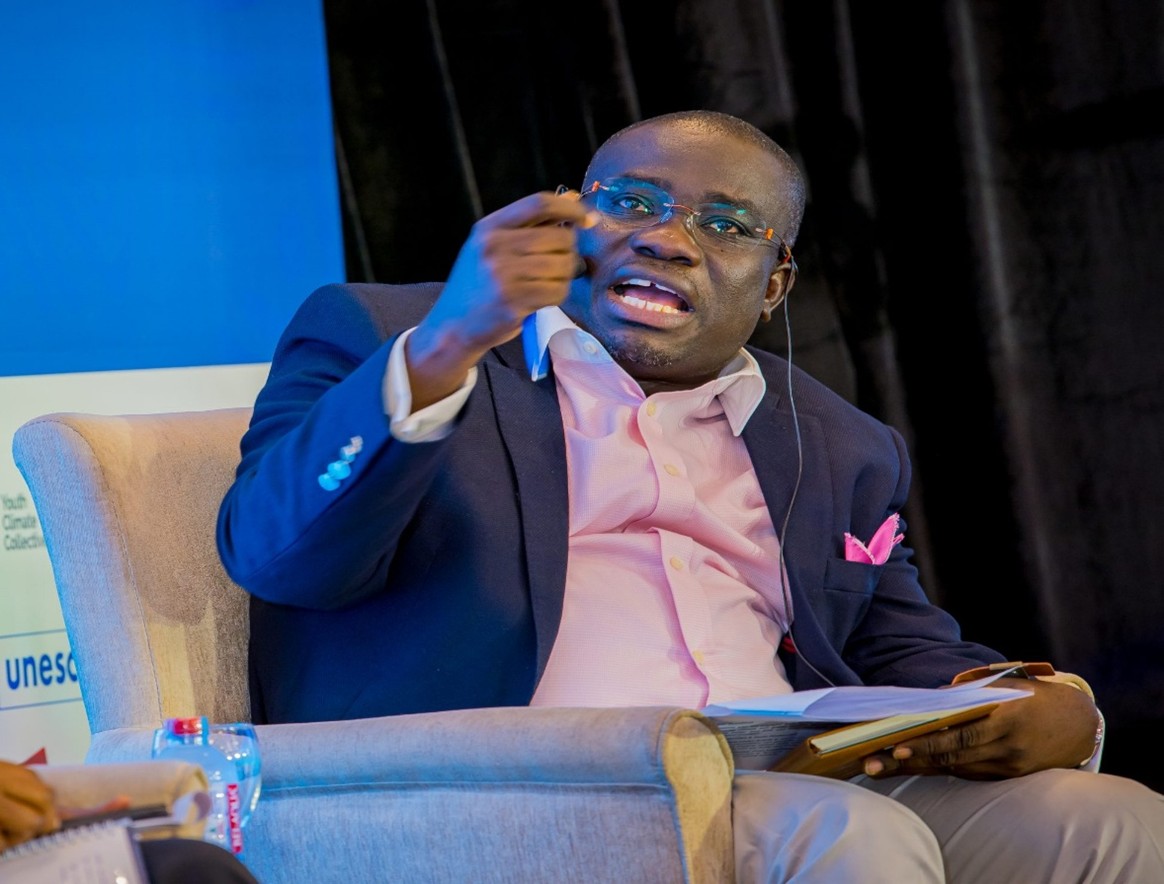
Atta Akyea
Lead Counsel for Kwabena Adu Boahene and the other accused persons, Samuel Atta Akyea, is today, September 2, 2026, expected to bring to an end more than 10 weeks of intense cross-examination of the Economic and Organised Crime Office (EOCO) investigator and the Attorney-General’s final prosecution witness (PW4), Frank Marshal Cromwell, after securing a series of significant admissions that have sharply challenged key pillars of the prosecution’s case against his client, the former Director-General of the National Signals Bureau (NSB).
The final day of questioning follows what has emerged as a major courtroom setback for the prosecution, with Lawyer Atta Akyea’s prolonged cross-examination exposing gaps and inconsistencies in the prosecution’s account of the disputed GH¢49.1 million. Among the critical issues challenged are the prosecution’s description of the originating Fidelity Bank account as “STATE BNC”, its characterisation of the UMB account as a private account jointly owned by Mr Adu Boahene and his wife, and its claim that the entire GH¢49.1 million was diverted for personal use.
The development came to light at the Accra High Court on Monday, September 1, 2026, when the presiding judge granted Mr Atta Akyea an additional day to complete his cross-examination of PW4, after he indicated that about 60 more questions remained. When the case resumes at 11:30 a.m. today, the defence is expected to conclude its questioning following a cross-examination that has produced several admissions from the prosecution’s own investigator—including that Mr Adu Boahene did not have sole control of the account from which the GH¢49.1 million originated, that National Security operatives transacted on the disputed UMB account, that about GH¢9.5 million was paid directly to ISC Holdings in Israel, and that Mayfair Estate payments relied upon by the prosecution were not part of the GH¢49.1 million.
The prolonged cross-examination has focused largely on the prosecution’s allegation that Mr Adu Boahene, in his capacity as Director-General of the National Signals Bureau (NSB), unlawfully moved GH¢49.1 million from an account described by the prosecution as “STATE BNC” into a UMB account which the prosecution alleges was a private account jointly opened by Mr Adu Boahene and his wife and referred to as the Bureau of National Communications–Operations Account, or “PRIVATE BNC”.
The prosecution’s broader case is that Mr Adu Boahene allegedly moved the GH¢49.1 million under the guise of procuring a cyber-defence system but subsequently dissipated the funds on luxury vehicles, more than 50 properties in Accra, the construction of the Kobby Keach Hotel and an apartment complex known as Dorchester Heights in Kumasi, without procuring the cyber-defence system.
However, after more than 10 weeks of cross-examination, several admissions made by the prosecution’s own investigator under oath have raised significant questions about key aspects of that narrative.
No “STATE BNC” agency identified
One of the major points to emerge from the cross-examination was the investigator’s testimony that there is no government agency known as “STATE BNC”.
The witness explained that the account he had referred to as “STATE BNC” was actually a special operations account established and operated by the National Security Coordinator and held at Fidelity Bank.
Adu Boahene did not have sole control of Fidelity account
The investigator further testified that the Fidelity Bank account had three signatories: Joshua Kyeremeh, then National Security Coordinator; Seth Danso, Head of Finance at the Office of the National Security Coordinator; and Kwabena Adu Boahene, then Director-General of the National Signals Bureau.
He told the court that two signatures were required for withdrawals from the account.
The evidence therefore established that Mr Adu Boahene could not, on his own, access, withdraw or transfer funds from the account.
The development is significant to the defence because it challenges the suggestion that Mr Adu Boahene single-handedly controlled the account from which the GH¢49.1 million originated.
GH¢49.1m cheques signed by Coordinator and co-signed by Adu Boahene
The investigator also testified that the three cheques totalling GH¢49.1 million were signed by Joshua Kyeremeh and co-signed by Mr Adu Boahene.
That evidence is consistent with the earlier testimony of Ruby Edith Aduamoah, PW2, the Head of Finance at the NSB and the second prosecution witness, who told the court that she prepared and wrote the cheques for the signatures of her superiors.
The evidence consequently establishes that the account from which the funds originated was not opened or controlled solely by Mr Adu Boahene and that he could not independently move the funds.
The prosecution’s own evidence, the defence contends, therefore does not support the simplistic proposition that Mr Adu Boahene simply moved GH¢49.1 million from a state account into his personal account.
BNC Finance Head paid two cheques into UMB account
The investigator further testified that Ms Aduamoah paid two of the three cheques into the UMB account.
That evidence confirms Ms Aduamoah’s earlier testimony that she personally paid two of the three cheques into the account.
The defence has relied on this evidence to support its position that the UMB account was a National Security operational account and not a private account belonging to Mr Adu Boahene and his wife.
National Security operatives transacted on UMB account
Another significant aspect of the cross-examination was the admission that several National Security operatives transacted on the UMB account.
The investigator specifically mentioned Gerald Osei Tutu, then Deputy Director-General of the NSB, and Denise Blackson among those who conducted transactions on the account.
He further admitted that more than GH¢109 million was withdrawn from the account by National Security operatives for special operations.
The evidence raises a fundamental question over the prosecution’s description of the UMB account as a private account: if it was exclusively a private account belonging to Mr Adu Boahene and his wife, why were several National Security operatives using it for special operations?
GH¢9.5m paid directly to ISC Holdings
The investigator also testified that approximately GH¢9.5 million was transferred directly from the UMB account to ISC Holdings in Israel for the purchase of a cyber-defence system.
The payment is significant because the alleged procurement of the cyber-defence system is at the centre of the prosecution’s case against Mr Adu Boahene.
The evidence therefore establishes that at least part of the money in the disputed UMB account was transferred directly to the company identified in connection with the cyber-defence system.
“Private BNC” account had several names but one account number
The cross-examination further established that the UMB account was referred to by several names, including “BNC Operations Account”, “Bureau of National Communications Account–Operations”, “BNC Ops” and “Private BNC”.
Despite the different descriptions, the evidence established that the names referred to the same account number.
The defence has consequently argued that the central issue should not simply be the label attached to the account, but its actual character, purpose and use.
Investigator unable to identify account into which GH¢49.1m was supposed to have been paid
In another potentially significant moment, Mr Atta Akyea questioned the investigator about the account into which the GH¢49.1 million was originally supposed to have been deposited before Mr Adu Boahene allegedly diverted the money.
The investigator was unable to identify such an account.
He testified that he knew of no such account.
The evidence is potentially important to the allegation of diversion because, in order to establish that money was diverted from one account to another, the prosecution would ordinarily be expected to identify the account from which the funds were allegedly diverted, the intended destination of the funds and the basis for describing the eventual destination as unauthorised.
The investigator could not establish that account during cross-examination.
Prosecution fails to establish UMB account as unauthorised private account
The investigator was also unable to demonstrate that the UMB account was a private account improperly established or operated by Mr Adu Boahene and his wife.
He could not establish that the account was created without the knowledge or authority of the National Security Coordinator, who, significantly, signed the cheques that were subsequently deposited into the account.
The defence has further pointed to evidence that funds later moved from the UMB account into an account controlled by the National Security Coordinator at Fidelity Bank.
According to the defence, that evidence is inconsistent with the prosecution’s characterisation of the UMB account as a purely private account.
Mayfair payments not part of GH¢49.1m
Another most consequential admissions during the cross-examination concerned the prosecution’s allegation that Mr Adu Boahene used the GH¢49.1 million to acquire properties at Mayfair Estate.
The investigator admitted that the Mayfair payment receipts relied upon by the prosecution were dated 2016 and 2018.
The GH¢49.1 million cheques, however, came later.
The witness therefore testified that the Mayfair payments were not part of the GH¢49.1 million.
That admission directly weakens the attempt to connect the Mayfair receipts to the alleged dissipation of the GH¢49.1 million, given that the payments predated the disputed cheques.
No land titles or vehicle purchases linked to GH¢49.1m
The investigator was also unable to produce land title documents establishing that Mr Adu Boahene and his wife owned the properties allegedly attributed to them at Mayfair, Oyarifa, Kumasi and London.
He was similarly unable to demonstrate that Mr Adu Boahene purchased any vehicle with the GH¢49.1 million.
Consequently, the direct evidentiary link between the GH¢49.1 million and the properties and luxury vehicles alleged by the prosecution remains unestablished from the testimony of its own investigator.
Purpose of GH¢49.1m not established
Perhaps most fundamentally, the investigator could not establish that the GH¢49.1 million was exclusively intended for the procurement of a cyber-defence system, as opposed to funds allocated for National Security special operations.
That distinction goes to the foundation of the prosecution’s theory.
The prosecution alleges that the money was obtained under the guise of procuring a cyber-defence system and subsequently misappropriated.
The defence, however, has maintained that the funds were connected to National Security operations and that the evidence does not establish that the entire GH¢49.1 million was exclusively earmarked for the cyber-defence procurement.
Funds paid into Coordinator’s account were pre-financing for special operations
The investigator also testified that monies were transferred by several individuals, including Mr Adu Boahene, into the account controlled by the National Security Coordinator.
That evidence was consistent with the earlier testimony of PW2, Ms Aduamoah, who had testified that such funds constituted pre-financing for time-sensitive special operations.
With Mr Atta Akyea’s cross-examination now concluded, the prosecution’s final witness has completed more than 10 weeks of testimony and questioning.
The defence is expected to rely heavily on the admissions made during the cross-examination as it challenges the prosecution’s characterisation of the two accounts, the alleged diversion of GH¢49.1 million, the purpose for which the funds were provided and the alleged acquisition of properties and luxury vehicles.
The prosecution, for its part, maintains its case against the accused persons, and the court will ultimately determine whether the evidence adduced satisfies the required legal threshold.
For the defence, however, the conclusion of the lengthy cross-examination represents a major stage in its effort to dismantle the prosecution’s narrative surrounding the GH¢49.1 million. Adu Boahene scores major courtroom victory as Atta Akyea ends cross-examination today after dismantling prosecution’s case
Lead Counsel for Kwabena Adu Boahene and the other accused persons, Samuel Atta Akyea, is today, September 2, 2026, expected to bring to an end more than 10 weeks of intense cross-examination of the Economic and Organised Crime Office (EOCO) investigator and the Attorney-General’s final prosecution witness (PW4), Frank Marshal Cromwell, after securing a series of significant admissions that have sharply challenged key pillars of the prosecution’s case against his client, the former Director-General of the National Signals Bureau (NSB).
The final day of questioning follows what has emerged as a major courtroom setback for the prosecution, with Lawyer Atta Akyea’s prolonged cross-examination exposing gaps and inconsistencies in the prosecution’s account of the disputed GH¢49.1 million. Among the critical issues challenged are the prosecution’s description of the originating Fidelity Bank account as “STATE BNC”, its characterisation of the UMB account as a private account jointly owned by Mr Adu Boahene and his wife, and its claim that the entire GH¢49.1 million was diverted for personal use.
The development came to light at the Accra High Court on Monday, September 1, 2026, when the presiding judge granted Mr Atta Akyea an additional day to complete his cross-examination of PW4, after he indicated that about 60 more questions remained. When the case resumes at 11:30 a.m. today, the defence is expected to conclude its questioning following a cross-examination that has produced several admissions from the prosecution’s own investigator—including that Mr Adu Boahene did not have sole control of the account from which the GH¢49.1 million originated, that National Security operatives transacted on the disputed UMB account, that about GH¢9.5 million was paid directly to ISC Holdings in Israel, and that Mayfair Estate payments relied upon by the prosecution were not part of the GH¢49.1 million.
The prolonged cross-examination has focused largely on the prosecution’s allegation that Mr Adu Boahene, in his capacity as Director-General of the National Signals Bureau (NSB), unlawfully moved GH¢49.1 million from an account described by the prosecution as “STATE BNC” into a UMB account which the prosecution alleges was a private account jointly opened by Mr Adu Boahene and his wife and referred to as the Bureau of National Communications–Operations Account, or “PRIVATE BNC”.
The prosecution’s broader case is that Mr Adu Boahene allegedly moved the GH¢49.1 million under the guise of procuring a cyber-defence system but subsequently dissipated the funds on luxury vehicles, more than 50 properties in Accra, the construction of the Kobby Keach Hotel and an apartment complex known as Dorchester Heights in Kumasi, without procuring the cyber-defence system.
However, after more than 10 weeks of cross-examination, several admissions made by the prosecution’s own investigator under oath have raised significant questions about key aspects of that narrative.
No “STATE BNC” agency identified
One of the major points to emerge from the cross-examination was the investigator’s testimony that there is no government agency known as “STATE BNC”.
The witness explained that the account he had referred to as “STATE BNC” was actually a special operations account established and operated by the National Security Coordinator and held at Fidelity Bank.
Adu Boahene did not have sole control of Fidelity account
The investigator further testified that the Fidelity Bank account had three signatories: Joshua Kyeremeh, then National Security Coordinator; Seth Danso, Head of Finance at the Office of the National Security Coordinator; and Kwabena Adu Boahene, then Director-General of the National Signals Bureau.
He told the court that two signatures were required for withdrawals from the account.
The evidence therefore established that Mr Adu Boahene could not, on his own, access, withdraw or transfer funds from the account.
The development is significant to the defence because it challenges the suggestion that Mr Adu Boahene single-handedly controlled the account from which the GH¢49.1 million originated.
GH¢49.1m cheques signed by Coordinator and co-signed by Adu Boahene
The investigator also testified that the three cheques totalling GH¢49.1 million were signed by Joshua Kyeremeh and co-signed by Mr Adu Boahene.
That evidence is consistent with the earlier testimony of Ruby Edith Aduamoah, PW2, the Head of Finance at the NSB and the second prosecution witness, who told the court that she prepared and wrote the cheques for the signatures of her superiors.
The evidence consequently establishes that the account from which the funds originated was not opened or controlled solely by Mr Adu Boahene and that he could not independently move the funds.
The prosecution’s own evidence, the defence contends, therefore does not support the simplistic proposition that Mr Adu Boahene simply moved GH¢49.1 million from a state account into his personal account.
BNC Finance Head paid two cheques into UMB account
The investigator further testified that Ms Aduamoah paid two of the three cheques into the UMB account.
That evidence confirms Ms Aduamoah’s earlier testimony that she personally paid two of the three cheques into the account.
The defence has relied on this evidence to support its position that the UMB account was a National Security operational account and not a private account belonging to Mr Adu Boahene and his wife.
National Security operatives transacted on UMB account
Another significant aspect of the cross-examination was the admission that several National Security operatives transacted on the UMB account.
The investigator specifically mentioned Gerald Osei Tutu, then Deputy Director-General of the NSB, and Denise Blackson among those who conducted transactions on the account.
He further admitted that more than GH¢109 million was withdrawn from the account by National Security operatives for special operations.
The evidence raises a fundamental question over the prosecution’s description of the UMB account as a private account: if it was exclusively a private account belonging to Mr Adu Boahene and his wife, why were several National Security operatives using it for special operations?
GH¢9.5m paid directly to ISC Holdings
The investigator also testified that approximately GH¢9.5 million was transferred directly from the UMB account to ISC Holdings in Israel for the purchase of a cyber-defence system.
The payment is significant because the alleged procurement of the cyber-defence system is at the centre of the prosecution’s case against Mr Adu Boahene.
The evidence therefore establishes that at least part of the money in the disputed UMB account was transferred directly to the company identified in connection with the cyber-defence system.
“Private BNC” account had several names but one account number
The cross-examination further established that the UMB account was referred to by several names, including “BNC Operations Account”, “Bureau of National Communications Account–Operations”, “BNC Ops” and “Private BNC”.
Despite the different descriptions, the evidence established that the names referred to the same account number.
The defence has consequently argued that the central issue should not simply be the label attached to the account, but its actual character, purpose and use.
Investigator unable to identify account into which GH¢49.1m was supposed to have been paid
In another potentially significant moment, Mr Atta Akyea questioned the investigator about the account into which the GH¢49.1 million was originally supposed to have been deposited before Mr Adu Boahene allegedly diverted the money.
The investigator was unable to identify such an account.
He testified that he knew of no such account.
The evidence is potentially important to the allegation of diversion because, in order to establish that money was diverted from one account to another, the prosecution would ordinarily be expected to identify the account from which the funds were allegedly diverted, the intended destination of the funds and the basis for describing the eventual destination as unauthorised.
The investigator could not establish that account during cross-examination.
Prosecution fails to establish UMB account as unauthorised private account
The investigator was also unable to demonstrate that the UMB account was a private account improperly established or operated by Mr Adu Boahene and his wife.
He could not establish that the account was created without the knowledge or authority of the National Security Coordinator, who, significantly, signed the cheques that were subsequently deposited into the account.
The defence has further pointed to evidence that funds later moved from the UMB account into an account controlled by the National Security Coordinator at Fidelity Bank.
According to the defence, that evidence is inconsistent with the prosecution’s characterisation of the UMB account as a purely private account.
Mayfair payments not part of GH¢49.1m
Another most consequential admissions during the cross-examination concerned the prosecution’s allegation that Mr Adu Boahene used the GH¢49.1 million to acquire properties at Mayfair Estate.
The investigator admitted that the Mayfair payment receipts relied upon by the prosecution were dated 2016 and 2018.
The GH¢49.1 million cheques, however, came later.
The witness therefore testified that the Mayfair payments were not part of the GH¢49.1 million.
That admission directly weakens the attempt to connect the Mayfair receipts to the alleged dissipation of the GH¢49.1 million, given that the payments predated the disputed cheques.
No land titles or vehicle purchases linked to GH¢49.1m
The investigator was also unable to produce land title documents establishing that Mr Adu Boahene and his wife owned the properties allegedly attributed to them at Mayfair, Oyarifa, Kumasi and London.
He was similarly unable to demonstrate that Mr Adu Boahene purchased any vehicle with the GH¢49.1 million.
Consequently, the direct evidentiary link between the GH¢49.1 million and the properties and luxury vehicles alleged by the prosecution remains unestablished from the testimony of its own investigator.
Purpose of GH¢49.1m not established
Perhaps most fundamentally, the investigator could not establish that the GH¢49.1 million was exclusively intended for the procurement of a cyber-defence system, as opposed to funds allocated for National Security special operations.
That distinction goes to the foundation of the prosecution’s theory.
The prosecution alleges that the money was obtained under the guise of procuring a cyber-defence system and subsequently misappropriated.
The defence, however, has maintained that the funds were connected to National Security operations and that the evidence does not establish that the entire GH¢49.1 million was exclusively earmarked for the cyber-defence procurement.
Funds paid into Coordinator’s account were pre-financing for special operations
The investigator also testified that monies were transferred by several individuals, including Mr Adu Boahene, into the account controlled by the National Security Coordinator.
That evidence was consistent with the earlier testimony of PW2, Ms Aduamoah, who had testified that such funds constituted pre-financing for time-sensitive special operations.
With Mr Atta Akyea’s cross-examination now concluded, the prosecution’s final witness has completed more than 10 weeks of testimony and questioning.
The defence is expected to rely heavily on the admissions made during the cross-examination as it challenges the prosecution’s characterisation of the two accounts, the alleged diversion of GH¢49.1 million, the purpose for which the funds were provided and the alleged acquisition of properties and luxury vehicles.
The prosecution, for its part, maintains its case against the accused persons, and the court will ultimately determine whether the evidence adduced satisfies the required legal threshold.
For the defence, however, the conclusion of the lengthy cross-examination represents a major stage in its effort to dismantle the prosecution’s narrative surrounding the GH¢49.1 million.