How foreign bribery investigations, disputed payments, controversial contracts and allegations involving Ghanaian officials have repeatedly damaged Ghana’s reputation and why Ghana must stop allowing political power to become a shield against accountability
Why does Ghana keep appearing in major international bribery and corruption investigations involving government contracts, political influence and public officials , yet accountability at home so often appears to disappear into the political fog?
This is not a question about the NDC alone. Corruption has no political party.
there is a particularly troubling historical pattern involving controversies that have touched successive NDC administrations and NDC-linked political figures, stretching from the Rawlings era through the administrations of Presidents Jerry John Rawlings, John Evans Atta Mills and John Dramani Mahama.
The names and cases are now familiar to anyone who has followed Ghana’s corruption history closely:
Scancem/GHACEM.
Mabey & Johnson.
Armajaro.
The Embraer aircraft controversy.
The AKSA Energy/Asante Berko case.
And the Airbus affair.
Some involved proven corporate bribery abroad. Some involved allegations that were denied.
Some resulted in investigations but no finding of criminal liability against the Ghanaian political figures mentioned.
That distinction matters.
But so does the pattern.
And that pattern deserves a national conversation.
THE SCANCEM SHADOW
Perhaps one of the earliest major international corruption controversies to cast a shadow over the Rawlings era was the Scancem/GHACEM affair, which surfaced through proceedings in Norway.
Scancem, the Norwegian company associated with GHACEM, became embroiled in litigation and allegations concerning payments made in connection with its Ghanaian operations.
Norwegian court proceedings concerning former Scancem employee Tor Egil Kjelsaas brought allegations of an elaborate bribery arrangement involving Ghanaian political figures and others. Contemporary reports named former President Jerry John Rawlings, former First Lady Nana Konadu Agyeman Rawlings and Rawlings-era adviser P.V. Obeng.
But here is where responsible journalism must draw the line.
Rawlings denied the allegations.
He publicly rejected claims that he and his wife received millions of dollars in bribes, saying the allegations were false.
Reporting based on the Norwegian proceedings described evidence of a wider system of questionable payments and financial dealings involving Ghana.
The question that remains is not simply whether one particular individual took money
How could an international company develop a system of questionable payments around government-related business without Ghanaian institutions detecting, stopping and fully prosecuting the conduct?
That question remains painfully relevant today.
MABEY & JOHNSON: WHEN BRITAIN DID WHAT GHANA FAILED TO Do
Then came Mabey & Johnson.
This case is considerably more concrete.
The British bridge-building company admitted overseas corruption and pleaded guilty to bribery offences involving Ghana, Jamaica and Iraq
In the Ghanaian component of the case, British prosecutors told a London court that Mabey & Johnson had paid approximately £470,000 in bribes to politicians and officials in Ghana. Several Ghanaian public officials were named in the British proceedings.
The company was convicted in Britain and ordered to pay more than £6.5 million in fines and reparations.
Think about that.
A foreign jurisdiction investigated a company for corrupt dealings connected with Ghana, prosecuted it, secured a conviction and imposed financial penalties.
Ghana was left grappling with the question of what would happen to the Ghanaian side of the alleged corruption.
Parliamentary evidence later recorded that Ghana’s Commission on Human Rights and Administrative Justice investigated the allegations but complained that it had difficulty obtaining relevant documents from the British Serious Fraud Office.
This is the recurring tragedy.
The foreign investigators do the digging.
The foreign prosecutors build the case.
The foreign courts establish wrongdoing.
And Ghana debates the political implications.
That is not sovereignty.
That is institutional weakness.
ARMAJARO: COCOA, POLITICAL INFLUENCE AND THE QUESTION OF ACCESS
The Armajaro controversy produced another uncomfortable chapter.
In 2010, Armajaro Ghana Ltd and other cocoa companies became embroiled in a controversy following allegations concerning cocoa smuggling and the subsequent lifting of restrictions imposed by COCOBOD.
British media reports alleged that British politician Andrew Mitchell had intervened on behalf of Armajaro after the company became subject to restrictions in Ghana.
Then-Vice President John Dramani Mahama was drawn into the controversy.
Mahama admitted that the British minister had spoken to him about the matter but denied interfering with COCOBOD’s decision. He said he advised that the company petition
COCOBOD.
COCOBOD itself stated that Mahama did not interfere in the matter.
Critics, however, continued to demand an investigation.
And Mahama challenged them to take the matter to CHRAJ.
Again, the important journalistic point is this:
The case raised a fundamental question about the relationship between international business interests, political lobbying and Ghana’s public institutions.
And that question remains legitimate:
When a powerful foreign business has a problem with a government regulator, who gets access to the highest levels of political authority — and why?
THE EMBRAER AIRCRAFT CONTROVERSY
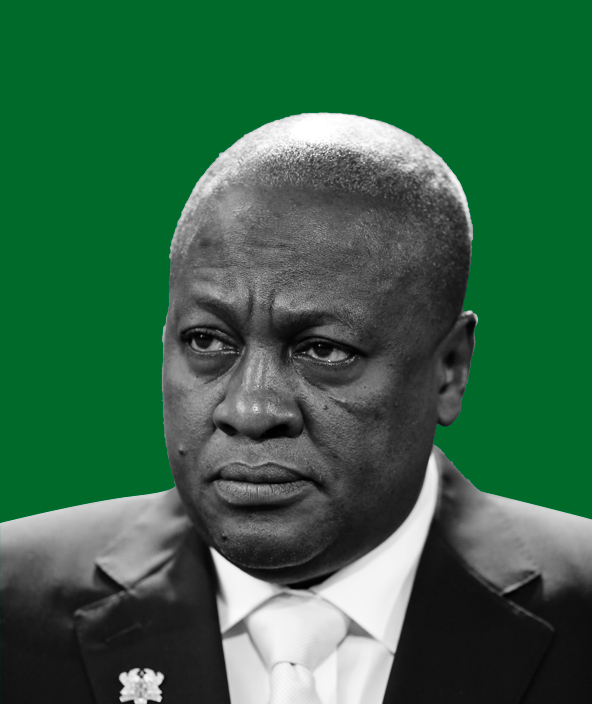
Then came the Embraer aircraft controversy under the Mills administration.
This case is particularly interesting because it reportedly triggered an investigation from within the government itself.
According to accounts attributed to then-Attorney-General Martin Amidu, President Mills established a committee to investigate the procurement process for an Embraer 190 aircraft and other aircraft acquisitions.
The procurement was associated with then-Vice President John Mahama.
The controversy centred on the price and procurement arrangements, with critics questioning how the final cost compared with the manufacturer’s quoted range and the additional equipment incorporated into the transaction.
This should have been a warning to Ghana.
Because when a sitting President is prepared to investigate a procurement associated with his own Vice-President, the matter should not be treated as ordinary political noise.
It should trigger one simple principle:
Follow the money.
Who negotiated?
Who approved?
Who benefited?
What was the original quotation?
What was eventually paid?
Who were the intermediaries?
Were commissions involved?
Were political or commercial interests improperly connected?
And most importantly:
What did the investigation finally establish?
Those questions deserve documentary answers rather than partisan arguments.
AKSA ENERGY AND THE ASANTE BERKO CASE
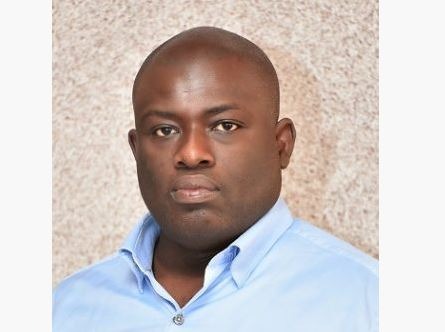
Then came one of the most serious international corruption cases connected to a Ghanaian power project.
This time, the action moved to the United States.
Former Goldman Sachs banker and former Tema Oil Refinery Managing Director Asante Kwaku Berko was charged by U.S. authorities in connection with an alleged bribery and money-laundering scheme involving Ghanaian government officials and a Turkish energy company seeking to develop a power plant in Ghana.
The U.S. Department of Justice alleged that between 2014 and 2017, Berko and others conspired to make corrupt payments to Ghanaian officials to obtain and retain Ghanaian government business.
U.S. prosecutors also alleged payments to officials during a trip to Turkey and described other alleged payments associated with securing the power project.
But again, an allegation is not a conviction.
in December 2025, a U.S. judge rejected Berko’s attempt to have the criminal case dismissed.
Nevertheless, the allegations are grave.
Because the U.S. indictment did not merely describe a private business dispute.
It alleged a scheme involving Ghanaian government officials and a major state-linked energy transaction.
That should have been enough to trigger an aggressive, transparent Ghanaian investigation.
Berko was thus found guilty and sentenced to 20 years imprisonment.
AIRBUS: THE SCANDAL THAT WENT GLOBAL
And then came Airbus.
This is perhaps the most politically explosive chapter.
Airbus SE was investigated by authorities in Britain, France and the United States over allegations of improper payments and corrupt practices in international aircraft sales.
Ghana was one of the countries examined.
The Ghanaian transaction concerned military transport aircraft purchased during the period spanning the Mills and Mahama administrations.
The Ghana Office of the Special Prosecutor subsequently conducted its own investigation.
And this is where the political debate becomes particularly complicated.
The OSP reported in August 2024 that it had investigated allegations of bribery involving Airbus and high-ranking Ghanaian officials, including former President John Dramani Mahama.
But the OSP reached a conclusion that is frequently distorted in political debate.
It did not establish that Mahama was involved in or facilitated the alleged intermediary relationship.
Why does Ghana repeatedly find itself at the intersection of international corruption investigations involving public contracts?
THE INTERNATIONAL EMBARRASSMENT
There is something particularly humiliating about repeatedly seeing Ghanaian names surface in investigations conducted in London, Washington, Oslo and other foreign jurisdictions.
It tells the world that Ghanaian institutions may not be sufficiently aggressive in protecting the public purse.
Foreign investigators should not consistently know more about corruption involving Ghana than Ghanaian investigators do.
Foreign courts should not consistently be the places where Ghana-related corruption becomes visible.
Foreign prosecutors should not be the ones telling Ghanaians what happened to their own money.
That is a national embarrassment.
And it is not merely about reputation.
Corruption increases the cost of government.
It distorts procurement.
It destroys competition.
It creates overpriced contracts.
It rewards political connections over competence.
It pushes honest businesses out of the market.
And ultimately, ordinary Ghanaians pay the bill.
They pay through taxes.
They pay through electricity tariffs.
They pay through expensive infrastructure.
They pay through debt.
They pay through deteriorating public services.
They pay through lost
opportunities.
WHERE IS THE ACCOUNTABILITY?
The central question confronting Ghana is therefore not:
“Is the NDC corrupt?”
That is too simplistic.
The real question is:
Why has Ghana repeatedly struggled to convert international corruption revelations into credible domestic accountability?
Why do cases emerge abroad before Ghana acts?
Why are documents so difficult to obtain?
Why do investigations sometimes become partisan battles?
Why are parliamentary committees unable to follow financial trails to their logical conclusion?
Why do politically exposed persons so often survive allegations without a definitive judicial determination?
And why does the Ghanaian taxpayer rarely see meaningful recovery of money allegedly lost through corrupt transactions?
THE NATION DESERVES A CORRUPTION ARCHIVE
Ghana needs something it has never properly created:
A National International Corruption Register.
Every major should be classified:
THE NDC CANNOT PREACH ACCOUNTABILITY SELECTIVELY
GHANA’S REPUTATION IS AT STAKE
From the Scancem allegations of the Rawlings era, through Mabey & Johnson, the Armajaro controversy, the Embraer procurement questions, the AKSA Energy allegations and the Airbus investigation, Ghana’s name has repeatedly appeared in international corruption stories.