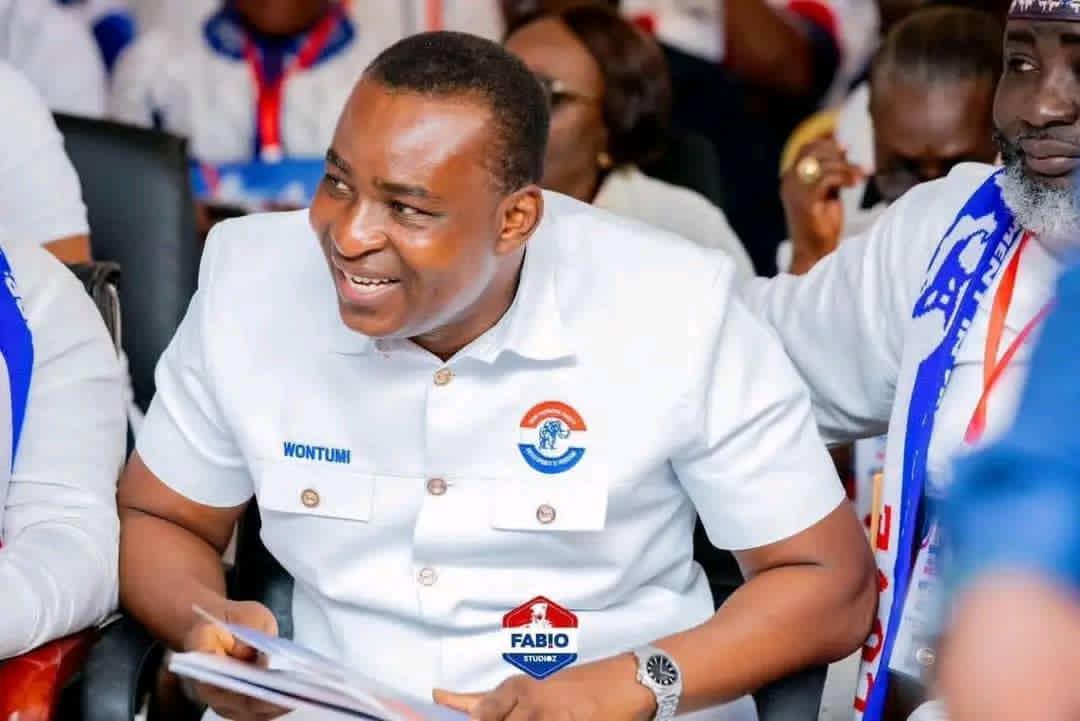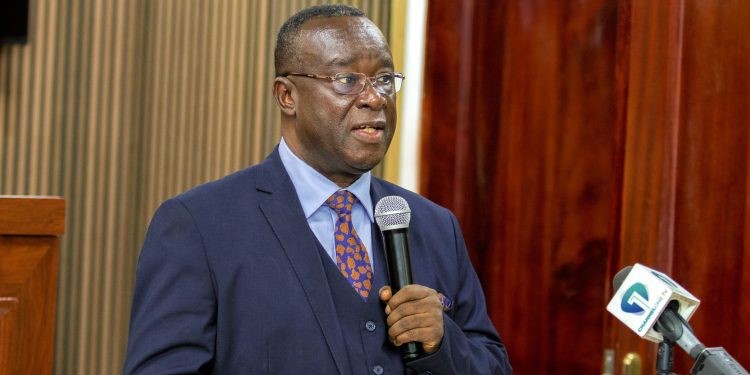
An open letter from NPP’s Dennis Miracles Aboagye lays out the constitutional stakes in stark terms, drawing comparisons to the controversial removal of his predecessor.
Ghana, long held up as one of West Africa’s most stable democracies, is facing a deepening crisis of confidence in the independence of its judiciary, a crisis crystallised this week by a detailed open letter from opposition communicator Dennis Miracles Aboagye to Chief Justice Paul Kwadwo Baffoe-Bonnie, demanding that the head of the judiciary publicly account for a pattern of social and official proximity to the ruling National Democratic Congress (NDC) government.
The letter, addressed to the Chief Justice and copied to the Council of State, the General Legal Council, and the Ghana Bar Association, runs to several thousand words and is written with the precision of a constitutional brief. It invokes Article 127(1) of Ghana’s 1992 Constitution, the guarantee of judicial independence, and applies the international legal doctrine of objective impartiality to argue that the Chief Justice’s public conduct has already crossed a line that observers of democratic governance will recognise as consequential.
The background against which the letter arrives is important. Ghana’s judiciary has been in a state of turbulence since April 2025, when Chief Justice Gertrude Torkornoo, the first woman to hold the office, was suspended and subsequently dismissed by President John Dramani Mahama’s government through a constitutional mechanism involving a prima facie committee. The removal was widely criticised by opposition figures, civil society organisations, and sections of the legal profession as a politically motivated act, though the government and the committee maintained that the process was constitutionally sound.
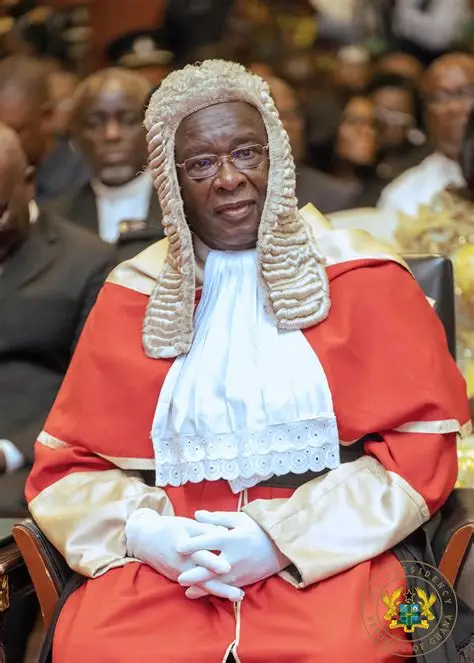
Justice Baffoe-Bonnie, who served as acting Chief Justice following the suspension, was subsequently nominated by President Mahama as substantive Chief Justice, a decision that itself attracted scrutiny, given that his appointment to the substantive role came directly from the president whose government had removed his predecessor.
“Ghana’s democracy has earned admiration across the African continent precisely because we have maintained institutions capable of checking and balancing the exercise of power. What is unfolding today threatens not merely the reputation of one institution, but the coherence of that entire architecture.”
The immediate trigger for the letter is the Chief Justice’s appearance in the Vice President’s official delegation to Toronto, Canada, where the delegation visited the Black Stars ahead of Ghana’s 2026 FIFA World Cup opener against Panama. The Ghana Football Association confirmed that the delegation, led by Vice President Jane Naana Opoku-Agyemang, included Justice Baffoe-Bonnie alongside the Ghana High Commissioner to Canada and a representative of the Asantehene.
For democratic governance analysts, the significance of the episode is not the event itself but what it represents. ‘The Chief Justice joining a government delegation to a football event is not a constitutional crisis in isolation,’ one regional governance researcher told The Africa Report. ‘But in the context of how this Chief Justice came to power, and the pattern of conduct that preceded this episode, it sends a signal that the informal conventions protecting judicial independence in Ghana are breaking down.’
The letter is also notable for the question it puts directly to the Chief Justice: whether the social relationships he has cultivated with NDC government officials could be mobilised against a citizen — specifically, the letter writer himself, who criticises the government. It is a question that reflects a growing concern across Ghana’s civil society about the narrowing space for political dissent, and about the role of the judiciary in either protecting or constraining that space.
Ghana’s democratic credential, the peaceful transfers of power, the competitive elections, the independence of institutions, have historically made it a reference point for democratic governance in West Africa. The erosion of those credentials, if it continues, carries implications not only for Ghana but for the broader regional narrative about the compatibility of African democracy with genuine institutional independence.
‘Ghana used to be the answer you gave when someone asked if African democracy worked,’ one Accra-based political analyst observed. ‘The question today is whether Ghana can still be that answer, and what happens to the region’s democratic imagination if it cannot.’
Aboagye’s letter ends with a direct call to history: ‘I call upon you, in the name of the Constitution you have sworn to protect, in honour of the covenant you made with the Ghanaian people on the day you were sworn in, and in service to the generations who will inherit the institutions we either strengthen or squander, to rise without hesitation to the full and uncompromising demands of your sacred office.’
The Chief Justice’s office had not responded to requests for comment at the time of publication.