Frustration is mounting within Minority ranks in Parliament over what they describe as the continued neglect of the 500-bed Afari Military Hospital project, amid broader concerns about stalled infrastructure and rising pressure on Ghana’s healthcare system.
The Minority, led by Ranking Member on Parliament’s Health Committee, Nana Ayew Afriyie, has accused the government of abandoning critical health infrastructure despite what they say is massive public investment in ongoing projects.
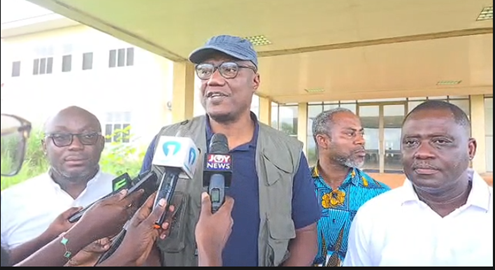
During an inspection tour of the facility, the lawmakers expressed alarm at the apparent stagnation of works on the hospital, which was expected to significantly ease congestion at major referral centres in the Ashanti Region and beyond.
“UNFINISHED PROJECTS ARE BEING LEFT TO ROT”
Speaking to journalists at the site, Mr. Afriyie described the situation as unacceptable, especially at a time when hospitals across the country are overwhelmed and patients continue to struggle for access to care.
“Yeah, but that’s what I’m saying. We are here for the people, in the interest of the people,” he said, expressing concern over what he termed a pattern of abandoned or delayed infrastructure.
The Minority insists that the government previously committed to prioritising the completion of ongoing projects before initiating new ones, a pledge they attribute to President John Dramani Mahama.
“The president promised on his Facebook on February 2024 he would complete existing infrastructure projects before he does new ones,” Mr. Afriyie said. “But now new ones are being done in the Volta Region, the Northern Region, and the Western Region.”
$2.2 BILLION QUESTION: WHERE IS THE MONEY GOING?
The Minority also raised financial concerns over what they describe as significant expenditure on infrastructure projects, claiming that of an estimated $2.2 billion allocated, about $2 billion may already have been spent, leaving roughly $200 million outstanding.
They argue that despite such spending levels, critical facilities like Afari remain incomplete, raising questions about prioritisation and project management.
“PAY SMALL, AND WORK CAN CONTINUE”
Mr. Afriyie further pointed to delays in contractor payments, revealing that discussions had been ongoing around an estimated $18 million requirement to complete key components of the hospital.
“It wasn’t easy. They are aware. The Ministry of Defence, they are aware. It was back to back,” he said.
He suggested that even partial disbursement could reactivate stalled work on site.
“At least pay him some $5 million and he will come to site, complete everything. The rest can be paid gradually. They have not paid a thing,” he lamented.
HEALTH SYSTEM UNDER PRESSURE
The Minority argues that the delay in completing such strategic health infrastructure is worsening pressure on teaching hospitals and forcing patients into avoidable hardship.
They further questioned government priorities, contrasting the funding of large-scale flagship programmes with what they describe as relatively modest sums required to complete critical health facilities.
Their concerns come amid ongoing industrial action and service disruptions at major health facilities, including Komfo Anokye Teaching Hospital, where doctors have raised issues over conditions of service and operational constraints.
“THIS IS NOT POLITICS — IT IS HEALTHCARE”
Mr. Afriyie stressed that the issue should not be reduced to partisan politics, insisting that access to healthcare is a national concern that requires urgent, coordinated action.
For now, the fate of the Afari Military Hospital project remains uncertain — a symbol, critics say, of stalled promises and competing priorities in Ghana’s infrastructure landscape.