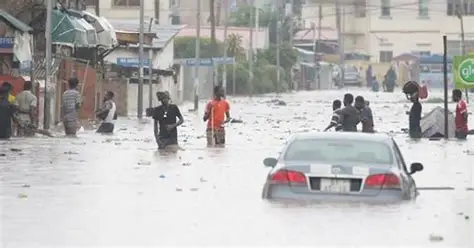
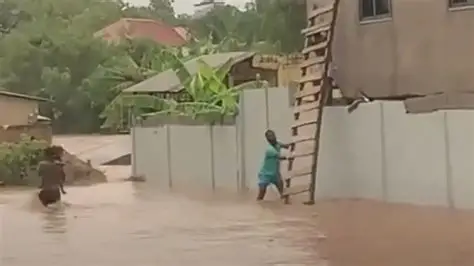
The heavy rains that recently pounded Accra did more than flood streets and disrupt traffic. They exposed what many residents have long suspected: Ghana’s capital is paying a heavy price for poor road construction, weak supervision, and a public procurement system that too often raises more questions than answers.
Across the city, roads disappeared beneath floodwaters. Freshly paved surfaces were scarred by erosion. Potholes widened. Entire sections of infrastructure that cost millions of cedis to construct were left damaged after only a few hours of rain.
For many taxpayers, the annual spectacle has become both infuriating and predictable.
How can roads built with public funds fail so easily?
Why do newly constructed roads deteriorate after only a few rainy seasons?
Why are roads repeatedly reconstructed while the underlying drainage problems remain unresolved?
These are questions government officials must answer.
Roads Built to Fail?
One of the most glaring problems visible across several parts of Accra is poor drainage and questionable road elevation.
Basic civil engineering principles require roads to be designed in a manner that allows water to flow away from the carriageway. Yet in many communities, roads appear to sit lower than adjoining properties and surrounding terrain.
The result is disastrous.
When heavy rains fall, water naturally rushes onto the roads, turning them into rivers. The floodwaters seep beneath asphalt surfaces, weaken foundations, and eventually wash away entire sections of pavement.
What follows is a familiar cycle: roads collapse, emergency repairs are announced, contractors return, more public money is spent, and the same roads begin failing again.
Citizens are entitled to ask whether some of these projects were properly designed, supervised, and executed in the first place.
The Corruption Question
Beyond engineering concerns lies an issue that continues to dominate public discussion: corruption.
For years, allegations have circulated that some public contracts are awarded through opaque processes that prioritize political connections over competence.
Many Ghanaians believe road contracts too often end up in the hands of politically connected contractors whose primary qualification is proximity to power rather than technical expertise.
While allegations must always be distinguished from proven facts, the perception itself is deeply damaging.
When roads repeatedly fail, public confidence in the procurement system inevitably erodes.
Citizens begin to wonder whether projects are designed to serve the public interest or enrich a privileged few.
Every washed-away road strengthens those suspicions.
A Costly National Embarrassment
The consequences extend far beyond damaged roads.
Businesses lose productive hours sitting in traffic caused by flooding. Commercial vehicles incur higher maintenance costs. Property owners suffer losses. Emergency services struggle to reach affected communities.
Meanwhile, taxpayers continue funding repairs to infrastructure that should have lasted far longer.
This represents not merely an engineering failure but a financial one.
At a time when Ghana faces serious economic challenges, the country cannot afford to keep rebuilding roads that should not have failed in the first place.
Accountability Must Begin Somewhere
The annual flooding of Accra has become a symbol of institutional failure.
Heavy rainfall alone cannot explain why roads repeatedly collapse, drainage systems fail, and communities remain vulnerable year after year.
Government agencies responsible for road design, supervision, and maintenance must be subjected to rigorous scrutiny. Contractors who deliver substandard work should face sanctions. Procurement processes must be transparent and competitive.
Most importantly, public officials must recognize that infrastructure projects are not political trophies. They are long-term national investments funded by ordinary taxpayers.
Enough Excuses
The rain is not the enemy.
The real challenge lies in decades of inadequate planning, poor enforcement of standards, weak oversight, and persistent concerns about how public contracts are awarded and managed.
Accra deserves roads that can withstand the rainy season.
Taxpayers deserve value for money.
And Ghana deserves institutions that place competence, professionalism, and accountability above political expediency.
Until that happens, every major downpour will continue to expose not just flooded roads, but the cracks in a system that too often fails the people it is meant to serve.
— Kwabena Adu Koranteng
Investigative Journalist