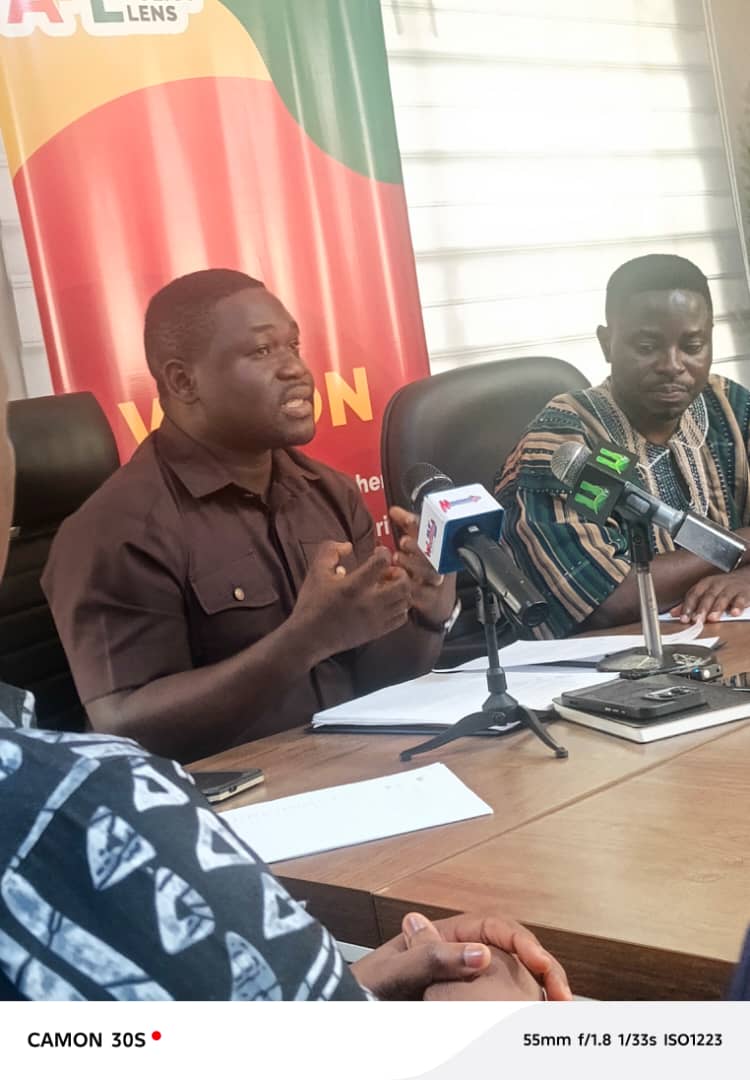
The Africa Policy Lens (APL) has warned of a huge financial loss to the state if the Mahama government goes ahead to reduce agreed royalty rate of the lithium deal between Barari DV Ghana Limited and Ghana from 10% to 5%.
The previous government, following a Cabinet approval to review royalty rates for Ghana’s lithium and associated minerals, reached a mutual agreement with Barari DV Ghana Limited, for an upward 10% royalty stake for Ghana – 5% extra royalty stake in the the main mining sector.
However, the new Mahama government, members of which criticised the previous government’s improved lithium royalty stake for Ghana as inadequate, has now proposed a reduction of the 10% stake for Ghana to 5% – a situation which has sparked outrage.
The APL, in a statement on the controversy, has expressed surprise at the Mahama government’s eagerness not to implement a mutual agreement which favours Ghana, but rather advocating for a reduced stake, which will cost the nation millions of dollars.
“The best international practices in mining investment dictate that royalty rates are not determined by short-term market fluctuations. Even in jurisdictions that apply sliding-scale royalty regimes, upper thresholds are established in anticipation of future commodity price increases. Consequently, claims that the recent decline in lithium prices justifies a reduction in Ghana’s royalty rate are untenable,” the APL said, rejecting government’s ‘market fluctuation’ reasons for its proposed 5% royalty for Ghana instead of 10%.
The APL added: ”the definitive feasibility study of the Ewoyaa Project estimates an all-in sustaining cost (AISC) of approximately US$610 per tonne, based on a lithium spodumene concentrate (5.5–6% lithium oxide) price of US$1,587 per tonne. At this benchmark, the company achieves margins of roughly 62% per tonne before royalties. Moreover, even at current market prices of US$1,000–1,195 per tonne, as reported by Trading Economics in November 2025, the project remains profitable with margins exceeding 40% per tonne. Notably, in response to falling lithium prices in 2024, the Government of Zimbabwe introduced an additional 2% levy on gross lithium revenues, supplementing its existing 5% royalty. This underscores that temporary price declines do not compel sovereign governments to reduce royalty rates without sound economic justification.”
The APL, continuing its detailed analysis, predicted a huge loss of between $210m to $610m if government goes ahead to reduce the royalty rate from 10% to 5%.
“Assuming lithium concentrate prices remain within the range of US$1,000–3,000 over the projected 12-year mine life, with annual production of 350,000 tonnes, Ghana would forfeit between US$210 million and US$630 million if royalties were reduced from 10% to 5%. Such losses represent revenue effectively ceded to the company, with no mechanism for recovery.”
“Indeed, at prevailing and projected price levels, even a 30% royalty rate would not render the Ewoyaa Lithium Project unprofitable. It follows, therefore, that the current 10% royalty rate must be maintained as both economically rational and strategically necessary.”