Ghana has entered dangerous territory—and the latest whispers inside the National Democratic Congress (NDC) should alarm every citizen who cares about constitutional order.
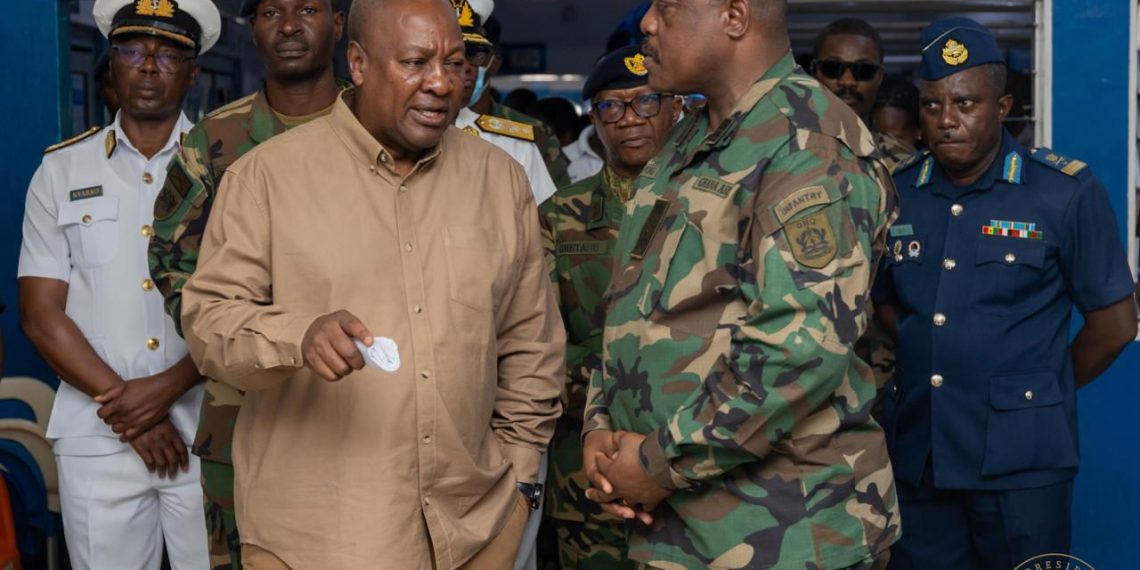
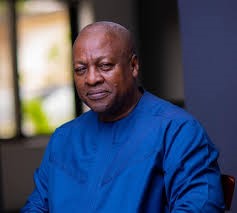
The mere idea that former President John Dramani Mahama could be pushed toward a third-term agenda—after exhausting his constitutional two terms—is not just reckless. It is a direct assault on the heart of Ghana’s democracy.
Hassan Ayariga’s bold claim on JoyNews that he would support a Mahama third term if the NDC “imposed” it on him triggered panic among the party’s top hierarchy. And rightly so. His comment forced National Chairman Johnson Asiedu Nketia into emergency damage control, issuing a hurried press statement conde…
[13:36, 12/12/2025] Chief Adu Koranteng: FEATURE: INSIDE THE SHADOW WAR OVER A MAHAMA THIRD TERM
Ghana’s political landscape is never short of drama, but the latest swirl of rumours, denials, secret consultations, and political panic surrounding a supposed “Mahama third-term agenda” has opened a new chapter—one that exposes the quiet power struggles shaping our democracy behind closed doors.
It all began with one explosive comment.
Hassan Ayariga, leader of the APC and a man who thrives on controversy, declared on JoyNews’ AM Show that he would support a push for John Mahama to seek a third term if the NDC “imposed” such a decision on him.
To many viewers, it may have sounded like mere political talk.
To the NDC leadership, it was a bombshell.
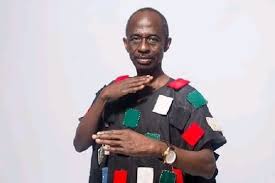
Within hours, National Chairman Johnson Asiedu Nketia—usually calm, composed, and strategic—issued a sharply worded statement condemning Ayariga’s remarks. He dismissed the entire idea as baseless, irresponsible, and nowhere near the party’s thinking. If the Chairman’s message sounded unusually urgent, that’s because it was. The party was rattled.
Why would one man’s comment cause such alarm?
Because it struck too close to a conversation that some within the political system have been quietly having.
Across Ghana’s political circles, whispers have grown louder: that influential figures, both inside and outside the NDC, are exploring unconventional pathways to stretch6 Mahama’s political life beyond the constitutionally mandated limit. These conversations—ranging from legal manoeuvres to parliamentary coordination—suggest a strategy aimed at exploiting the Judiciary, the Majority in Parliament, and even the office of the Speaker.
Whether these schemes are truly feasible is another matter entirely.
The 1992 Constitution is brutally clear: presidential term limits are an entrenched clause. To change them requires a national referendum with an almost impossible threshold—75% approval in a vote that must attract at least 40% of registered voters. No court can rewrite that. No Speaker can reinterpret that. No parliamentary majority can dance around that.
And yet, in the backrooms of power, some believe there may be “creative” ways to test the boundaries.
This is where the fear comes in.
Where the NDC’s denial becomes more than a routine press release.
Because even the hint of a third-term agenda risks detonating a political and constitutional crisis in a country already battling economic hardship and declining trust in its institutions.
Inside the NDC, the issue is divisive.
Mahama loyalists, who see him as the party’s strongest electoral asset, are reluctant to imagine a future without him. Strategists argue that losing him after 2028 would leave the party scrambling for leadership. Others, especially veterans who lived through Ghana’s earlier authoritarian eras, warn that tampering with term limits is the gateway drug of African democracy’s worst nightmares.
As for John Mahama himself, his public silence is beginning to raise questions. Does he know about these behind-the-scenes consultations? Is he willing to shut them down? Or is he watching carefully to see how far the idea travels before he intervenes?
In the wider political space, the stakes are enormous.
Civil society organisations, constitutional scholars, religious leaders, and even Ghana’s development partners view term limits as sacred. Any attempt—real or perceived—to tamper with that red line will trigger fierce resistance.
The memories of West Africa’s democratic declines—from Guinea to Côte d’Ivoire—are still too fresh. Ghana has long been the region’s stabilising anchor. A third-term attempt could change that in a heartbeat.
For now, all Ghanaians can do is watch as the quiet chess game unfolds.
Ayariga has thrown the first stone.
The NDC has rushed to shield itself.
But the real battle is happening far from press conferences and TV studios—in private rooms where political ambition meets constitutional reality.
And until the key players speak clearly, the fears, rumours, doubts, and secret consultations will only grow.
Because in Ghana today, the question is no longer whether a Mahama third-term agenda exists.
The real question is: how far will some people go to make it possible—and how far will the nation go to stop it?