Growth projections for Ghana and other economies are set to be revised downward as the International Monetary Fund warns that the escalating Middle East conflict is weakening the global outlook ahead of the IMF-World Bank Spring Meetings 2026 which begin today, April 13 in Washington.
The Fund says disruptions to energy supplies are already feeding into inflation, trade, and financial markets, raising fresh risks for both advanced and emerging economies and complicating the recovery path for countries like Ghana.
The conflict, which intensified in late February, has unsettled global markets, with analysts closely tracking ceasefire talks and their potential impact on commodity prices and supply chains.
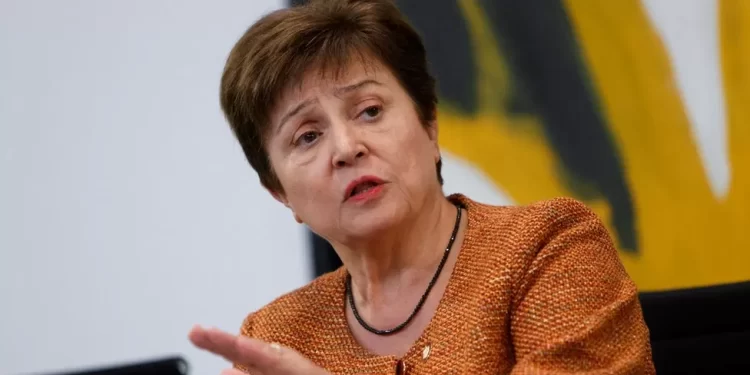
Speaking ahead of the meetings, Managing Director Kristalina Georgieva indicated that the global outlook has shifted significantly.
“In fact, had it not been for this shock, we would have been upgrading global growth. But now, even our most hopeful scenario involves a growth downgrade.”
She attributed the weaker outlook to multiple shocks hitting the global economy simultaneously, adding, “Why? Because of significant infrastructure damage, supply disruptions, losses of confidence, and other scarring effects.”
Georgieva further warned that uncertainty remains high, particularly around key global trade and energy routes.
“So the reality is, we don’t truly know what the future holds for transits through the Strait of Hormuz or, for that matter, for the recovery of regional air traffic.”
She stressed that even in a best-case scenario, the impact on growth will be lasting. “What we do know is that growth will be slower; even if the new peace is durable.”
The IMF’s warning underscores growing concerns that geopolitical tensions could derail growth momentum at a time when many economies are still recovering from recent shocks.
Meanwhile, Finance Minister Dr. Cassiel Ato Forson and the Governor of the Bank of Ghana, Dr. Johnson Pandit Asiama, are expected to join other global fiscal and monetary leaders at the meetings, which run from April 13 to April 19.
Key discussions will focus on the global economic outlook, regional growth prospects, climate financing, and strategies to navigate ongoing instability in trade and energy markets.