By Adu Koranteng
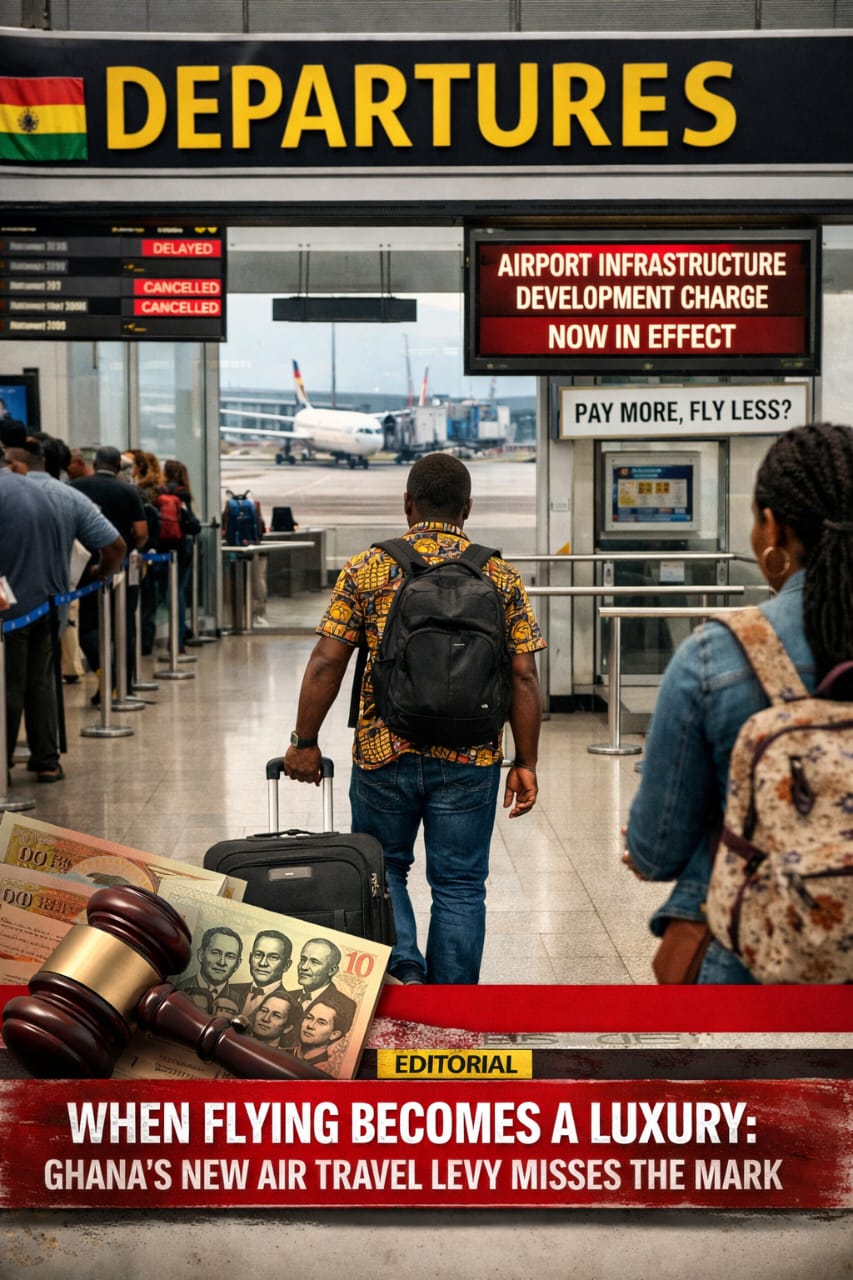
Mahama’s NDC Government’s decision to impose a new Airport Infrastructure Development Charge on air travel has ignited debate across the aviation sector, with critics warning of rising travel costs even as authorities insist the levy is critical to modernising Ghana’s ageing airport facilities.
The new charge, which takes effect today, will apply to all tickets issued for both domestic and international flights. Exemptions have been granted to infants, diplomats, and airline crew on official duty.
Officials at the Ministry of Transport argue that the move is long overdue, pointing to mounting pressure on key aviation facilities—particularly at Kotoka International Airport—as passenger numbers continue to rise without corresponding infrastructure investment.
But while government frames the levy as a strategic intervention, industry observers say it exposes deeper structural challenges in how Ghana funds critical infrastructure.
WHY NOW?
According to aviation analyst Dr. Dominic Andoh, Managing Editorw of Aviation Ghana, the introduction of the charge reflects a growing financing gap in the sector.
“Passenger traffic has increased significantly overw the years, but investment has not kept pace. Government is now turning to users of the system to fund its sustainability,” he explained.
The levy, first outlined in the 2026 Budget Statement, is expected to generate hundreds of millions of cedis annually, providing a dedicated funding stream for airport development.
WHERE WILL THE MONEY GO?
Authorities say proceeds from the charge will be channelled into runway rehabilitation, terminal expansion, enhanced security systems, and digital upgrades to passenger processing.
Regional airports—many of which remain underdeveloped—are also expected to benefit from the fund, as government seeks to decentralise air travel and boost domestic aviation.
However, concerns remain over transparency and accountability in the utilisation of the funds, with some stakeholders calling for strict oversight mechanisms to prevent misuse.
PASSENGERS TO PAY MORE
For travelers, the immediate impact will be felt in their pockets.
Airlines are expected to pass on the cost of the levy directly to passengers, leading to incremental increasesw in ticket prices. While officials insist the hikes will be “modest,” frequent flyers and industry players warn that cumulative charges could make Ghana a more expensive travel destination.
“At a time when global travel costs are already high, adding new levies risks reducing Ghana’s competitiveness,” one industry source noted.
BETTER EXPERIENCE OR JUST MORE TAXES?
Governmentb maintains that the long-term benefits will outweigh the short-term burden. Improved airport facilities, faster processing times, and enhanced safety standards are among the promised outcomes.
If effectively implemented, analysts say the initiative could position Ghana as a regional aviation hub, attracting more airlines and boosting tourism and trade.w
Yet skepticism persists.
Critics argue that without clear timelines, transparency, and measurable outcomes, the new charge risks being seen as justw another tax burden on consumers rather than a genuine development tool.
THE BIGGER QUESTION
At the heart of the debate lies a broader issue: should infrastructure development be funded through targeted user charges or general taxation?
For now, passengers will begin paying the price—literally—as the policy takes off.
Whether the Airport Infrastructure Development Charge delivers on its promise or becomes another controversial levy will depend not just on how much is collected, but how effectively it is spent.