By Ebow Hagan
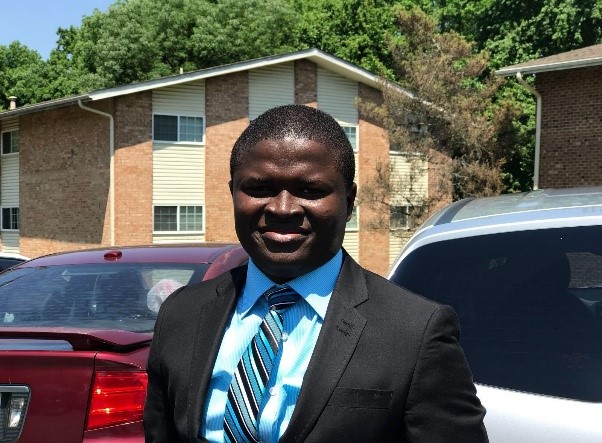
An Artificial Intelligence and Scalable Computing specialist at Intel Corporation, USA, Dr Daniel Teye Ocansey, says AI can rescue Ghana from the myriad of challenges it faces, among them illegal mining.
According to Dr Ocansey, Ghana can harness the futuristic features of AI tools to significantly strengthen its fight against galamsey, reduce the country’s rising road accident rates, and tackle other socio-economic challenges.
Dr. Ocansey made these remarks when he appeared as the Motivational & Special Guest Speaker of the College of Science Graduation ceremony at the Kwame Nkrumah University of Science and Technology, Kumasi.
He disclosed that the advanced prowess of AI can detect galamsey operations in real-time—long before security forces arrive too late to stop the damage, as has been the operational strategy.
“AI can analyse satellite images from Google Maps to spot changes like cleared land, new pits, paths or river discolouration, and send alerts with GPS locations to authorities,” he allowed.
Over the past year, illegal mining, notoriously known as galamsey, has overwhelmed the capacity of security agencies and has become a major national security concern.
Activities of illegal miners have left in their wake destruction to the environment, degraded forest reserves, polluted water bodies, and caused loss of human lives.
In response, the government has deployed the Blue Water Guards and scaled up resources for the National Anti-Illegal Mining Operations Secretariat (NAIMOS) in a bid to combat illegal mining activities in various regions.
These deployments and operations notwithstanding, authorities are often one step behind and frequently discover newly encroached sites only after major destruction has occurred.
This trend, Dr Ocansey believes, can be reversed by adopting AI-backed systems, allowing Ghana to track early signs of encroachment and intervene swiftly to forestall further damage.
Using AI To Reduce Road Accidents
The Senior Software Engineer at Intel also highlighted the ability of AI to address the persistent road accidents in the country.
Ghana, a country of 32 million people, ranks very high per capita in road fatalities on the continent, with 24.8 deaths per 100,000 people, only behind Kenya with 28.9 deaths per 100,000 people.
According to the Police Motor Traffic and Transport Department, Ghana witnessed 13,000 crashes, 2,600 deaths, and 550 pedestrian losses in 2025.
Dr Ocansey observed that while human error accounts for many recorded cases of road accidents, the inability of drivers to detect hazards early enough, including broken-down vehicles, potholes and road obstructions, remains a major factor.
“AI can combine Google Maps, phone sensors and traffic data to detect hazards instantly and send real-time alerts to drivers via Google Maps, WhatsApp or radio,” he suggested.
In his estimation, at least 3,000 lives annually could be saved if such AI tools are integrated into the Ghana national road safety system.
AI Can Be The Game-Changer In Addressing National Problems
Nicknamed the “coding magician” in the tech world, Dr Ocansey has successfully applied his vast theoretical knowledge for the greater good.
The spirit of curiosity and resilience that was imbued in him from his secondary school days at Our Lady of Mercy SHS, Tema, has become the driving force behind his passion for innovation.
Today, Dr Ocansey boasts of several digital platforms under his belt that are enhancing the way Ghanaians go about their daily lives.
He has built ‘EFIEPRO’, an intelligent property management platform designed to simplify and strengthen the connection between tenants and property owners.
DASYQUOTE, one of his innovations is an automated system that instantly connects
customers to professional handymen for real-time quotations and service
matching.
He also co-founded Impact Solutions Consult- a data analytics firm and also owns ROVIAi, a scalable data collection and analytics framework,
“Each of these initiatives stems from one simple belief: technology is only as
powerful as the problems it helps us solve”, Dr Ocansey told the enthusiastic graduands.
Graduates Should Be Agents Of Change
Dr Ocansey charged the graduating class of 2025 to think outside the box and apply the theories they’ve learnt to bring measurable change to the world, noting “when the applause fades and reality sets in, remember this: the degree you
receive today is not the end of your education — it’s the beginning of your
application.”
He pointed out to the graduands some of the opportunities in Industry 4.0 that they can explore and utilise.
Aside from the issues of galamsey and road accidents, Dr Ocansey revealed to the graduands that data collection is an area that has been neglected for far too long and is open to exploration by curious minds to improve our governance structure.
Dr Ocansey outlined to the graduates that one neglected they can build a National Integrated Data Platform where agencies upload standardised data.
“AI can clean, merge, and organise it, creating a single, accessible source for research and decision-making”, he emphasised.
Using his exemplifying achievement as an impact maker , he admonished the fresh graduates not to forget to use their success and experience to transform the communities which made them.
“And when you finally make it — which I believe you will — come back home. Return to KNUST. Inspire the next generation,” he enforced.
The ceremony brought together academics, students and industry leaders as KNUST’s College of Science celebrated this year’s graduating class.
In all, the College graduated 2,014 graduands and produced Mr Ebenezer Appiah Odei, a student from the Department of Statistics and Actuarial Science, who emerged as both the Best Graduating Student for the College and the Overall Best Graduating Student for the entire University, achieving an impressive CWA of 88.06.