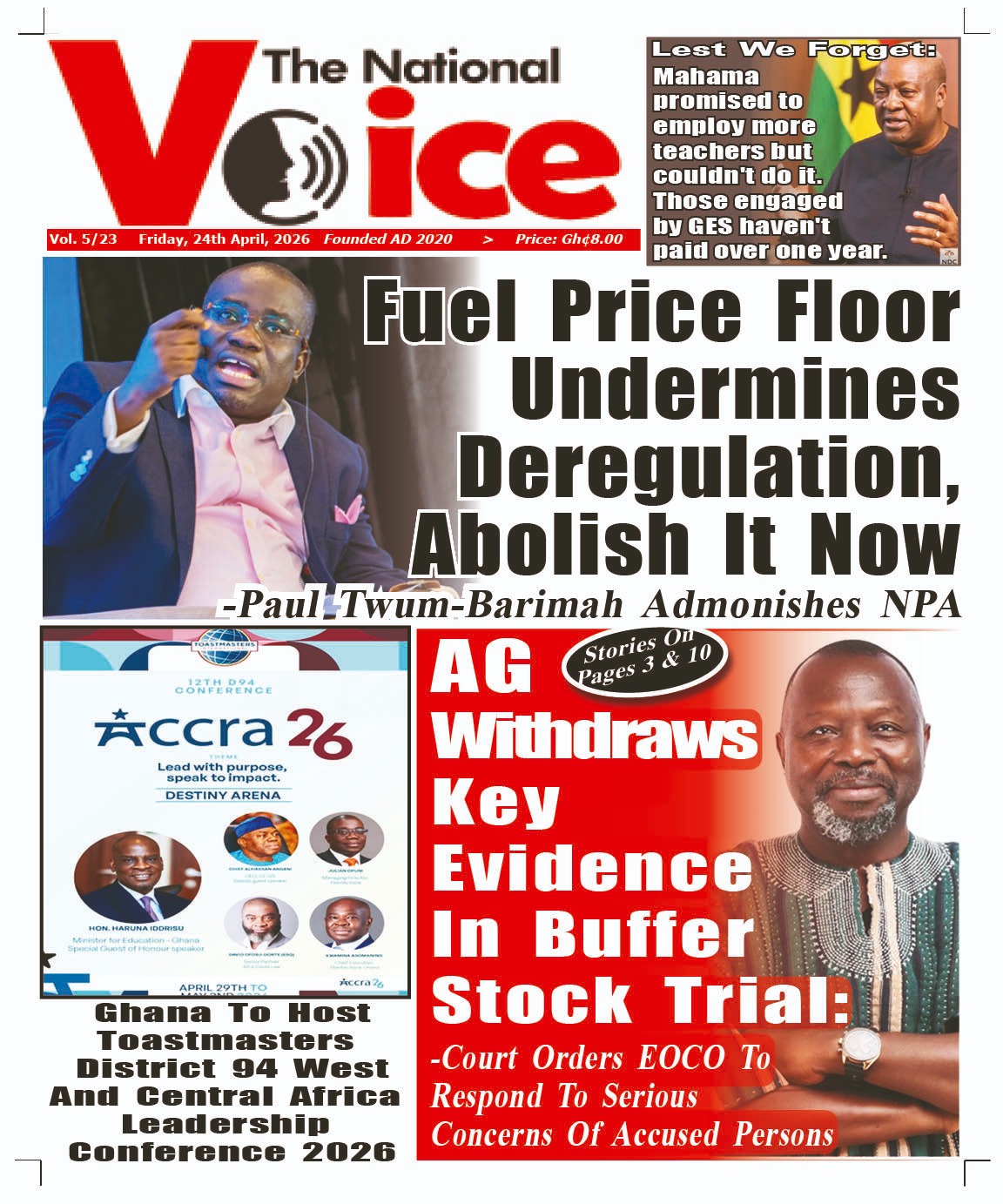
The Former Member of Parliament for Dormaa East, Paul Apreku Twum Barimah, has called on the National Petroleum Authority (NPA) to abolish the fuel price floor policy, arguing that it undermines competition and defeats the purpose of deregulation in Ghana’s downstream petroleum sector.
He maintains that several Oil Marketing Companies (OMCs) have the capacity to sell petroleum products below the minimum price set by the National Petroleum Authority, but are constrained by regulatory directives which prevent them from pricing below the prescribed floor.
According to him, the situation has effectively limited the ability of efficient operators to pass on cost advantages to consumers, thereby weakening competition in the sector.
“I know some oil marketing companies who can sell petrol and diesel below the current rate, but because of the floor price set by the NPA, their hands have been tied,” he stated.
Mr. Twum Barimah further argued that the recent volatility in global oil markets, triggered by geopolitical tensions involving the United States, Israel, and Iran, has created conditions where some OMCs are able to secure fuel from relatively cheaper or safer supply routes and could potentially offer lower prices locally.
However, he insists that the existing price floor prevents such companies from reflecting these advantages at the pump.
“The deregulation policy was introduced to promote competition and efficiency in the downstream sector. The introduction of a price floor is effectively a form of price control, which defeats that objective,” he added.
Background to Policy
The debate comes in the wake of the NPA’s decision in April 2024 to introduce a minimum retail price for petroleum products. The policy was designed to curb what regulators described as “unhealthy competition” and to ensure stability within the downstream petroleum market.
However, the move has since sparked controversy among industry stakeholders and policy analysts who argue that it interferes with market forces.
Concerns Over Market Distortion
Economic observers note that in a largely homogeneous market such as petroleum retail—where fuel products are identical across brands—pricing remains the key competitive tool. As a result, they argue that price floors can distort natural supply and demand dynamics.
Industry players further point out that some OMCs, particularly those operating outside major urban centres, rely heavily on competitive pricing to attract customers. These firms often exert downward pressure on market prices, benefiting consumers across the board.
However, critics argue that the introduction of a price floor removes this competitive edge and creates a uniform pricing structure regardless of efficiency differences among operators.
Analysts also warn that the policy could discourage efficiency and innovation within the sector. When firms are unable to fully benefit from cost reductions by lowering prices, the incentive to invest in logistics, technology, and improved service delivery is reduced.
There are also concerns that smaller and emerging OMCs, which often depend on lower pricing strategies to gain market entry, may be disproportionately affected. This could limit market diversity and reduce competitive pressure in the long term.
While the National Petroleum Authority maintains that the policy promotes price predictability and protects consumers from erratic pricing, critics argue it may instead lead to higher fuel costs than would prevail under a fully competitive market.
During periods of declining global crude oil prices, a price floor could prevent reductions from being passed on to consumers, particularly affecting low-income households and transport-dependent businesses.
Mr. Twum Barimah stressed that such outcomes run contrary to the principles of affordability and efficiency that underpin deregulation.
The ongoing debate has renewed calls for a review of the fuel pricing framework in Ghana’s downstream petroleum sector. Stakeholders are urging the NPA to adopt a more flexible regulatory approach that balances market stability with genuine competition.