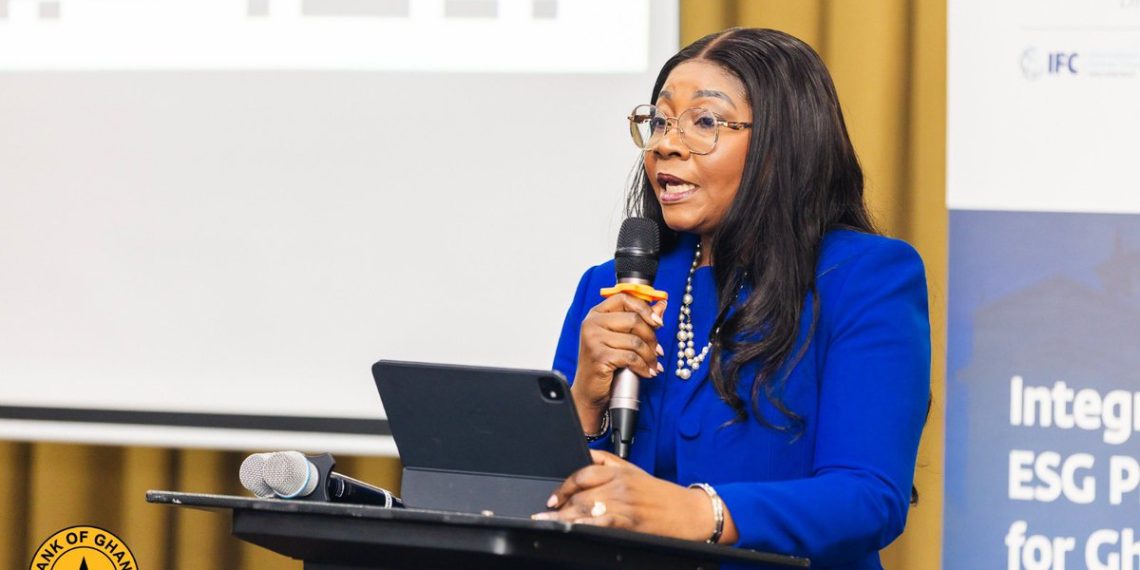
The Second Deputy Governor of the Bank of Ghana, Matilda Asante-Asiedu, has called for urgent reforms to better structure Africa’s financial markets, warning that weak coordination is limiting the continent’s ability to mobilise its own capital for growth.
According to her, Africa has over one trillion dollars in financial resources across pensions, capital markets, and remittances, but these funds are not being effectively channelled into long-term investments.
She stressed that in the face of growing global uncertainties, the continent must look inward and deliberately pool and structure these resources to build resilience.
She explains that despite the existence of more than 30 stock and bond markets across Africa, lack of integration means countries are unable to access capital beyond their borders, highlighting the need for stronger coordination, political will, and leadership from economic actors.
“For Africa to build resilience, Africa has to begin to look inward, because we all know what is happening geopolitically in the economies of the world,” she said, adding that “Africa has in excess of 1 trillion in revenue when it comes to whether it’s pension funds, capital and bond markets, investment and savings remittance, that’s significant resource.”
She noted, however, that “the only difficulty is that it hasn’t been properly channeled into long-term investment,” stressing the need for deliberate efforts to redirect these funds into productive sectors.
She further explained that “if you take the stock markets for instance, there are over 30 stock markets and bond markets in Africa, but they are not structured,” pointing out that “from Ghana, I cannot go and borrow from the stock markets in Kenya, but if that was properly structured, I could actually be borrowing from Kenya.”
According to her, such integration would ensure that “Kenyan investments will get returns and the Ghanaian economy will also grow through the investment that I make.”
She maintained that “it’s about pulling resources, looking inward and building the resilience that the continent needs,” adding that “it requires a lot of political will, but also economic actors really leading the conversation.”