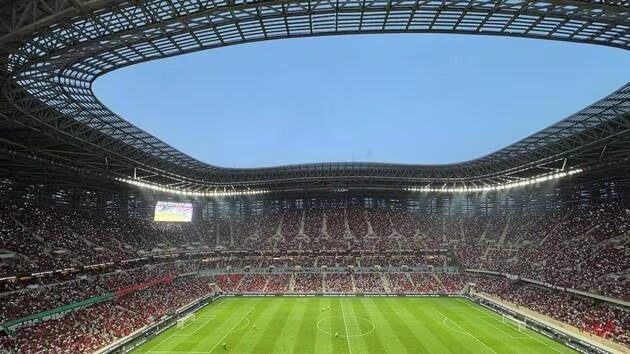
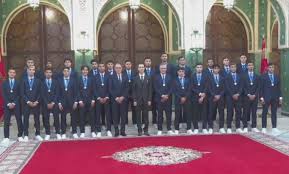
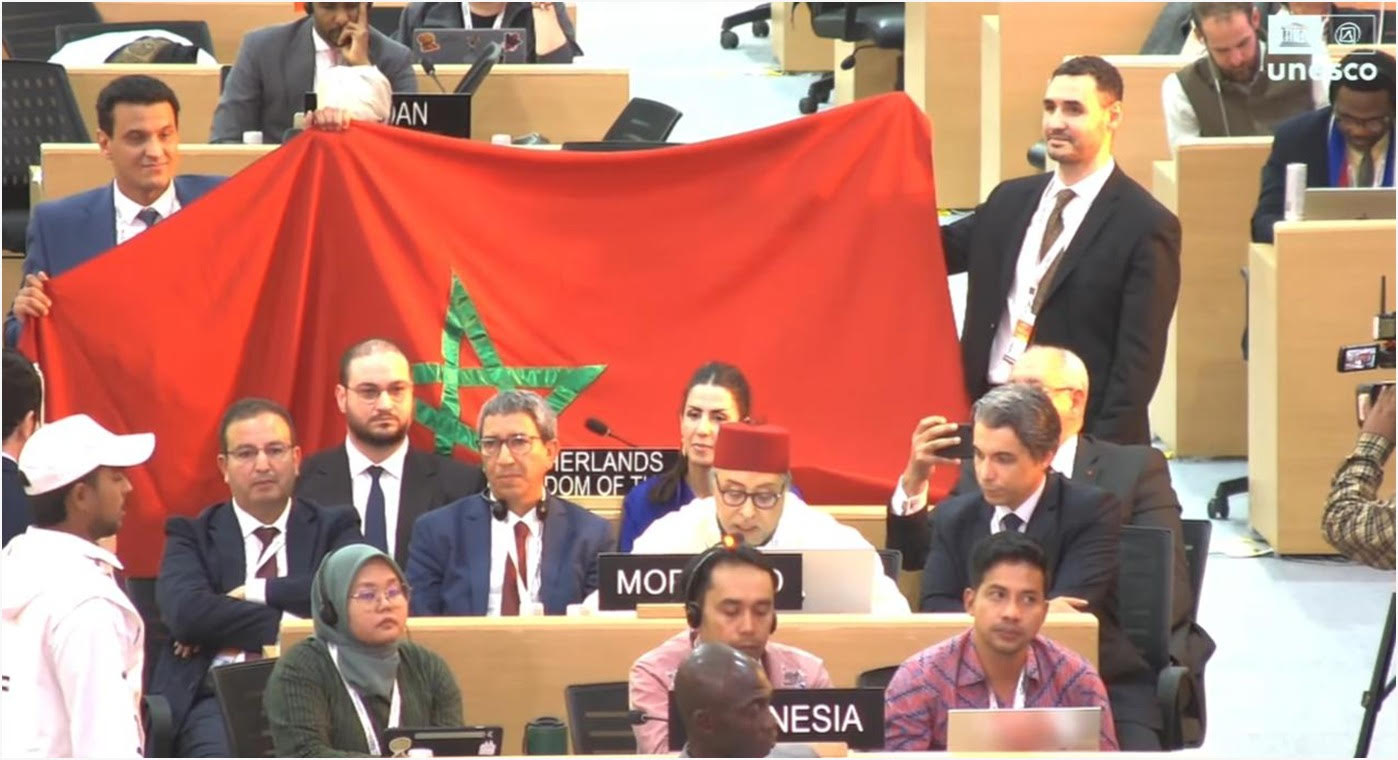
By hosting the 2025 Africa Cup of Nations (AFCON), Morocco has done far more than successfully stage a sporting event. The kingdom has showcased a comprehensive strategy combining security, diplomacy and influence, turning football into an openly asserted political lever. This approach draws the attention of other African powers at a time when sport is increasingly becoming a new instrument of international projection.
The 2025 Africa Cup of Nations, held in Morocco from 21 December 2025 to 18 January 2026, has established itself as one of the most tightly managed editions in the recent history of the competition. According to the French daily Le Monde, no major incidents were recorded after more than fifty matches played across six cities in the kingdom, confirming the country’s reputation for effective security management at major sporting events.
Unprecedented measures were deployed: multiple screening points at stadium entrances, extensive use of video surveillance and drones, a highly visible and reinforced security presence, as well as the installation of police stations and mobile courts within the stadiums themselves. This organisation, praised by officials from African football federations and by several international players, enabled Morocco to deliver a smooth tournament without major incidents.
This success is no accident. It is part of a long-term policy driven by King Mohammed VI, who has made football a central pillar of Morocco’s influence strategy. Modern infrastructure, sustained investment and active sports diplomacy have turned football into a universal language capable of enhancing the kingdom’s prestige, both in Africa and beyond.
The organisation of AFCON is thus presented as a showcase, intended to demonstrate Morocco’s ability to host major international events—particularly in the run-up to the 2030 FIFA World Cup, which the country will co-host with Spain and Portugal. Football has therefore become a tool of institutional credibility and diplomatic outreach.
Security has played a central role in this strategy. Morocco used AFCON to promote what it describes as a “Moroccan model” for securing major events, combining prevention, deterrence and targeted enforcement. This approach attracted the attention of international actors, including a delegation from the FBI that travelled to observe Morocco’s organisational framework in the context of preparations for future global events.
Beyond the sporting dimension, Rabat also hosted international meetings and symposiums on the security of major sporting events, further strengthening its position as a credible partner within global security cooperation networks.
A Regional Contrast Highlighted
From a more political perspective, Le Journal du Dimanche (JDD) argues that Morocco’s success highlights the contrast with other African football powers, notably Algeria. While Morocco has leveraged sport as a structuring tool of regional influence, Algeria appears, according to the JDD, to be lagging behind in organisational and strategic terms, despite a recognised sporting record.
This contrast reflects a broader shift: African football is no longer judged solely on the performances of national teams, but also on states’ ability to use sport as an instrument of political, economic and diplomatic projection.
AFCON 2025 thus served as a strategic demonstration: in contemporary Africa, football is emerging as a fully-fledged sphere of influence, at the crossroads of sport, diplomacy and state credibility.
AFCON 2025: Morocco Positions Football as a Tool of Regional Power